
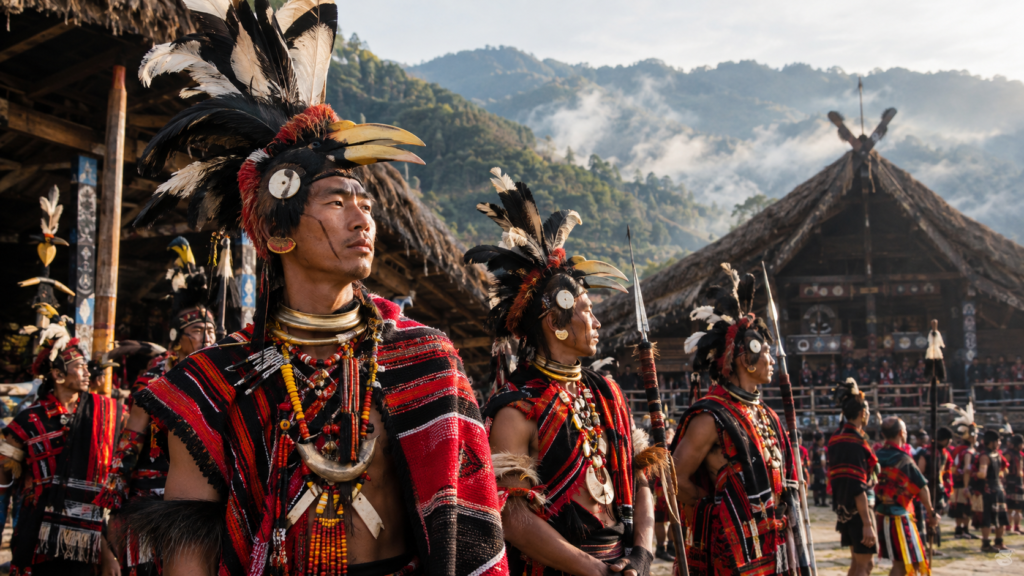
Planning an overland trip to the eastern Himalayas requires clear timing and advance logistics. This practical Hornbill Festival Nagaland guide breaks down official dates, entry permits, tribal morungs, transport costs, and village accommodation for 2026.
Known widely as the “Festival of Festivals,” the celebration unites seventeen indigenous tribes. Much like regional celebrations in our sacred Ganga Aarti traditions in Varanasi, the gathering honors living oral heritage and unity.
When & Where: Official 2026 Dates & Venue
The festival takes place every year from December 1 to December 10 without date changes. Specifically, the opening day coincides with Nagaland Statehood Day, creating celebration across the state.
All primary cultural performances unfold at the Naga Heritage Village in Kisama. The village sits twelve kilometers south of Kohima along the national highway.
Kisama is an open-air cultural complex built to preserve indigenous Naga architecture. Each of the seventeen recognized tribes maintains an authentic permanent morung on the property.
Morning programs in the central open-air amphitheater begin at 9:30 AM daily. Meanwhile, afternoon cultural sessions resume at 2:00 PM following a short lunch break.
Permits & Travel Documents: ILP Regulations
Entering Nagaland requires specific paperwork depending on your nationality. Understanding these rules in advance prevents delays at highway checkpoints:
- Domestic Indian Travelers: You must obtain an Inner Line Permit (ILP) before entering. Apply online via the official Nagaland Government ILP Portal (Tourist ILP fee: ₹50 for 15 days).
- Foreign Passport Holders: Foreigners no longer need a Protected Area Permit (PAP) for Nagaland. However, you must register with the Foreigners Registration Officer (FRO) within twenty-four hours of arrival.
- Checkpoint Inspections: Carry physical printouts of your permit and identity cards. Officials inspect documents at Dimapur railway station, airport exits, and the Khuzama highway post.
Consequently, apply for your digital ILP at least two weeks before departure to avoid processing delays during peak festival rush.
Inside the 17 Tribal Morungs: Woodcarvings & Rice Beer
In traditional Naga society, a morung was a communal dormitory where youth learned oral history, warrior skills, and woodcraft.
At Kisama, each tribe manages its own morung. Visitors can walk freely into these open wooden longhouses to meet tribal elders and observe distinct customs:
- Traditional Architecture: Observe massive wooden front pillars carved with hornbill birds, tigers, and mithun horns.
- Ethnic Cuisine: Sample traditional dishes like slow-smoked pork cooked with fermented soybean paste (axone) and dried bamboo shoots.
- Indigenous Beverages: Sip freshly fermented local rice beverages like Zutho or Thutse, served in hollowed bamboo mugs around the central hearth fire.
- Artisanal Crafts: Watch artisans hand-weaving colorful tribal shawls on backstrap looms and carving wooden ceremonial platters.
Morungs remain open between 8:30 AM and 5:00 PM daily. Therefore, visiting early in the morning allows personal conversations with tribal elders before midday crowds arrive.

Main Arena Spectacles: War Dances & Folk Games
The heart of the festival beats in the main dirt amphitheater. Each day features synchronized presentations from rotating tribes:
- Tribal War Dances: Warriors dressed in hornbill feather crowns, bear-fur armlets, and boar-tusk neckpieces perform rhythmic battle dances accompanied by resonant log drums.
- Indigenous Folk Games: Watch traditional sports, including Naga wrestling (Kene), grease-pole climbing, and bamboo stilt racing.
- Traditional Fire-Making: Competitors race to ignite tinder within seconds using only bamboo strips and dry wood friction.
- Naga King Chilli Contest: Courageous locals and daring visitors compete to eat raw Bhut Jolokia chillies, among the hottest peppers on earth.
Always check the daily performance roster published by the Nagaland Tourism Official Portal to catch your preferred tribal dances.
Evenings in Kohima: Night Carnival & Rock Music
As dusk settles over Kisama around 4:30 PM, the action moves back into Kohima town:
- Kohima Night Carnival: Central streets close to vehicle traffic from 6:00 PM onward. Streets fill with hundreds of illuminated food stalls, local bands, and festive crowds.
- Hornbill Music Festival: Held at nearby venues like the Indira Gandhi Stadium, this gathering features national rock bands and indie artists.
- Local Shopping: Browse night markets for hand-woven Angami wool shawls, natural wild honey, fermented bamboo shoot bottles, and bead jewelry.
In addition, dress warmly in heavy winter jackets, woolen beanies, and gloves. Night temperatures in Kohima drop below eight degrees Celsius in December.
How to Reach Kisama: Transit Route & Costs
Reaching Kohima and Kisama requires combining flights or trains with mountain highway travel:
- By Air or Rail to Dimapur: Fly into Dimapur Airport (DMU) or book direct express trains to Dimapur Railway Station (DMR) via the Indian Railways Official Portal (IRCTC).
- Dimapur to Kohima (74 km): Shared Tata Sumo four-wheel-drive taxis depart outside Dimapur railway station regularly (₹400–₹500 per seat, 2.5–3.5 hours). Private cabs cost ₹2,500–₹3,500.
- Kohima to Kisama (12 km): Shared yellow local taxis run from Kohima Phoolbari junction to Kisama gate for ₹60–₹100 per seat. Private town cabs charge ₹600–₹800 each way.
- Highway Traffic Warning: Highway NH29 experiences heavy bumper-to-bumper traffic jams on opening and closing days. Leave your stay before 8:00 AM to avoid gridlock.
If you have an early morning flight out of Dimapur on your final day, consider staying overnight at Zone Niathu Dimapur By The Park to avoid missing your connection.
4-Day Hornbill Festival Itinerary
This structured itinerary balances tribal arena performances, village walks, and historic mountain heritage.
| Day | Time | Activities & Key Highlights |
|---|---|---|
| Day 1 | Morning | Arrive in Dimapur by rail or air, board a shared Sumo to Kohima, and check into Hotel Ariel, Kohima or Niraamaya Retreats Aradura Kohima. |
| Afternoon | Visit the Kohima War Cemetery on Garrison Hill to view the historic Commonwealth battle memorials. | |
| Evening | Walk along the opening evening of the Kohima Night Carnival, sample local snacks, and listen to street musicians. | |
| Day 2 | Morning | Arrive at Kisama Heritage Village by 9:00 AM for the opening drum beats and main arena tribal war dances. |
| Midday | Explore the seventeen tribal morungs, chat with Angami and Konyak elders, and have lunch at a Sumi kitchen. | |
| Afternoon | Watch indigenous sporting events, including Naga wrestling and traditional friction fire-lighting competitions. | |
| Night | Attend an evening rock concert session at the Hornbill Music Festival before returning to your stay. | |
| Day 3 | Morning | Take a short taxi ride to nearby Kigwema heritage village for a guided walking tour of ancient Angami stone houses. |
| Midday | Return to Kisama to browse the horticultural flower exhibition, craft pavilions, and traditional handloom stalls. | |
| Evening | Settle around an evening wood fire inside an Ao tribal morung for hot tea and traditional storytelling. | |
| Day 4 | Morning | Check out early, take a shared taxi down to Dimapur station, and board your onward train or flight. |
Where to Stay & Estimated Budget Breakdown
Accommodation during Hornbill Festival is in extremely high demand. You must book rooms two to four months ahead to secure lodging:
- Kohima Hotels & Homestays: Staying in Kohima provides easy access to the Night Carnival and restaurants. Book through verified listings like Hotel Ariel, Kohima or browse Kohima Hotels on Booking.com.
- Luxury Stays in Kohima: For premium comfort and valley views, reserve well in advance at Niraamaya Retreats Aradura Kohima.
- Kigwema & Jakhama Homestays: These traditional villages sit two to four kilometers from Kisama, allowing you to walk to the festival grounds and avoid vehicle traffic.
- Tented Campsites near Kisama: Several seasonal pop-up campsites operate in the pine hills surrounding Kisama, offering pre-pitched alpine tents, hot water buckets, and campfire meals.
The table below outlines typical travel expenses for different traveler styles:
| Expense Category | Budget Backpacker (Campsite / Homestay) | Mid-Range Explorer (Guesthouse & Cabs) | Comfort Traveler (Top Hotel & Private Driver) |
|---|---|---|---|
| Accommodation (per night) | ₹1,200 – ₹2,500 ($14 – $30 USD) via Kohima Hotels on Booking.com | ₹4,000 – ₹7,500 ($48 – $90 USD) at Hotel Ariel, Kohima | ₹12,000 – ₹25,000+ ($145 – $300+ USD) at Niraamaya Retreats Aradura Kohima |
| Daily Meals & Drinks | ₹500 – ₹800 ($6 – $10 USD) | ₹1,200 – ₹2,000 ($14 – $24 USD) | ₹2,500 – ₹5,000 ($30 – $60 USD) |
| Local Transport (per day) | ₹150 – ₹300 (Shared Sumos) | ₹800 – ₹1,500 (Point Taxis) | ₹3,000 – ₹5,000 (Dedicated Vehicle) |
| Entry Tickets & Cameras | ₹100 (₹50 Entry + Camera Fee) | ₹200 (Entry + Video Camera Pass) | ₹500+ (VIP Access / Cultural Pass) |
| Daily Total (approximate) | ₹1,950 – ₹3,700 ($23 – $44 USD) | ₹6,200 – ₹11,200 ($74 – $134 USD) | ₹18,000 – ₹35,500+ ($215 – $420+ USD) |
To avoid unverified roadside broker scams, always reserve your accommodation in advance through official channels and verified listings on Kohima Hotels on Booking.com.
Essential Morung Etiquette & Practical Tips
Respecting local customs ensures a welcoming and meaningful visit:
- Photography Ethics: Always ask polite permission before taking close-up portraits of village elders, especially tattooed Konyak veterans. A friendly smile and greeting opens doors.
- Do Not Touch Regalia: Never handle ceremonial headgear, hornbill feathers, or ancestral weapons displayed inside morungs without an explicit invitation from tribe members.
- Warm Layering: December mountain weather is sunny and pleasant by day (18°C) but drops sharply after sunset (6°C). Pack thermal innerwear, wool socks, and windproof jackets.
- Carry Cash: ATMs in Kohima frequently run out of banknotes during the festival. Digital UPI networks often fail at Kisama due to cellular congestion. Carry sufficient paper currency.
- Comfortable Footwear: Kisama is built on a steep terraced hillside. You will walk thousands of stone steps every day, so sturdy walking boots are essential.
Connecting Your Indian Cultural Itinerary
Furthermore, travelers combining major cultural circuits can easily pair Northeast tribal celebrations with North India’s historic heritage routes.
For example, you can fly west toward Rajasthan to compare indigenous festivities with royal desert architecture featured in our Jaipur Pink City travel guide.
In contrast, journey to the lower Himalayas to explore the mountain ashrams and river rapids in our Rishikesh Travel Guide: Rafting, Ashrams & Budget Tips.
Travelers exploring international celebrations across Asia can also compare Nagaland’s winter fire gatherings with luminous river ceremonies in our Yi Peng Lantern Festival Chiang Mai.
Please remember to travel responsibly by carrying reusable water bottles, keeping the tribal village grounds completely litter-free, and showing deep reverence to the heritage of the Naga people.
