

Ubud sits among deep river ravines in the uplands of Bali. Most travelers stay three to five days to tour temples and craft shops. In fact, dry months from May to September bring clear blue skies. Ngurah Rai Airport serves as the main gateway.
This verified Ubud travel guide gives exact fees, trail tips, and driver rates. For example, guests learn temple dress rules and fair taxi costs. You can plan your entire trip with ease using our daily budget tables. Reliable facts ensure a smooth journey.
Sacred Monkey Forest Wildlife and Temple Complex
The Sacred Monkey Forest in Padangtebal village remains Ubud’s top nature sight. Over twelve hundred long-tailed macaques live in this tall nutmeg woods. In this Ubud travel guide, we suggest visiting early in the morning. Indeed, cool air keeps monkey troops calm.
Visitors enter through three main gates on Jalan Monkey Forest. Weekday tickets cost eighty thousand rupiah, or five dollars and fifteen cents. On weekends, tickets cost one hundred thousand rupiah. In fact, ticket booths close at five in the evening.
Three ancient fourteenth-century stone shrines stand inside the forest grounds. Pura Dalem Agung serves as the chief temple honoring Lord Shiva. Carved stone dragons line the wooden bridge across the river gorge. In addition, giant banyan trees cast deep shade.

Exploring Pura Dalem Agung and Ancient Canopy Trails
Down in the damp river gorge sits the Holy Spring Temple. Moss covers old stone stairs leading to holy bathing spouts. In fact, temple priests use this cool water for village purification rites. Tall tree ferns shade the quiet canyon walkway.
Forest rangers in bright green shirts patrol paths to help guests. In fact, rangers carry wooden sticks to direct monkey troops away. If a curious monkey jumps on you, stay still and walk slowly. The animal will jump down on its own.
Practical Monkey Safety and Forest Etiquette
Monkeys here are wild animals with sharp teeth and quick paws. Therefore, secure all small items before walking through the gates. Keep water bottles and phones zipped inside your daypack. Above all, do not look monkeys straight in the eyes.
Tegallalang Rice Terraces and the Ancient Subak System
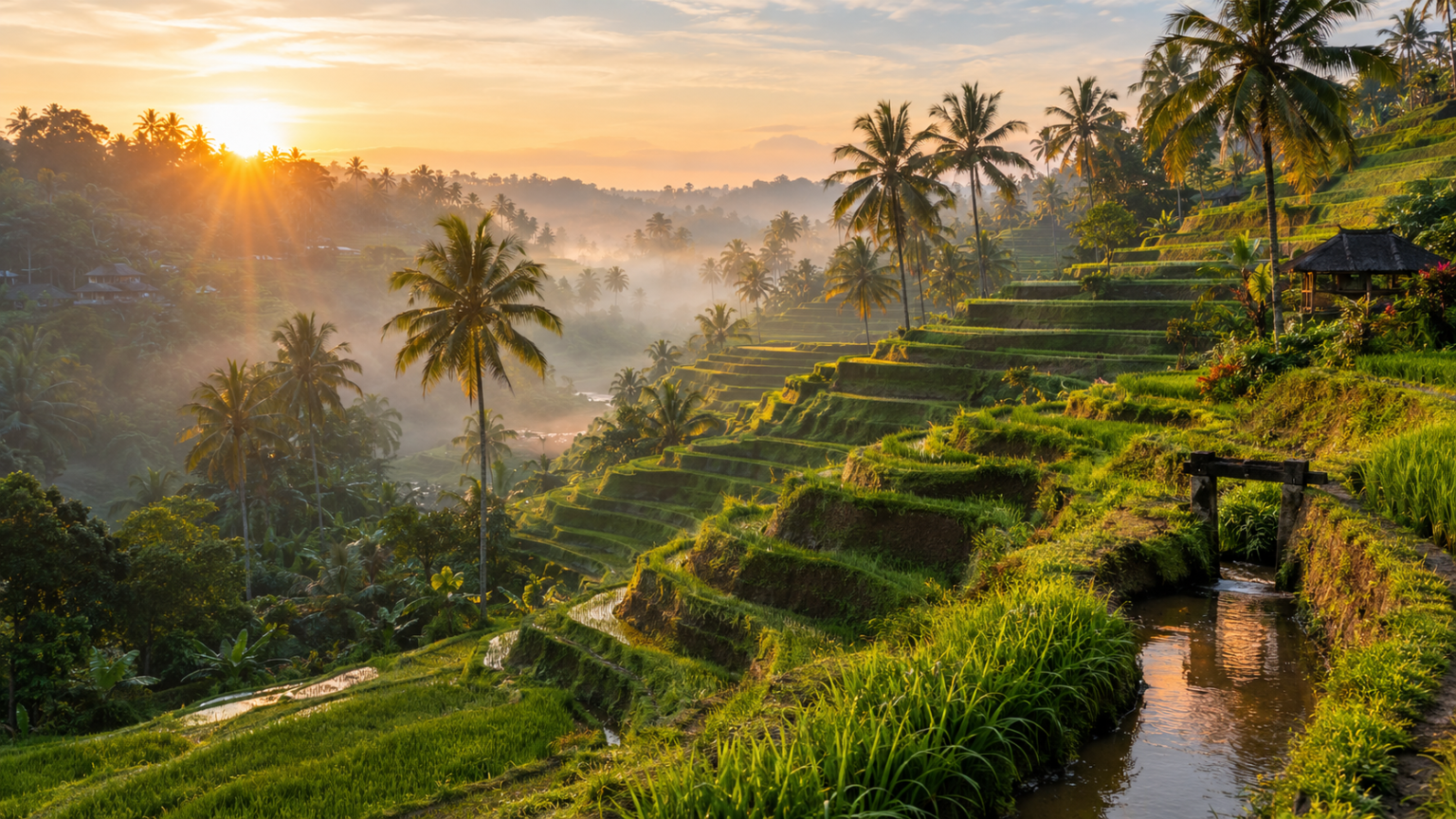
The Tegallalang Rice Terraces lie nine kilometers north of the town center. Green stepped paddies drop down steep valley walls beside tall palm trees. This Ubud travel guide recommends reaching the rim by half past six. Early morning brings soft golden light.
Village entry tickets cost twenty-five thousand rupiah at roadside kiosks. Stone stairs lead down into the deep river canyon below. Then, dirt footpaths climb the far ridge through wet rice plots. Therefore, wear good walking shoes for muddy slopes.
Local farmers build small wood bridges across the farm ditches. When crossing farm land, small cash gifts of five thousand rupiah show goodwill. In fact, farmers work hard to tend rice seedlings. Morning mist lifts slowly off the palm fronds.
Hiking the Green Terraces and Sunrise Viewpoints
Small wooden pavilions stand along the ridge trail for resting. In fact, local cafes sell fresh coconut water and Balinese black coffee. Photographers get the best pictures from the upper western ridge. Morning shadows highlight the curved green terrace walls.
Understanding Traditional Subak Water Management
The stepped fields use the ancient subak water system from the ninth century. Like the old canals seen on an Ayutthaya temple tour, subak channels share river water fairly. In addition, water temple rites guide planting times. This cooperative work preserves village farms.
Royal Heritage and Architecture at Puri Saren Agung
Ubud Palace stands right at the main town road crossing. Built in the early nineteenth century, it houses the local royal family. In this Ubud travel guide, we note that daytime palace yard entry is free. Gates remain open daily until seven at night.
The grand central stone gate displays fierce carved demon faces. In fact, these stone masks guard the inner home from dark spirits. Open pavilions show carved teak wood pillars painted in bright gold. Visitors can walk the outer yards at their own pace.
Palace Courtyards and Traditional Legong Dance
Each night at half past seven, dancers perform classical Legong shows on stage. Like dances celebrated during a Songkran water festival, Balinese temple dances share deep epic tales. Show tickets cost one hundred thousand rupiah at the gate. Come early to get good seats.
Musicians play bronze gongs and bamboo flutes in the gamelan band. In fact, fast drum rhythms guide the dancers’ swift eye movements. Gilded cloth costumes shimmer under warm courtyard lanterns. The nightly show lasts about seventy-five minutes.
Lotus Ponds and Stone Carvings at Pura Taman Saraswati
Pura Taman Saraswati honors the Hindu goddess of learning and fine arts. Master artist I Gusti Nyoman Lempad planned the temple in nineteen fifty-one. In fact, a wide brick path cuts straight across twin ponds. Pink lotus flowers bloom across the water surface.
Walking the outer lotus pond path is free for all travelers. However, entering the inner yard costs thirty-five thousand rupiah with a sash. Like rules in our temples in Bangkok guide, guests must cover knees. Quiet manners help preserve temple peace.
Intricate sandstone relief carvings line the central temple gate. In fact, carved images show Dewi Saraswati holding holy books and palm leaves. On Tuesday and Thursday evenings, dancers perform upon the open water stage. Lotus blooms frame the nighttime lights.

Scenic Walking Trails on the Campuhan Ridge Walk
The Campuhan Ridge Walk offers the town’s most popular scenic trail. The stone path follows a green hill crest between two rushing rivers. This Ubud travel guide advises starting your walk before eight in the morning. Indeed, the open path offers zero tree shade.
The trail begins by the Warwick Ibah entrance road on the main highway. Walk down the paved ramp and pass the old Gunung Lebah temple. Then, the stone trail climbs up onto the grassy ridge. In addition, cool morning breezes refresh tired walkers.
The one-way hike spans two kilometers to Bangkiang Sidem village. Small family cafes at the trail end serve fresh fruit juice and coffee. Afterward, walkers can return along the same ridge path. The gentle walk takes under one hour each way.
Tall elephant grass borders both sides of the paved ridge path. In fact, wide views look down into the Cerik and Wos river valleys. Early morning skies often show the distant cone of Mount Agung. Remember to carry a water bottle along the trail.
Ancient Relics at the Goa Gajah Elephant Cave
Goa Gajah, or Elephant Cave, sits five kilometers east in Bedulu village. The ancient site dates back to the eleventh century. In fact, both Hindu and Buddhist monks meditated inside its dark rock rooms. Stone niches held oil lamps and holy statues.
The cave entrance shows a giant carved monster face with a wide open mouth. You step right through the mouth into a cool stone hallway. In addition, old stone pools outside feature waterspouts held by stone nymphs. Clean spring water fills the stone basins.
Entry tickets cost fifty thousand rupiah and include a purple waist sash. Below the pools, a stone path drops into a green river ravine. Old fallen rock carvings rest beside the stream bed. In particular, this quiet valley stays cool all day.
Archaeologists uncovered giant broken Buddhist stupas along the lower river bank. In fact, ancient hermits carved these rock cells directly into sandstone cliffs. Shaded jungle trees now wrap roots around the crumbling relics. The river trail provides a peaceful walk.
Central Bali River Ravines and Forest Waterfalls
Central Bali valleys conceal fresh mountain streams and scenic water drops. Tegenungan Waterfall drops fifteen meters into a wide river basin south of town. Entry costs twenty thousand rupiah at the village gate. Concrete stairs lead down the cliff in ten minutes.
However, visit before nine in the morning to avoid large tour bus groups. Strong currents run near the waterfall base after heavy rains. Therefore, stay within marked safety ropes when wading. Nearby, Tibumana Waterfall offers a calmer swimming pool.
Tibumana Waterfall falls in a straight sheet into a deep forest pool. In fact, entry costs twenty thousand rupiah and features an easy bamboo walk. In addition, Kanto Lampo Waterfall lets guests wade over stepped black rocks. Both spots reward early morning visits.
Getting to Ubud: Airport Transfers and Local Transport
Ngurah Rai Airport lies thirty-seven kilometers southwest of Ubud town. Official prepaid taxi desks at the terminal charge about twenty-five dollars. This Ubud travel guide recommends booking rides before landing. The highway drive takes ninety minutes in light traffic.
Hiring a private car with driver costs forty dollars for a full day. In addition, local shops rent small motorbikes for five dollars daily. Furthermore, you can book Sanur to Nusa Penida fast boat tickets for day trips to nearby islands.
Foreign visitors can check entry visas on the Wonderful Indonesia official portal. Most tourists obtain thirty-day visas on arrival at the airport. In fact, keep your passport safe in your hotel room box. Safe travel habits ensure a pleasant stay.
Where to Stay: Neighborhood Bases and Forest Lodges
Choosing a good neighborhood shapes your holiday pace in central Bali. Jalan Monkey Forest offers walking access to cafes, shops, and dance shows. In this Ubud travel guide, we also praise quiet Penestanan village. Narrow walking lanes wind past rice farms and artist homes.
Nyuh Kuning village south of the monkey forest features calm family homestays. You can reserve verified Ubud central guesthouses and eco-villas online. In fact, booking rooms four weeks ahead secures top rates. Many small inns include cooked banana pancakes.
Daily Travel Costs and Budget Breakdown
Central Bali remains quite cheap for budget hikers and mid-range couples. Solo backpackers spend thirty to forty dollars a day for meals and beds. In contrast, couples in private pool villas spend eighty to one hundred dollars. Local warungs serve tasty fried rice for two dollars.
| Expense Category | Budget Backpacker (IDR / USD) | Mid-Range Explorer (IDR / USD) | Luxury Comfort (IDR / USD)
|
|---|---|---|---|
| Accommodation (per night) | IDR 180,000–250,000 (11.60–16.10 USD) Dorm or simple fan homestay | IDR 600,000–1,100,000 (38.70–71.00 USD) Boutique hotel or private pool room | IDR 2,800,000–6,500,000 (180–420 USD) Five-star jungle resort villa |
| Daily Meals & Drinks | IDR 100,000–140,000 (6.45–9.00 USD) Local warung nasi campur & tea | IDR 300,000–450,000 (19.35–29.00 USD) Garden cafes & fresh juice bars | IDR 900,000–1,600,000 (58.00–103 USD) Fine dining & organic tasting menus |
| Local Transportation | IDR 75,000 ($4.85 USD) Daily scooter hire & fuel | IDR 250,000–350,000 (16.10–22.50 USD) Shared tours or Grab rides | IDR 650,000–850,000 (42.00–55.00 USD) Private air-conditioned car & driver |
| Attraction Entry Tickets | IDR 105,000 ($6.75 USD) Monkey Forest & Tegallalang | IDR 240,000 ($15.50 USD) Temples, waterfalls & Legong show | IDR 650,000 ($42.00 USD) VIP palace seats & private guides |
| Estimated Daily Total | IDR 460,000–570,000 (29.65–36.70 USD) | IDR 1,390,000–2,140,000 (89.65–138.00 USD) | IDR 5,000,000–9,600,000 (322–620 USD) |
Prices checked on 14 October 2026. Local currency conversions calculated at 1 USD = 15,500 IDR.
Complete 3-Day Ubud Cultural and Nature Itinerary
This three-day plan balances temple visits with scenic walks and green valleys. In addition, early morning starts beat the tropical noon heat and tour crowds. You can hire a driver for day trips or ride a scooter. The schedule keeps travel times short.
| Day & Focus | Morning Schedule | Afternoon Schedule | Evening Experience | Practical Transit Note
|
|---|---|---|---|---|
| Day 1: Town Heritage & Sacred Monkeys | 09:00 AM walk through the Sacred Monkey Forest Sanctuary before midday heat. | Visit Pura Taman Saraswati lotus ponds and browse Ubud Art Market stalls. | 19:30 PM classical Legong dance performance inside Puri Saren Agung courtyard. | Entire day is easily walkable on foot along Monkey Forest and Raya Ubud roads. |
| Day 2: Rice Terraces & Waterfalls | 06:30 AM sunrise hike across Tegallalang Rice Terraces and subak canals. | Explore Goa Gajah Elephant Cave and swim at Tibumana forest waterfall. | Sunset dinner overlooking organic rice paddies in tranquil Penestanan village. | Hire a private driver (IDR 600,000) or ride an automatic scooter north. |
| Day 3: Scenic Ridge & Artisan Villages | 06:45 AM Campuhan Ridge Walk to Bangkiang Sidem village for morning coffee. | Visit woodcarving workshops in Mas village and silver studios in Celuk. | Traditional Balinese herbal massage followed by warung dinner in Nyuh Kuning. | Campuhan trail starts near Warwick Ibah; use local taxis for craft villages. |
Practical Etiquette, Temple Dress Codes, and Safety
Balinese Hindu shrines follow strict modesty codes that all guests must honor. Both men and women must wear a waist sash and knee-length sarong. The Bali Tourism Board official registry lists visitor guidelines. Never step on small woven flower baskets left on footpaths.
Frequently Asked Questions About Ubud
How many days do you need in Ubud?
Three to four days is ideal to see temples, rice terraces, and river walks. This timeframe lets you enjoy evening dances without rushing. In fact, you can take day trips into central hills with ease.
Is Ubud safe for solo travelers?
Yes, the town is very safe with friendly locals and low crime rates. However, hold your bag tight near forest monkeys. In addition, ride scooters slowly on narrow village roads after dark.
Do you need an International Driving Permit in Bali?
Yes, Indonesian law requires a valid International Driving Permit to ride a scooter legally. Police check permits at roadside posts. Therefore, carry your home license and permit while riding.
What is the best way to get around town?
Central streets are easy to walk, but hills can tire your feet. Renting a scooter or hiring a car with driver works best for day trips. In fact, private drivers cost under forty dollars daily.
Why read this Ubud travel guide before your trip?
This verified Ubud travel guide provides real prices, opening times, and transport tips. For example, you learn how to avoid common tourist fees. Honest guidance helps you explore Bali with total peace of mind.
Please travel responsibly by respecting sacred Balinese ceremonies, avoiding single-use plastics, and supporting local artisan cooperatives.


