

Bali marks the Hindu Saka New Year with deep island peace. In fact, sacred rites run from March 6 to March 9 in 2027. Nyepi Day of Silence runs from dawn on March 8 to dawn on March 9.
This practical Bali Nyepi Day of Silence guide shares clear advice for your journey. For example, guests learn flight bans, giant monster paths, and hotel rules. You will see sea rites, torch walks, and bright star skies with ease.
Confirmed 2027 Dates and the Sacred Saka Calendar
The festival tracks the Balinese Saka moon year of 1949. In 2027, beach sea rites start on March 6. This trusted Bali Nyepi Day of Silence guide follows each sacred step across nearby towns. Morning rites begin early along sunny coast sands.
Melasti sea wash rites run from March 6 through March 7. Meanwhile, monster effigy walks rock town roads on March 8. The complete Day of Silence starts at six on March 8. Finally, normal island life restarts on March 9.
The main airport shuts down for twenty-four hours during Nyepi. Therefore, travelers must land in Bali well before dusk on March 7. Sea boats stop running between small islands. Good plans ensure you reach your hotel bed without delay.
Melasti Beach Cleansing Rituals Across Coastal Shores
Melasti marks the washing of temple relics in cold sea water. Thousands of Hindu villagers dress in white clothes and walk to coast sands. In fact, long lines carry carved wooden shrines from hill shrines. Bronze gamelan bells chime softly in time.
The main beach rites fill Sanur sands, Kuta beach, and south coves. However, small coast roads pack with walking crowds by noon. For this reason, smart photographers pick polite beach spots early. Keep a safe gap from praying village priests.
Priests sprinkle blessed holy water over bowed village heads on the sand. Devotees offer flower plates to the sea to wash away spiritual dirt. In addition, bright cloth flags flap in the fresh sea breeze. The ocean rite brings deep heart peace.

Pengerupukan Eve and Ogoh-Ogoh Demon Parades
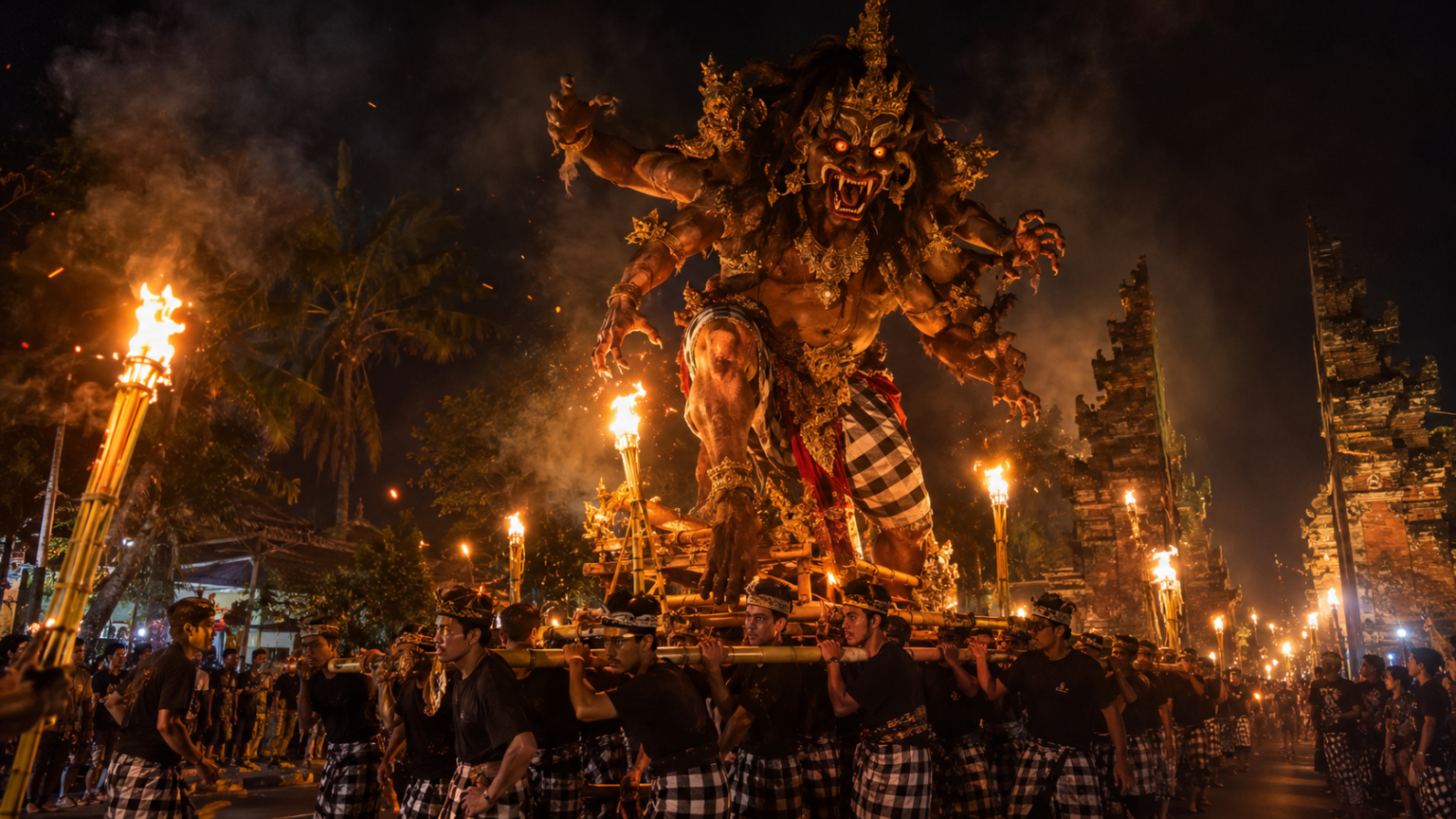
The eve of Nyepi brings loud joy during the Pengerupukan feast. Youth clubs in each village make giant paper monsters called ogoh-ogoh. This detailed Bali Nyepi Day of Silence guide shows top walk spots. Giant monster dolls show big fangs and wild eyes.
Villagers hold heavy wood frames bearing giant monsters on strong shoulders. They spin the statues three times at road crossings to scare bad spirits. In fact, loud bronze gongs and fire torches light the dark air. Crowds roar as monsters dance.
Parades start near seven at night in Denpasar and Ubud town. Therefore, walk to your viewing spot early before cross roads pack tight. Keep your cash safe inside deep inner pockets. Parades end before midnight so streets clear out.
The Four Sacred Rules of Catur Brata Penyepian
Nyepi calls for four strict old rules named Catur Brata Penyepian. First is Amati Geni, which bans all fire, stoves, and room lights. This helpful Bali Nyepi Day of Silence guide explains home rules. Deep quiet covers the whole green island.
Second is Amati Karya, which stops all hard work and shop trades. Third is Amati Lelungan, which bans all walks outside house gates. In fact, streets stay empty from dawn to dawn. Finally, Amati Lelanguan bans loud games and fun.
The quiet spell lasts from six in the morning until next dawn. Mobile phone web service turns off across the island by law. In fact, landline cable web often stays on inside hotel rooms. Guests use the long hours for deep rest.
Traditional Pecalang Village Security Guards on Patrol
Traditional Balinese guards called pecalang watch all village roads. They walk quiet town lanes dressed in black vests and checkered cloth wraps. In fact, pecalang make sure no cars drive and no lamps shine. They guard the peace with firm grace.
Guests must stay inside their hotel grounds through the full day. Stepping onto public lanes or sands brings quick calls from local guards. This comprehensive Bali Nyepi Day of Silence guide urges respect for guards. Polite care honors local sacred ways.
Hotels pull thick drapes across glass doors so light stays inside. In addition, outdoor pool lamps and garden lights stay dark all night. Emergency vans and fire trucks remain the only moving cars. The quiet isle rests in deep dark peace.
Stargazing and Celestial Views Under Pitch-Black Skies
Total island blackout brings great views of starry night skies. Because zero street lamps burn, the Milky Way glows with crisp light. This inspiring Bali Nyepi Day of Silence guide points out porch stargazing. Millions of bright stars shine over dark roofs.
The warm night air feels very clean and fresh without car fumes. You can hear bugs chirp and ocean waves break miles away in the dark. In fact, lack of city smog makes the night sky look close. Sitting outside brings deep calm joy.
Pack a light wrap as night winds feel cool on open stone decks. Step outside onto private patios without turning on indoor room lamps. Indeed, quiet hours give rare mental room away from phone screens. The dark night leaves rich memories.
Ngembak Geni and the Omed-Omedan Kissing Rite
The day after Nyepi is named Ngembak Geni, meaning to relight fire. Balinese clans visit kin to ask for sweet peace and share meals. In fact, glad smiles take the place of quiet as shrine gates open. Warm village love fills every family home.
In Sesetan village in South Denpasar, youth hold the Omed-Omedan rite. Young men and women pull, hug, and kiss while elders pour cold water. In fact, this merry tug-of-war game builds strong social ties. Cheerful crowds laugh as water flies on the road.
Guests must dress politely in long cloth wraps to watch the street rite. Keep camera lens tops safe from flying water pots. In addition, buy fresh tropical fruit from small street carts. Ngembak Geni marks new life and warm community joy.
Sacred Banyan Shrines, Rice Terraces, and Village Arts
Quiet village temples hold special cleaning rites in the week before Nyepi. Devotees scrub stone shrines and hang yellow cloths over sacred altars. Travelers often compare these old temple arts to Siamese shrines in our Ayutthaya temple tour guide. Carved volcanic stone walls look fresh and clean.
Women weave fresh palm leaf trays named canang sari each morning before silence. They place sweet white frangipani buds and incense on stone shrine gates. In fact, sweet flower scent drifts through quiet garden yards. These small daily gifts honor good spirits of nature.
Artisan workshops in Ubud display hand-carved wood masks of wild beasts. Wood carvers shape fierce Barong lions and sharp-toothed demon faces. Visitors who love ancient temple craft also enjoy shrines shown in our temples in Bangkok guide. Master carvers tell rich tales of good and evil.
Balinese New Year rites differ from wet water play in Thailand. While neighbors toss water during festivals in our Songkran Thai New Year guide, Bali keeps deep quiet. In fact, both holidays mark clean spiritual starts. Sacred renewal guides each joyful spring festival.
Rural rice terraces in Jatiluwih and Sidemen stand quiet on the holy day. Without cars or motorbikes, water runs softly through old stone farm streams. In fact, white birds hunt peacefully among tall green stalks. The green countryside rests in pure natural peace.
Local banjar village halls keep finished demon effigies before the parade night. Children gather to view bright paper teeth and long demon claws. In addition, older boys practice fast beats on bronze gongs. Village pride shines through every handmade doll.
Sacred fig trees in village squares receive woven black-and-white cloth wraps. Priests tie holy threads around massive tree roots to guard the town. In fact, sweet incense smoke drifts into high green leaves. Old trees stand as timeless cultural guards.
Getting to Bali: Flights, Airport Shutdown, and Transfers
Overseas planes land at I Gusti Ngurah Rai Airport near Denpasar daily. In fact, the official Wonderful Indonesia tourism portal shares yearly holiday notes. Note that the airport shuts down fully for twenty-four hours on Nyepi. Land two days early to rest with ease.
Fast boats connect Sanur port to nearby islands before holiday stops begin. Alternatively, book your ferry and ride transfers online through 12Go transit booking before boat seats sell out. Private airport cabs take forty minutes to reach central Sanur hotels. Cars cost fifteen to twenty dollars.
Where to Stay: Peaceful Resort Bases and Cultural Enclaves
Ubud offers rich cultural depth near artisan craft shops and parade roads. Coast resorts in Sanur provide wide green gardens and calm shore grounds. In fact, full-service hotels serve hot meals and quiet fun during Day of Silence. Book rooms many months ahead.
Picking a hotel with on-site food is key since outside food stalls close. For example, find verified garden villas on Booking.com Ubud hotels before peak dates fill up. Staying in full-service resorts guarantees hot meals and comfort all day.
Daily Travel Costs and Realistic Vacation Budget Breakdown
Budget travelers spend thirty to fifty dollars per day on guest homes. Mid-range visitors budget eighty to one hundred fifty dollars for garden villas. In fact, resort food plans cost twenty to thirty dollars. Temple rites stay completely free.
| Expense Category | Budget Traveler (IDR / USD) | Mid-Range Traveler (IDR / USD) | Comfort / Luxury Villa (IDR / USD)
|
|---|---|---|---|
| Resort / Villa (Per Night) | Rp 450,000 – Rp 800,000 ($28 – $50) | Rp 1,300,000 – Rp 2,500,000 ($81 – $156) | Rp 3,500,000 – Rp 7,000,000 ($218 – $438) |
| Nyepi Meal Packages & Snacks | Rp 250,000 – Rp 400,000 ($16 – $25) | Rp 500,000 – Rp 900,000 ($31 – $56) | Rp 1,200,000 – Rp 2,200,000 ($75 – $138) |
| Airport & Fast Boat Transfers | Rp 200,000 – Rp 350,000 ($12 – $22) | Rp 400,000 – Rp 750,000 ($25 – $47) | Rp 900,000 – Rp 1,600,000 ($56 – $100) |
| Cultural Offerings & Donations | Rp 50,000 – Rp 100,000 ($3 – $6) | Rp 150,000 – Rp 300,000 ($9 – $19) | Rp 400,000 – Rp 800,000 ($25 – $50) |
| Daily Estimated Total | Rp 950,000 – Rp 1,650,000 ($59 – $103) | Rp 2,350,000 – Rp 4,450,000 ($146 – $278) | Rp 6,000,000 – Rp 11,600,000 ($374 – $726) |
Prices checked on 13 October 2026. Conversion rate: 1 USD ≈ 16,000 IDR.
Complete Four-Day Bali Nyepi Festival Itinerary
| Day / Date | Primary Cultural Center | Ritual Event & Main Focus | Recommended Vantage Point & Traveler Advice
|
|---|---|---|---|
| Day 1 (March 6, 2027) | Sanur Beach & Kuta Shore | Melasti holy sea cleansing processions | Arrive on Sanur sands by 8:00 AM; wear white shirts and observe from coastal walkways. |
| Day 2 (March 8, 2027 – Eve) | Ubud & Denpasar Crossroads | Pengerupukan and Ogoh-Ogoh demon parades | Position yourself along Ubud Main Road by 6:30 PM; watch crossroads statue spins before 11:00 PM. |
| Day 3 (March 8–9, 2027) | Resort Grounds & Private Patios | Nyepi 24-hour complete Day of Silence | Remain strictly inside hotel gates; draw heavy window drapes and stargaze from private balconies. |
| Day 4 (March 9, 2027) | Sesetan Village, South Denpasar | Ngembak Geni and Omed-Omedan water rite | Head to Banjar Kaja Sesetan by 2:00 PM; wear Balinese sarongs and shield cameras from splashing water. |
Essential Nyepi Etiquette, Food Prep, and Survival Rules
Stock up on snacks, fresh water, and pills the day before Nyepi starts. In fact, the official Bali Government Tourism Office posts safety tips for foreign guests. This Bali Nyepi Day of Silence guide asks all visitors to honor island ways. Keep all room sounds low.
Download films and books before mobile web shuts off for the day. Keep room drapes tightly shut when turning on small bedside reading lamps at night. In addition, do not play loud music or call from room decks. Polite ways honor local hosts.
Keep front desk phone lines ready in case you need quick medical care. Pack light cotton shirts and soft shoes for walking along parade paths. Furthermore, buy travel medical insurance before flying out to Indonesia. This Bali Nyepi Day of Silence guide ensures a calm trip.
Frequently Asked Questions About Bali Nyepi
Can tourists leave their hotel during Nyepi?
Tourists cannot leave their hotel grounds under any cause during the twenty-four hours. This Bali Nyepi Day of Silence guide notes that public roads stay completely closed. Pecalang security guards patrol lanes to enforce rules.
Does the airport close during the Day of Silence?
Yes, Bali’s international airport closes fully for twenty-four hours during Nyepi Day. No commercial planes take off or land between dawn and next dawn. Book your flights outside this holiday time.
Does internet and mobile phone data work on Nyepi?
Mobile phone data and digital TV shows shut down island-wide by state rule. However, landline Wi-Fi in many private hotels and villas keeps on working. Prepare offline books and music just in case.
Where can I watch the Ogoh-Ogoh parade?
You can watch grand ogoh-ogoh parades along major cross roads in Ubud and Denpasar. Arrive at central road spots by six in the evening on parade eve. Stand politely along shop porches to view the show.
Are hotel restaurants and pools open during Nyepi?
Most large hotels and resorts keep indoor dining rooms and pools open for guests. However, outdoor lamps stay dark and music stays turned off. Check food plans with your front desk on check-in day.
Travel with true kindness and honor sacred traditions. Leave every quiet lane clean for the local community.


