

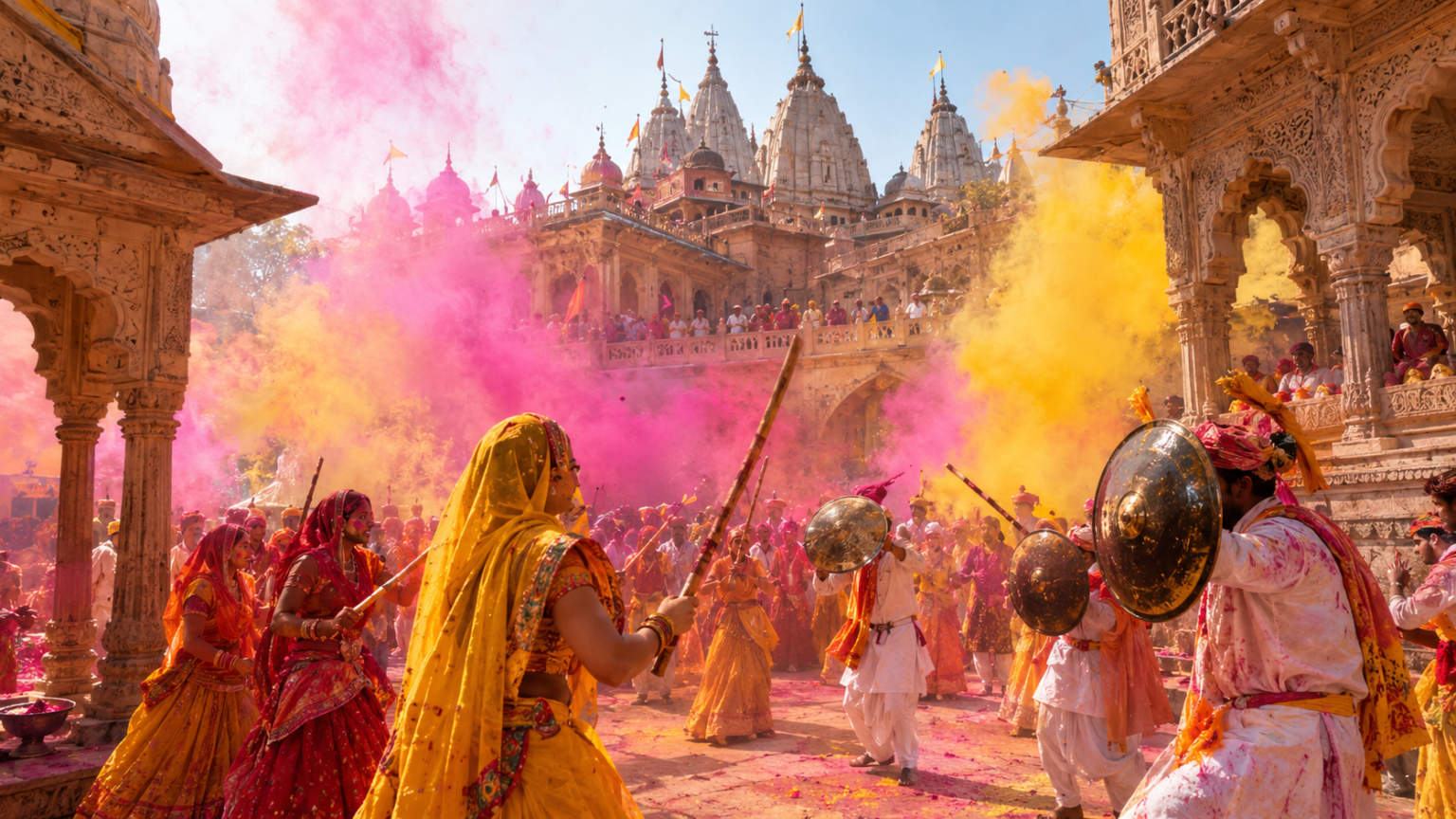
Braj hosts the spring Hindu festival of Holi over eight days. In fact, holy rites run from March 15 to March 23 in 2027. Pilgrims gather at ancient shrines in Mathura, Vrindavan, Barsana, and Nandgaon. The towns honor Radha and Krishna with bright colors.
This practical Mathura Vrindavan Holi guide shares clear facts for your trip. For example, visitors learn sacred customs, train routes, and safe viewing spots. You will see flower showers, wooden shield battles, and river bonfires. Good planning keeps your trip safe and joyful.
Confirmed 2027 Dates and the Eight-Day Braj Calendar
The festival follows the Hindu month of Phalguna each spring. In 2027, Barsana starts rituals with laddu sweets on March 15. This trusted Mathura Vrindavan Holi guide tracks each event across nearby towns. Morning rites begin early before the hot sun rises high.
Lathmar stick rites run in Barsana and Nandgaon on March 16 and 17. Meanwhile, Vrindavan temples fill with yellow flower petals on March 19. Holika Dahan fires burn on March 21. Finally, wet color play peaks in Mathura on March 22.
Braj towns sit twenty to forty kilometers apart on flat plains. Therefore, booking an e-rickshaw saves key morning hours. Temple doors open at dawn and close by noon for sacred rest. Evening prayers start again around four o’clock as temple bells ring.
Lathmar Holi in Barsana and Nandgaon
Barsana reenacts old tales of Radha driving Krishna off with sticks. Village women swing long bamboo poles while men hold shields aloft. In fact, loud drums beat through stone lanes as crowds cheer. Bright pink dry powder flies thick over smiling village faces.
The main mock fights pack the steep steps of Radha Rani Temple. However, huge crowds crowd the stone lanes before noon. For this reason, smart photographers rent upper balcony spots early in the day. Keep your back to thick stone walls for safety.
The next day, Barsana men walk to Nandgaon for return stick games. Village yards echo with sweet songs and loud clapping. In addition, women pour warm orange water from painted brass pots. These friendly contests show deep faith and strong village ties.
Phoolon Wali Holi at Banke Bihari Temple
Vrindavan plays with fresh flower blossoms instead of dry dust. Priests at Banke Bihari Temple toss marigold and rose petals over worshippers. In fact, sweet floral perfume fills the air as silver bells sound. Pilgrims lift both hands up to catch blessed blooms.
The flower rite lasts just twenty minutes during morning puja prayers. Therefore, enter the temple yard well before priest curtains pull back. Heavy crowds surge forward toward the gold shrine gates. Keep both feet flat and move slowly with the human crowd.
Monkeys often snatch glasses and bags from visitors near temple gates. For this reason, leave your glasses and bags inside your hotel room. Tuck phones inside deep pockets beneath plain white shirts. Travel light so you walk through lanes without fear.

Widow Holi at Gopinath Temple
Old Gopinath Temple holds a moving service for elderly Hindu widows. Long ago, harsh social rules banned widows from playing with colors. But modern reforms invite hundreds of older women to throw yellow gulal. This caring Mathura Vrindavan Holi guide honors their new joy.
Yellow flower leis cover gray stone flags in sunny designs. In fact, photographers compare this quiet grace to peaceful temple stops at the Pushkar Camel Fair. Smiling women dance gently to ancient drum songs. The moving scene creates lasting memories for polite visitors.
Guests must stay quiet and polite during temple widow prayers. Do not toss wet dyes or yell in holy yards. In fact, priests ask all visitors to offer dry petals with both hands. Kind actions honor these brave older women.
Holika Dahan Bonfires at Vishram Ghat
On full moon eve, Mathura lights tall Holika Dahan bonfires. Worshippers pray beside the holy Yamuna River at Vishram Ghat. In this Mathura Vrindavan Holi guide, we suggest seeing river rites from wooden boats. Bright orange fire reflects across the dark river water.
The sacred bonfire marks the defeat of the evil demon Holika. Priests chant holy hymns as families walk around crackling wood piles. In addition, women place fresh grain and sweet sugar drops in the flames. The river bank feels very calm and deeply holy.
Evening leaf boats carrying oil wicks drift down the calm Yamuna. Priests wave tall brass fire lamps as conch horns call out. In fact, cool river breezes feel fresh after warm street walks. You can hire small rowing boats for modest fees.

Rangwali Holi Wet Revelry Across Mathura
The main day of color brings wild fun to town streets. Crowds stream past Holi Gate and gather near Dwarkadhish Temple. In fact, local boys spray water dyed with orange palash flower juice. This dynamic Mathura Vrindavan Holi guide helps you avoid rowdy spots.
Morning hours between nine and noon see the most intense color play. Therefore, women traveling on their own should join guided family groups. Stay away from loud street corners where youths ride fast motorbikes. Stick to temple gates where local police officers stand watch.
Street play stops promptly by two o’clock in the afternoon. Lanes empty fast as local families walk home to bathe and rest. In fact, shops pull down metal doors until evening prayers start. Peaceful silence returns to historic stone paths by late afternoon.
Dauji Huranga Grand Finale at Baldeo Temple
The day after main Holi, Baldeo village holds the Dauji Huranga. This lively rite takes place inside the yard of Dauji Temple. In fact, women tear men’s shirts into cloth ropes to strike back. This Mathura Vrindavan Holi guide explains the wild spectacle.
The wet stone floor becomes a pond of bright yellow water. Roofs and stone decks fill with crowds of cheering village guests. However, wet stone steps get very slick under jumping bare feet. Watch all the fun from upper temple porch rails.
Priests hand out sweet prasad treats to pilgrims when rites end. The old custom honors Balarama, the elder brother of Lord Krishna. In fact, local clans celebrate with huge joy until afternoon prayers close. Dauji Huranga finishes the long Braj festival cycle.
Traditional Braj Festive Foods, Gujiya Pastries, and Sweet Milk Drinks
Braj sweet shops fry flaky gujiya pockets stuffed with milk solids and nuts. Stalls also sell crisp kachoris served with spicy potato gravy. In fact, travelers heading north pair these sweets with trips to the Taj Mahal in Agra. Hot snacks give you great fuel for long festival walks.
Cold thandai milk spiced with saffron, nuts, and sweet seeds cools revelers. Some street carts mix green bhang paste into festive milk cups. However, bhang can cause dizzy spells and upset stomachs in foreign guests. Stick to plain sweet lassi or cold fresh milk.
Drink bottled water only and skip ice cubes from roadside pushcarts. In addition, buy fresh fried snacks only from clean bazaar shops with brisk trade. Fresh jalebis fried in pure ghee make safe and tasty snacks. Wholesome food keeps your body strong each day.
Scenic River Crossings and Peaceful Courtyard Sanctuaries
Radha Vallabh Temple in Vrindavan hosts rare vocal prayer hours during festival week. Priests sing ancient Braj poems praising divine love and spring joy. In fact, temple elders toss yellow flower dust over seated pilgrims. Soft flute tunes float into stone lanes.
Village potters in Mathura shape red clay pots for festival colors. Stalls stack small earthenware cups in neat rows along temple paths. In fact, pilgrims buy clay bowls to hold dry herbal powders. These simple clay cups break down into clean soil.
Wooden boats cross the wide Yamuna River between old stone ghats. From the river, you see clouds of color rise above temple spires. Travelers seeking calm mountain retreats can continue onward to Kunjapuri Devi Temple near Rishikesh. River breezes bring deep calm after festival noise.
Kusum Sarovar near Govardhan offers a peaceful stone basin surrounded by sandstone arches. Pilgrims gather beside the still water to wash off festival colors. In fact, golden sunlight warms the quiet stone steps by late afternoon. The water reflects historic domes with lovely grace.
Priests at Radha Damodar Temple perform sweet flower ceremonies for devoted pilgrims. Singing groups chant holy names while playing clay drums and brass cymbals. In addition, temple helpers toss dried rose leaves over visiting families. The sacred atmosphere stays calm and deeply moving.
Narrow bazaar paths near Dwarkadhish Temple host traditional sweet makers each festival morning. Huge iron pans bubble with hot oil as cooks fry sweet gujiya pastries. In fact, friendly shop owners invite pilgrims to taste warm cardamom syrup. The lively scents delight every passerby.
Getting to Mathura: Express Trains, Buses, and Road Access
Fast express trains link New Delhi with Mathura Junction in ninety minutes. In fact, the Shatabdi Express provides clean, fast morning rides. Travelers can check train times on the official Indian Railway Catering and Tourism Corporation site. Book your seats early before festival dates sell out.
Taxis drive from Delhi Airport along the smooth Yamuna Expressway. Alternatively, reserve your seats in advance through 12Go transit booking to secure regional rail seats. Shared rickshaws connect Mathura to Vrindavan every ten minutes. Standard three-wheeler trips cost thirty rupees.
Where to Stay: Peaceful Temple Bases and Central Hotels
Staying in Vrindavan puts you close to flower rites and river ashrams. Quiet guest houses near Raman Reti offer calm rooms away from loud bazaars. In fact, many ashrams serve warm vegetarian meals to staying guests. Rooms book out months before festival week.
Mathura city suits visitors who want quick train links and modern amenities. For example, find verified boutique hotels through Booking.com Mathura hotels before peak dates fill up. Staying near the train station makes day trips to Barsana simple.
Daily Travel Costs and Realistic Festival Budget Breakdown
Budget travelers spend fifteen to twenty-five dollars per day on rooms and food. Mid-range visitors budget fifty to eighty dollars daily for private cars and hotel suites. In fact, tasty street meals cost just two dollars. Temple entry remains free for all.
| Expense Category | Budget Traveler (INR / USD) | Mid-Range Traveler (INR / USD) | Comfort / Private Tour (INR / USD)
|
|---|---|---|---|
| Guesthouse / Hotel (Per Night) | ₹1,200 – ₹2,000 ($14 – $24) | ₹3,500 – ₹6,000 ($42 – $72) | ₹8,000 – ₹15,000 ($96 – $180) |
| Local Meals & Festive Sweets | ₹400 – ₹700 ($5 – $8) | ₹1,000 – ₹1,800 ($12 – $22) | ₹2,500 – ₹4,000 ($30 – $48) |
| Local Transit (Auto / Taxi) | ₹300 – ₹600 ($4 – $7) | ₹1,500 – ₹2,500 ($18 – $30) | ₹3,500 – ₹5,500 ($42 – $66) |
| Herbal Gulal & Temple Flowers | ₹200 – ₹400 ($2 – $5) | ₹500 – ₹1,000 ($6 – $12) | ₹1,200 – ₹2,000 ($14 – $24) |
| Daily Estimated Total | ₹2,100 – ₹3,700 ($25 – $44) | ₹6,500 – ₹11,300 ($78 – $136) | ₹15,200 – ₹26,500 ($182 – $318) |
Prices checked on 12 October 2026. Conversion rate: 1 USD ≈ 83.5 INR.
Complete Four-Day Braj Holi Festival Itinerary
| Day / Date | Primary Sacred Location | Ritual Event & Key Focus | Recommended Vantage Point & Advice
|
|---|---|---|---|
| Day 1 (March 16, 2027) | Radha Rani Temple, Barsana | Barsana Lathmar Holi stick battles | Rent upper residential balconies overlooking temple stairs by 9:00 AM. |
| Day 2 (March 19, 2027) | Banke Bihari Temple, Vrindavan | Phoolon Wali Holi flower petal showers | Arrive inside the inner courtyard by 8:30 AM before curtains open. |
| Day 3 (March 21, 2027) | Vishram Ghat, Mathura | Holika Dahan sacred river bonfires | Hire a wooden river boat along the Yamuna for clear fire reflections. |
| Day 4 (March 22, 2027) | Dwarkadhish Temple, Mathura | Rangwali Holi main color celebration | Stay in central courtyards from 9:00 AM to 1:00 PM; return to hotel by 2:00 PM. |
Essential Safety, Crowd Etiquette, and Photography Protection
Large crowds pack narrow stone alleys during peak temple color play. In fact, the official Uttar Pradesh Tourism Department posts safety guards near main gates. This Mathura Vrindavan Holi guide warns guests against harsh synthetic paints. Natural flower gulal is safe for all skin.
Protect your skin and scalp by rubbing pure coconut oil before going out. Wear cheap white cotton clothes that you can throw away after rites end. In addition, wear clear swim goggles to protect your eyes from dry dust. Carry wet cloths to wipe face spots.
Camera gear needs careful shield wraps against fine dust and water sprays. Wrap camera bodies in plastic rain covers and seal lens edges with tape. Furthermore, keep spare memory cards safe in dry sealed bags. This detailed Mathura Vrindavan Holi guide keeps your camera clean.
Frequently Asked Questions About Braj Holi
When is the best time to visit Mathura and Vrindavan for Holi?
When is the best time to visit Mathura and Vrindavan for Holi? In 2027, the best travel window runs from March 16 to March 23. This Mathura Vrindavan Holi guide advises arriving early for Barsana stick rites. Eight full days let you see all key rituals.
Is it safe for solo female travelers to attend Braj Holi?
Is it safe for solo female travelers to attend Braj Holi? Women traveling solo should take extra care in crowded street spaces. In fact, we advise joining small guided groups or staying within temple yards. Avoid walking down dark village lanes after midday when wet play peaks.
What clothes should I wear for Braj Holi celebrations?
What clothes should I wear for Braj Holi celebrations? Wear loose, inexpensive white cotton shirts with long sleeves and light pants. Light cotton cloth stays cool under the warm spring sun. In addition, wear sturdy old shoes that you can throw out. Discard soiled clothes after play.
Do foreign travelers need permits to enter Braj temples?
Do foreign travelers need permits to enter Braj temples? Foreign visitors do not need special entry permits for shrines in Mathura or Vrindavan. However, non-Hindus cannot enter the inner sanctum at select old temples. In fact, take off your shoes outside gates. Dress politely with covered knees.
How do I clean colored powder from skin and hair?
How do I clean colored powder from skin and hair? Put thick coconut oil on your skin and hair before you walk outside. The oil layer keeps colored dyes from sticking to your skin pores. Afterward, wash with mild herbal soap and warm water. Colors fade away within two days.
Travel with true kindness and honor holy traditions. Leave every temple lane clean for the local community.


