

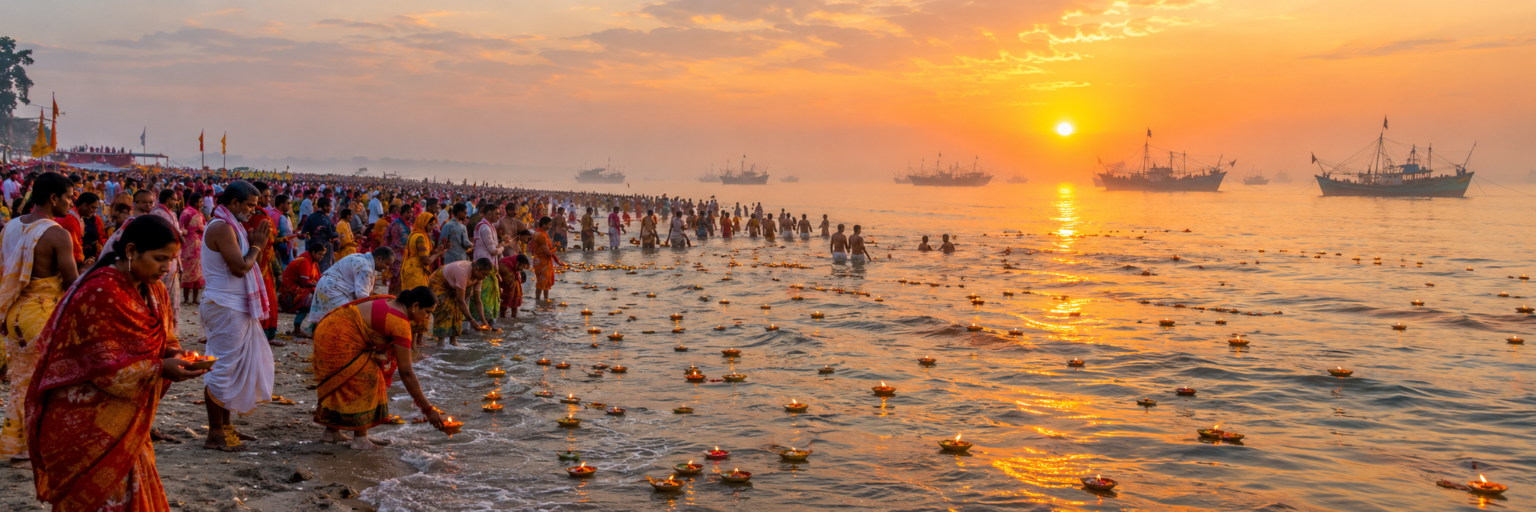
Golden dawn light warms the wild tidal beaches of Dublar Char. Thousands of pilgrims meet along sandy shores. They gather at the southern edge of the Sundarbans. Floating clay oil lamps drift across gentle waves into the Bay of Bengal.
Planning this remote river journey takes clear facts on boat convoys. It also takes clear facts on forest permits and sacred rites. This Dublar Char Rash Mela guide gives practical advice for your journey.
Quick Facts for Dublar Char Rash Mela Visitors
- Island Location: Dublar Char (Alorkol beach), southern Sundarbans, Bay of Bengal coast.
- Confirmed 2026 Dates: November 23 to November 25, 2026.
- Sacred Dawn Bath: Tuesday morning, November 24, 2026, at sunrise.
- Main Ports: Mongla Port and Khulna docks.
- Boat Travel Time: 10 to 14 hours by motor launch down the Pashur River.
- Forest Entry Fee: 150 BDT ($1.22 USD) for local citizens; 1,500 BDT ($12.20 USD) for foreign guests.
Confirmed 2026 Dates for Dublar Char Rash Mela
Matching your trip to lunar dates is vital for this holy island gathering. The fair follows the Hindu lunar calendar during the Kartik Purnima full moon. In 2026, the three-day fair runs from November 23 to 25.
The main holy bath takes place at sunrise on Tuesday, November 24, 2026. Devotees take their sacred sea bath as the bright moon sets.
Late November brings dry days, calm tides, and cool air. In fact, late November ranks among the top places to visit in Bangladesh during winter. Calm seas ensure safe voyages for wooden passenger launches.
Spiritual Origins & History of Dublar Char Rash Mela
Dublar Char Rash Mela holds a rich history spanning over one hundred years. The annual gathering began in 1923 on this wild coastal island.
A revered hermit named Haribhajan Sadhu started the fair. He was an early follower of Thakur Harichand. In those days, seasonal fishers built simple winter camps. They dried fish on the open sands of Dublar Char. Haribhajan Sadhu organized small prayer groups and Radha-Krishna worship among these hard-working fishers.
Over the decades, this small camp custom grew into a massive annual pilgrimage. Today, the Rash Purnima Puja Celebration Committee runs the fair alongside forest rangers.
Thousands of devotees sail across wide rivers. They pray for peace, health, and family welfare. In addition, local fishers pray for divine safety. They seek protection against dangerous sea storms and wild tigers.
Following this Dublar Char Rash Mela guide helps you understand the deep faith behind each island rite.
Core Sacred Rituals and the Dawn Holy Bath
The fair unites deep spiritual faith with the raw beauty of coastal tides. This Dublar Char Rash Mela guide details the core sacred rites held at Alorkol beach.
1. Arrival and Evening Radha-Krishna Puja at Alorkol
Pilgrim launches drop anchor off Alorkol on the afternoon of November 23. Devotees walk across wooden planks to reach the sandy shore.
Local craftspeople build colorful temporary shrines out of bamboo and palm thatch. Inside the main temple tent, priests lead evening arati prayers. They chant before idols of Lord Krishna and Radha. Sweet brass bells and conch shells ring across the sand. Darkness settles slowly over the sea.
Devotees sit on woven straw mats to chant holy names. The sound of evening hymns floats softly over the dark water.
2. Punya Snan: The Sacred Dawn Sea-Bath in the Bay of Bengal
The most sacred rite begins before dawn on Tuesday, November 24, 2026. Thousands of pilgrims walk quietly to the water while stars still shine.
As the red sun rises over the horizon, bathers step into the sea. The cool salt water cleanses them. This holy bath is called Punya Snan. It washes away bad karma. Devotees dip three times. They recite sacred prayers in the cool surf.
Holy water washes away past sins. The rites resemble water ceremonies at Durga Puja pandals in Dhaka.
3. Floating Earthen Pradips in the Coastal Waves
At sunrise, pilgrims release small handmade clay oil lamps onto the sea. These burning lamps are called pradips. They float beside orange marigold blossoms and fresh fruit.
Devotees whisper silent prayers for departed ancestors and family blessings. Thousands of tiny gold flames drift across rolling waves. It creates an unforgettable sight.
The morning sea breeze carries the sweet scent of burning mustard oil. As the tide turns, glowing lamps form golden ribbons across the blue bay.

4. The Dublar Char Island Fair and Folk Kirtan
After morning prayers, guests explore the lively temporary fairground at Alorkol. Folk singers play wooden string lutes. They sing sweet kirtan hymns under palm roofs.
Rustic stalls sell clay toys and wooden flutes. They also sell brass prayer bells. Sweet shops fry hot spiral jalebis. They sell crunchy sugar treats on the sand.
Pilgrims share warm smiles. The shared dawn bath creates a deep bond among all guests.
5. Evening Harinam Sankirtan and Chanting Circles
As twilight deepens, devotees gather in circular chanting groups outside the temple tent. Musicians play rhythm on clay drums and brass cymbals.
Devotees dance with arms raised toward the rising full moon. They sing the sacred names of Radha and Krishna. The collective singing fills the coastal night with joyful energy. In fact, the hymns echo far across the calm waves of the Bay of Bengal.
Coastal Landscapes and Island Sights on Dublar Char
Beyond the prayer tents, Dublar Char offers rare natural sights. It borders the wild southern sea.
Following this Dublar Char Rash Mela guide reveals the wild charm of this remote delta island.
Alorkol Beach and the Southern Tidal Mudflats
Alorkol forms the central gathering point. Wide sand flats stretch along the open sea.
At low tide, the sea pulls back. Vast sandy mudflats appear. Thousands of red fiddler crabs scuttle across the wet mud. Flocks of coastal birds feed along the water margin.
Walking along the hard sand at dawn offers dramatic views. The vast Bay of Bengal opens wide. Salty sea mist rolls across the dunes. It creates a dreamlike coastal scene.
The Old Shutki Fishing Camps
Dublar Char is the nation’s top dried fish camp. Over twenty thousand fishers live here in winter thatch huts.
Tall bamboo drying racks are called chatal. They cover open sand flats. Fishers catch marine fish in tidal nets. Then they dry them on high racks.
Guests can walk past the drying yards. Crews sort silver pomfret, ribbonfish, and tiger shrimp. The scene offers a rare glimpse into local coastal life.
Fishers work in rhythm with the sun. They turn salted fish by hand all day.
Meher Ali Char and Surrounding Sand Islands
Several smaller sand islands sit nearby. These include Meher Ali Char and Majher Char. These low sandbanks shift shape with every tide.
During the fair, small motorboats cross the water. They carry guests between coastal sandbanks. Mangrove ferns grow on low dunes. They anchor the sandy soil against ocean waves.
Walking along these sandbanks feels like standing at the edge of the earth. Gentle waves lap against wild mudflats.
Coastal Wildlife and Mangrove Forests Around the Camp
Dense mangrove woods border Dublar Char. Wild spotted deer walk out of sundari groves at dawn. They graze peacefully on shore grasses.
Rhesus macaques sit atop wooden posts. They watch passing boats glide by. Forest rangers carry rifles on patrol. Wild Bengal tigers cross tidal creeks between islands at night.
Bird watchers can spot white-bellied sea eagles in flight. Kingfishers dive for small fish along creek banks.
The Sand Dune Trails and Fisher Shrines
Winding sand trails cross the central dunes. Small clay shrines sit along the path. They honor goddess Ganga and forest mother Bonbibi.
Fishers light small clay lamps each morning. They pray before sailing out to sea. These humble shrines show deep faith. Fishers face great ocean dangers with prayer.
Sunset over the Bay of Bengal from Alorkol Ridge
In the late afternoon, travelers climb the sand ridge behind Alorkol beach. The setting sun paints the sky in rich shades of red and gold.
Dozens of wooden boats rest at anchor in the quiet bay. Their tall wooden masts stand out against the glowing sky.
The Mangrove Creek Dinghy Safaris
At high tide, small wooden rowboats navigate narrow mangrove creeks branching off Dublar Char. Tangled stilt roots of sundari and gewa trees form archways over the brackish water.
Fiddler crabs and mudskippers crawl along the exposed mud shelves. Kingfishers dive for small silver fry, while spotted deer watch quietly from the riverbank. This silent boat safari offers an intimate encounter with the virgin mangrove wilderness.
The Coastal Mudbank Walks and Mangrove Creek Crossings
At low water, wide mud banks emerge along the tidal channels. Guests can walk along firm sand ridges with experienced forest guides.
The muddy creek banks display countless breathing roots, called pneumatophores. They rise like wooden pencils from the silt.
Small schools of mudskippers leap across the tidal mud. They use their strong fins to walk on land. Fiddler crabs wave their bright red claws in bold displays. This coastal ecology shows how the mangrove forest constantly builds new land from river silt.
Mangrove Waterways and River Sights en Route from Mongla
The boat voyage to Dublar Char forms a top highlight. Passenger launches cruise south through the grand mangrove forest.
This Dublar Char Rash Mela guide details the top river sights along the journey.
Cruising the Wide Pashur and Shibsha Rivers
Boats travel down the broad Pashur and Shibsha rivers. Dense green sundari trees line both muddy riverbanks.
Calm river water reflects passing clouds. Guests can sit on open boat decks to enjoy fresh breezes.
Fishers in small wooden canoes cast round nets near the shore. The quiet river trip offers deep rest.
Dhangmari and Chandpai Forest Checkpoints
All pilgrim boats stop for checks at Dhangmari or Chandpai posts. Here, forest rangers check passenger lists and boat safety passes.
These river posts sit inside the Sundarbans East Wildlife Reserve. Lucky guests can spot rare river dolphins surfacing in deep waters.
Their smooth grey backs gleam in the morning sun. Forest watchtowers offer sweeping views across endless mangrove trees.
Kotka and Kochikhali Coastal Wildlife Reserves
Many tour vessels stop near Kotka and Kochikhali wildlife reserves. These parks feature wooden lookout towers above grassy clearings.
Herds of spotted deer feed in open meadows. Large saltwater crocodiles sun themselves on muddy tidal banks at low tide.
Walking the wooden boardwalk at Kotka leads through dense keora woods. It brings guests right out to the ocean beach. It forms a grand nature trail.
Jamtola Sea Beach and Coastal Mangrove Mudflats
Near Kotka, the clean sands of Jamtola Beach stretch along the coast. Unlike tourist beaches, Jamtola stays wild and free of crowds.
Twisted roots of dead sundari trees line the high-tide mark. Guests can walk for miles along clean sands.
Hiron Point and the Southern Estuary
Farther south lies Hiron Point, also known as Nilkamal. This remote river mouth marks the edge of the open sea.
Spotted deer graze on grass glades near the ranger post. River otters hunt in family packs, splashing playfully in tidal creeks.
Shelar Char and Coastal Mangrove Channels
East of Dublar Char sits Shelar Char, a wild mangrove island. In winter, flocks of wild ducks and egrets rest in its quiet lagoons. Passing boats glide past mangrove roots where kingfishers dive for small fish.
Wildlife Night Anchoring in the River Channels
On the voyage down to Dublar Char, passenger boats drop anchor in deep river channels at night. The dense mangrove forest stands silent under the starlit sky.
The calm tidal water glows with blue natural light as tiny sea creatures react to boat ripples. Night birds call softly from the sundari tree canopy.
Distant river waves lap gently against the wooden hull. Anchoring in the heart of the mangrove wilderness gives guests a deep sense of peace and wonder.
Getting to Dublar Char: Five River Routes & Boat Transit
Dublar Char sits at the southern edge of the Sundarbans delta with zero road access. Every visitor must travel by boat on licensed passenger launches.
The Bangladesh Forest Department permits travel on only five set river channels:
- Route 1: Burigoalini through Kobadak and Hongsraj River.
- Route 2: Koyra through Kashiyabad and Morjat River.
- Route 3: Naliana Forest Post through Shibsha River.
- Route 4: Mongla Port through Pashur River and Tinkona Island.
- Route 5: Bogi through Baleshwar River and Kochikhali.
Most foreign travelers take Route 4 from the gateway to Sundarbans in Khulna and Mongla Port. Motor launches take 10 to 14 hours to reach Alorkol.
For a smooth voyage, book a Sundarbans 3-Day Wildlife Cruise from Khulna on Viator. Tour operators manage boat permits, nature guides, and hot meals on board.
Where to Stay: Boat Cabins & Base Towns for Dublar Char
Dublar Char has no brick hotels or rental rooms. Planning your sleeping base early is vital.
Sleeping on Chartered Sundarbans River Launches
Most visitors sleep on their chartered passenger launch anchored near Alorkol beach. Multi-deck wooden boats offer private sleeping berths, dining tables, and shared washrooms.
In Khulna, book a room at City Inn Khulna. You can also view other Khulna hotels and guesthouses on Booking.com near the docks.
Traditional Food & Island Meals During Dublar Char Rash Mela
Meals during the fair feature vegetarian dishes and hot boat curries.
Taste sweet batasha sugar drops and crunchy kadma candies. Vendors also fry hot spiral jalebis in deep iron pans. Pilgrims eat warm khichuri, a comforting lentil and rice stew cooked in giant pots. Always drink bottled water on the island.

Sacred Etiquette & Forest Conservation Rules on Dublar Char
Dublar Char sits inside a delicate global mangrove reserve. Treating sacred sites and wild nature with care is vital.
Dress modestly when visiting prayer tents and open shrines. Wear simple clothes that cover your shoulders and knees. Take off your shoes before stepping onto prayer mats.
Above all, follow strict zero-waste rules. Never throw plastic bottles or food wrappers on the beach. Forest officers strictly ban all single-use plastics to protect wildlife.
Forest Permits, Entry Fees & Safety Regulations on Dublar Char
Entering the Sundarbans requires valid entry permits and police checks. Official travel rules from Beautiful Bangladesh ensure safe river transit.
Every vessel must stop for inspection at forest checkpoints. Daily forest fees cost 150 BDT ($1.22 USD) for local citizens. Foreign travelers pay 1,500 BDT ($12.20 USD) per day. Fast patrol boats from the Bangladesh Coast Guard escort pilgrim fleets.
Step-by-Step 3-Day Dublar Char Rash Mela Itinerary
Follow this tested three-day river plan from our Dublar Char Rash Mela guide.
| Day & Time Window | Expedition Activity | Logistics & Practical Advice |
|---|---|---|
| Day 1: 06:00 – 16:00 | River Cruise from Mongla | Board launch at Mongla docks. Pass Dhangmari checkpoint and cruise south past dense mangrove forests. |
| Day 1: 16:00 – 21:00 | Alorkol Arrival & Evening Puja | Anchor off Dublar Char. Ride dinghies ashore to join evening Radha-Krishna arati prayers at the temple tent. |
| Day 2: 04:30 – 07:30 | Dawn Punya Snan Ritual | Watch sunrise sea-bath in the Bay of Bengal. Float clay oil lamps and marigold blossoms on the waves. |
| Day 2: 08:00 – 13:00 | Island Walk & Fishing Yards | Walk through Alorkol dried fish yards. Compare delta boat travel with Sunamganj houseboat trips. |
| Day 2: 13:00 – 17:00 | Island Fair & Kirtan Music | Listen to devotional folk music under palm roofs. Sample traditional Bengali sweets and buy wooden flutes. |
| Day 3: 06:00 – 16:00 | Return River Voyage to Mongla | Weigh anchor at dawn. Cruise north along the Pashur River back to Mongla docks for highway cars to Khulna. |
Dublar Char Travel Costs & Festival Budget Breakdown
Prices checked on 3 October 2026. Local currency conversions calculated at 122.92 BDT to 1 USD.
| Expense Category | Budget Pilgrim Boat | Mid-Range Tour Launch | Private River Vessel |
|---|---|---|---|
| 3-Day Boat Cabin / Berth | 6,000 BDT ($48.80 USD) / shared deck | 16,000 BDT ($130.15 USD) / launch room | 35,000 BDT ($284.75 USD) / private cabin |
| Forest Entry & Guard Fees | 450 BDT ($3.65 USD) / local pass | 4,500 BDT ($36.60 USD) / foreign pass | 4,500 BDT ($36.60 USD) / foreign pass |
| Meals & Bottled Water | 1,800 BDT ($14.65 USD) / basic curry | 3,500 BDT ($28.45 USD) / boat buffet | 6,000 BDT ($48.80 USD) / full dining |
| Temple Offerings & Sweets | 500 BDT ($4.05 USD) / lamps & flowers | 1,200 BDT ($9.75 USD) / gifts & tea | 2,500 BDT ($20.35 USD) / donations |
| Guide & Dinghy Boat Fares | 600 BDT ($4.90 USD) / rowboats | 1,500 BDT ($12.20 USD) / shared guide | 4,000 BDT ($32.55 USD) / private ranger |
| Total Estimated Cost (BDT) | 9,350 BDT | 26,700 BDT | 52,000 BDT |
| Total Estimated Cost (USD) | $76.05 USD | $217.15 USD | $423.05 USD |
Frequently Asked Questions About Dublar Char Rash Mela
Planning a boat trip to the Sundarbans requires clear facts. Here are easy answers to common questions in our Dublar Char Rash Mela guide.
When does the Dublar Char Rash Mela take place in 2026?
In 2026, the fair takes place from November 23 to 25. The key holy event is the dawn sea bath. It happens at dawn on Tuesday, November 24, on the full moon.
How do travelers travel to Dublar Char in the Sundarbans?
Guests must travel by water on approved passenger launches from Mongla Port or Khulna. The boat trip takes 10 to 14 hours down the Pashur River. In addition, all boats must follow five set channels fixed by forest teams.
What are the accommodation options on Dublar Char during Rash Mela?
There are no standard hotels on Dublar Char. Most guests sleep in private cabin berths on rented river boats anchored near shore. Budget pilgrims sleep in bamboo huts, while city hotels sit in Khulna.
Is Dublar Char safe for visitors during Rash Mela?
Yes, the island fair area is safe and well guarded by armed patrols. Guests must stay inside marked beach paths at Alorkol, avoid deep forests, and obey coastal water safety flags.


