

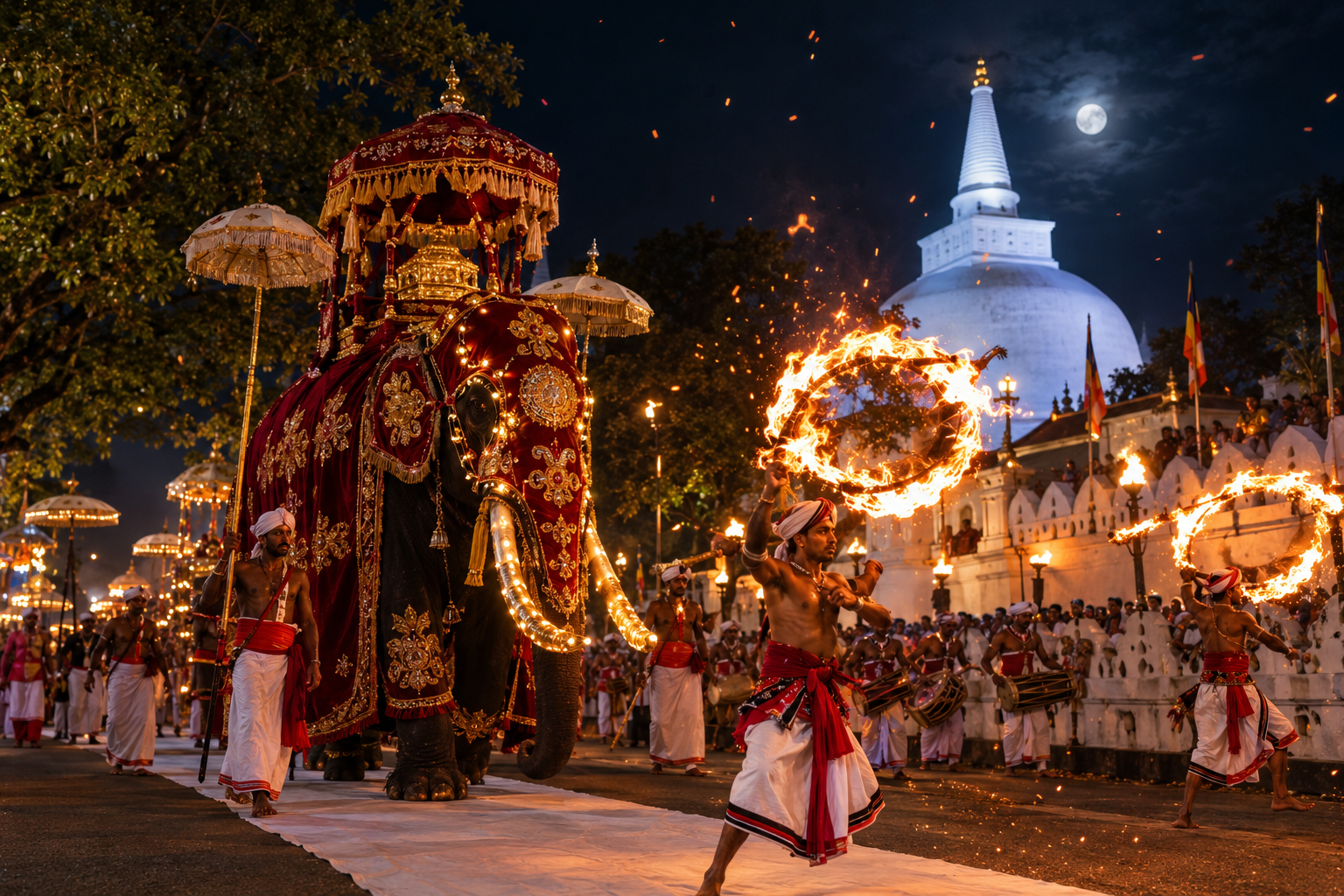
Kelaniya Duruthu Perahera lights up the Kelani river valley each January in Sri Lanka. The pageant honors the third visit of Gautama Buddha to Kelaniya temple. In fact, this feast marks its hundredth year. The pageant runs across three nights.
This verified Kelaniya Duruthu Perahera guide gives exact dates, ticket fees, and train routes from Colombo Fort. For example, guests learn gate rules and seat tiers. You can plan your entire festival trip with ease. Clear facts guarantee a smooth trip.
Origins of the Pageant and Centenary Milestones
The modern festival began in nineteen twenty-seven near Colombo under the care of Helena Wijewardene. She funded large repairs at Kelaniya Raja Maha Vihara after colonial damage. In this Kelaniya Duruthu Perahera guide, we trace this grand revival. Today, the pageant draws pilgrims from all regions.
Old chronicles state that the Buddha came to Kelaniya eight years after his supreme awakening. He came to settle a gem throne feud between rival Naga kings. In addition, the Buddha preached peace and bathed in the river. The stupa holds that throne.
The twenty twenty-seven festival marks one hundred full years of public street walks. In fact, royal tuskers, whip men, and dancers have walked these lanes each winter. Local drum guilds pass down fast beats from father to son. Elders take pride in these rites.
hundredth year plans feature special craft displays and rare old photos from the nineteen thirties. In addition, master carvers repair old brass oil lamps and silver poles. Monks chant verses in the preaching hall before night parades. Families share tea with weary guests.
Centenary banners flutter from tall bamboo poles along the river bank. In fact, youth groups paint fresh lime wash on low stone walls. Bright paper lanterns hang from roof eaves of small shops. The whole town prepares for the great winter feast.
Temple bells toll each dawn to call monks and workers to morning prayer. In fact, wood carvers carve fresh lotus blooms on the wooden gates. Devotees sweep the sand yards with long palm brooms. The air smells of sweet frangipani blossoms.
Historic stone inscriptions near the dagoba record ancient land gifts from royal kings. In fact, medieval rulers granted rice fields and coconut groves to support daily temple rites. Monks kept sacred texts safe during times of foreign warfare. The shrine stands as a pillar of faith.
The Three Procession Nights: Udamaluwa to Randoli
The sacred festival spreads over three distinct nights with growing scale. The first night features the Udamaluwa parade inside the upper temple yard. In this Kelaniya Duruthu Perahera guide, we note that monks carry sacred relics around the bodhi tree. White robes and oil lamps shine.
The second night brings the Pachcha parade out into the lower compound. Here, drummers and dancers form long lines along the sandy yard paths. In fact, twenty decorated tuskers march with silver bells and velvet rugs. Thousands of village pilgrims sit on mats.
The third night brings the grand Randoli Maha Perahera through outer town streets. This main parade starts at half past seven on the full moon night. In addition, thirty tuskers and forty dance troupes fill the lanes. Midnight conch shells mark the return.
Devotees line the streets five deep before the sacred tuskers step out. In fact, sweet temple incense drifts on the cool night air. Soft bells chime on the ears of the lead bull tusker. The deep sound of brass horns warns the waiting crowd.

Torch bearers feed coconut oil into blazing iron baskets held on long wood poles. Bright orange flames light the white dust kicked up by dancing feet. In addition, drum rolls grow loud as the first dance troupe leaps into view. The grand night comes alive.
Flute players blow high shrill notes that soar above the deep drum roll. In addition, dancers spin with quick steps along the wide road. Silver bangles click on their bare wrists as arms sway. The dark night turns bright with fire.
Ritual Elements: Whip Crackers to Sacred Relics
The grand parade opens with the sharp crack of heavy whip lines called Kasakkarayo. Young men crack thick coir whips on the stone road to clear paths. In fact, old custom holds that loud cracks drive off bad spirits. Blue smoke fills the air.
Behind the whips come daring fire dancers spinning burning wheels of flame called Gini Keli. Skilled men balance glowing metal rings on tall poles to fast drum beats. In addition, flag teams march in rank holding gold standards. Colorful banners depict lions and suns.
Next march master drummers playing Hewisi and Geta Beraya drums. Their hand strikes create deep drum beats that echo over river waters. Temple dancers leap high into the night air while spinning brass cymbals. Every hand sign reflects ancient court dance.
The great tusker Kandula steps forward onto clean white linen cloths laid on the road. The thirty-one year old tusker carries the golden relic casket. In this Kelaniya Duruthu Perahera guide, we honor this noble beast. Devotees raise their hands and chant in prayer.
Kandula bears a carved wooden canopy draped in rich red velvet and gold thread. Small electric bulbs glow on his tusks and head plate. In addition, two smaller tuskers walk beside him as noble guards. The crowd bows their heads in deep silence.
The relic casket shines with rare rubies, pearls, and pure yellow gold. White cloth spreads before each slow step of the royal tusker. In fact, monks follow close behind carrying bowls of sweet flower oil. Devotees wipe tears of joy from their eyes.
Dancers wear heavy silver breastplates that chime with every fast jump. In fact, their bronze head crowns flash brightly under the flaming torch poles. Master drummers guide each turn with sharp rolls on double-ended drums. The sacred dance honors island gods.
The Three Devale Pageants: Vibhishana, Vishnu, and Kataragama
The main relic parade is accompanied by three historic Hindu shrine pageants. Foremost among them is the parade honoring god Vibhishana, the divine guardian of Kelaniya. In this Kelaniya Duruthu Perahera guide, we note his ancient shrine. Dancers wear white and blue silk robes.
The second devale parade honors god Vishnu, the divine preserver of island peace. His attendants carry white chank shells and brass sun umbrellas. In addition, dancers step to sweet reed flutes and bronze gongs. Devotees believe Vishnu protects island homes from harm.
The third devale parade pays homage to god Kataragama, the fierce warrior deity of southern forests. Red flags, peacock feather fans, and fast drums mark this team. In addition, dancers spin with wooden kavadi arches on their shoulders. Steel spears ward off misfortune.
Senior temple lay guardians called Nilames walk with noble grace between the shrine pageants. They wear antique sixty-four piece court dress with four-cornered hats. In fact, these velvet coats date back to old royal courts. Attendants hold wide parasols over their heads.

Gold chains drape across the broad chests of the walking Nilames. Their barefoot steps follow the slow rhythm of the sacred horns. In addition, attendants wave white yak tail whisks to cool the warm air. The sight reflects the rich court life of old Kandy.
Attendants carry silver platters piled high with fragrant betel leaves and areca nuts. Dancers pause to bow before the chief Nilame as drums roll. In fact, his gold-trimmed coat glows under the light of nearby torches. The old court order lives on.
Temple stewards carry heavy brass oil lamps shaped like sacred lotus buds. In addition, temple attendants walk barefoot on fresh white linen cloth along the road. The soft glow of warm oil lights the smiling faces of village children. Peaceful joy fills the street.
Solias Mendis Murals and Temple Image House Art
Visiting the temple gives you access to the famed modern image house frescoes. Renowned local painter Solias Mendis spent twenty years painting these master murals. In fact, Mendis mixed natural earth clays and plant saps for his paint. His artwork portrays early island history.
One mural shows the arrival of Sanghamitta Theri carrying the sacred bodhi tree branch. Another panel depicts Princess Hemamala hiding the sacred tooth relic in her hair. In addition, soft earth tones give the figures gentle expressions. Scholars praise these classic brush strokes.
The inner shrine room holds an ancient rock statue of the sleeping Buddha. Warm oil lamps light the calm stone face surrounded by fresh white lotus blossoms. In addition, stone carvings of playful dwarfs line the doorway arches. Temple guides explain the deep spiritual signs.
Guests must maintain absolute silence while admiring the art inside the hall. In fact, camera photography is strictly banned inside the inner shrine rooms. Take time to study the subtle expressions on each painted face. The cool temple hall offers peace from street heat.
High ceiling beams display painted lotus rings and mythical swan birds. Each line shows the steady hand of a master folk artist at work. In addition, soft light falls through tall open windows on the polished clay floor. Guests leave with a sense of wonder.
Fine line drawings on white plaster show the old royal court of Anuradhapura. In fact, court ladies wear fine silk sashes and pearl hair nets. The colors remain fresh after nearly a century of time. Art lovers rate these murals as national treasures.
Mendis chose raw earth paints over bright modern chemical dyes to honor old island traditions. In fact, his yellow ochre came from river clay beds near Kelaniya. Red cinnabar rock gave warm life to the robe folds. The quiet paintings draw art scholars from around the globe.
Best Viewing Vantage Points and Crowd Navigation
Finding a good viewing spot is key for enjoying the three-hour night pageant. The temple trust provides four hundred reserved seats in the covered Tourist Enclosure. In this Kelaniya Duruthu Perahera guide, we advise booking early online. Front row seats offer clear views of passing tuskers.
For free public viewing, reach the outer river banks by four in the afternoon. The grassy banks near the outer bridge offer wide views over the water. In fact, local families arrive early with straw mats and cold drinks. River breezes cool the warm evening air.
Another fine public spot lies along the Biyagama Road approach street. The paved lane narrows here, bringing drummers and tuskers close to the pavement. In addition, local shops set out plastic chairs and sell fresh green coconuts. Reach the curb before five to secure space.
Avoid standing near main road junctions where traffic police manage bus diversions. These dusty corners get crowded with idling vans and noisy scooters. In addition, keep a clear exit path behind you if traveling with kids. Follow instructions from temple stewards wearing yellow armbands.
Pack a light cloth bag with wet wipes, bottled water, and mosquito oil. If street rains fall, pull out a light travel poncho rather than a broad umbrella. In fact, wide umbrellas block the view of people seated behind you. Polite manners keep the festival fun for all.
Temple steps near the north torana gate provide elevated stone platforms above the street. In fact, you can view passing tuskers without crowd heads blocking your camera lens. Bring a small wool cloth to sit on cold granite blocks. Friendly temple guards guide seated guests.
Getting to Kelaniya: Rail, Bus, and PickMe Routes
Kelaniya temple sits ten kilometers east of central Colombo Fort. Taking an urban train from Colombo to Kelaniya station is fast and cheap. The fast short ride costs fifty rupees. This Kelaniya Duruthu Perahera guide notes that trains run every half hour.
Local public buses also run from the Pettah bus stand in Colombo. Board bus two hundred and thirty heading toward Kelaniya temple. The ride takes forty minutes and costs sixty rupees. Police shut local roads to cars around five in the afternoon.
You can book Colombo to Kandy train and private transfer tickets for scenic hill country trips. In addition, read our Kandy to Ella train guide to plan the island top mountain railway trip. Safe trains make travel smooth and cheap.
Where to Stay: Colombo Hubs and Riverfront Retreats
Staying in central Colombo gives you easy access to food, shopping, and temple transit. Neighborhoods like Fort, Kollupitiya, and Cinnamon Gardens offer fine hotels. In this Kelaniya Duruthu Perahera guide, we suggest booking near Galle Face green. Central hotels make catching afternoon trains easy.
For a quiet stay, look for boutique guesthouses along the Kelani river near Peliyagoda. These pleasant riverside lodgings sit three kilometers from the temple gates. In addition, you can watch old wooden boats drift on the river. Green gardens feature mango and frangipani trees.
Travelers can browse verified Colombo and Kelaniya hotels and boutique villas to secure seasonal rates. In fact, book two months early for the busy January festival weeks. Friendly hotel staff can also help verify daily parade start times for you.
After the festival, plan onward island trips to southern shores or central hills. Consult our Galle Fort travel guide to see coastal ramparts and cafes. In addition, see our Sigiriya Lion Rock guide to climb the ancient royal palace rock. Sri Lanka offers vast cultural riches.
Ticket Options: Tourist Enclosure and Free Seating
The temple trust provides four hundred reserved seats in the covered Tourist Enclosure. VIP front rows cost thirty-five dollars or ten thousand five hundred rupees. In fact, second rows cost twenty-five dollars or seven thousand five hundred rupees. Tickets include cold water and clean washrooms.
Reserved seats can be bought on the Kelaniya Duruthu Perahera official portal before the event. You get a digital voucher to swap for a badge at the gate. In fact, the ticket booth opens at three in the afternoon. Bring your passport for check-in.
Check the Sri Lanka Tourism official portal for island travel alerts and train news. Help desks at Colombo Fort station also share schedule sheets. In addition, checking official news ensures smooth entry at ancient pilgrimage sites.
Estimated Daily Travel Budget and Cost Breakdown
Attending the Kelaniya pageant fits every travel budget with ease. Budget guests spend under twenty-five dollars per day on trains, guesthouses, and local food. In addition, mid-range guests spending on tickets and cabs average eighty-five dollars daily. Luxury guests spend two hundred and forty dollars.
Meals around Kelaniya and Colombo cost between two and six dollars. A plate of rice and vegetable curry costs nine hundred rupees at local cafes. In addition, sweet king coconuts outside temple gates cost two hundred rupees. Cool ginger beer is sold for pocket coins everywhere.
| Expense Category | Budget Pilgrim (LKR / USD) | Mid-Range Explorer (LKR / USD) | Luxury Heritage Guest (LKR / USD)
|
|---|---|---|---|
| Accommodation (per night) | LKR 3,500–6,000 (12–20 USD) Colombo Fort hostel or guesthouse | LKR 15,000–28,000 (50–93 USD) Central 3-star hotel or river villa | LKR 55,000–110,000 (183–367 USD) Galle Face Hotel or 5-star suite |
| Daily Meals & Refreshments | LKR 1,500–2,500 (5–8 USD) Rice & curry, roti, king coconuts | LKR 5,000–9,000 (17–30 USD) Air-conditioned cafes & restaurants | LKR 18,000–35,000 (60–117 USD) Fine dining seafood & colonial tea |
| Festival entry / Seating | LKR 0 ($0 USD) Free riverbank or Biyagama Road curb | LKR 7,500 ($25 USD) Standard Tourist Enclosure Row 3–4 | LKR 10,500 ($35 USD) VIP Tourist Enclosure Row 1–2 |
| Local Transport (Train, Bus, Tuk-Tuk) | LKR 200–500 (0.70–1.70 USD) Train from Fort (50 LKR) & Bus 230 | LKR 2,000–4,000 (6.70–13.30 USD) PickMe app three-wheeler tuk-tuks | LKR 12,000–22,000 (40–73 USD) Chauffeured private air-conditioned car |
| Estimated Daily Total | LKR 5,200–9,000 (17.70–29.70 USD) | LKR 29,500–48,500 (98.70–161.30 USD) | LKR 95,500–177,500 (318–592 USD) |
Prices checked on 15 October 2026. Local currency conversions calculated at 1 USD = 300 LKR.
Complete 2-Day Kelaniya Festival Itinerary
This two-day plan pairs Colombo heritage sights with evening temple pageants. Day one focuses on arriving, visiting colonial forts, and watching the second night parade. In addition, day two sees master temple murals before the grand Randoli pageant. Follow this schedule for an effortless cultural holiday.
| Day & Timing | Morning Schedule | Afternoon Schedule | Evening Festival Schedule | Transit Guidance
|
|---|---|---|---|---|
| Day 1: Colombo Heritage & Pachcha Perahera | 08:30 AM walk through Colombo Fort colonial streets, visiting Old Dutch Hospital and Lighthouse clock tower. | Explore Pettah floating market and National Museum; take late afternoon train to Kelaniya station by 16:00 PM. | 18:00 PM claim sandy courtyard mat space; 20:00 PM watch the second night Pachcha Perahera parade. | 15-minute train from Colombo Fort to Kelaniya (50 LKR); short tuk-tuk to temple gates. |
| Day 2: Temple Murals & Grand Randoli Finale | 09:00 AM leisurely breakfast in Colombo, followed by shopping for traditional white linen pilgrimage attire in Kollupitiya. | 14:30 PM arrive at Kelaniya temple to admire Solias Mendis murals in quiet light; collect Tourist Enclosure badge by 16:30 PM. | 19:30 PM take seats in Tourist Enclosure; watch the 3-hour grand centenary Randoli Maha Perahera finale. | PickMe tuk-tuk from Colombo Fort (1,000 LKR); arrange return pickup near river bridge before 22:00 PM. |
Temple Etiquette, Dress Codes, and Photography Rules
Kelaniya temple is an active Buddhist shrine with strict temple rules. Guests must wear modest white or light clothes covering shoulders and knees. In addition, leave black outfits at your hotel. White is the traditional color of Buddhist pilgrimage, symbolizing purity and respect.
You must take off shoes and hats before entering the sandy temple yard. Gate shoe counters hold shoes for fifty rupees. In fact, stone paths can stay warm after sunny afternoons, so wear thick white socks. Walk quietly and avoid pointing feet toward Buddha statues.
Photography is allowed along the street parade and in outer yards without flash. Turn off camera flash because sudden light bursts can scare walking tuskers. In addition, never pose for selfies with your back turned toward a sacred shrine. Flying camera drones is strictly banned.
Frequently Asked Questions About Kelaniya Perahera
When is the Kelaniya Duruthu Perahera held in 2027?
The festival runs from 19 to 21 January 2027 at Kelaniya Raja Maha Vihara. The grand Randoli Maha Perahera takes place on the final full moon night of 21 January. In fact, rites start at 19:30.
How much do Tourist Enclosure tickets cost?
VIP front row seats cost thirty-five US dollars or roughly ten thousand five hundred rupees. Standard second row seats cost twenty-five US dollars. In fact, tickets include bottled water and covered grandstand views.
Can you watch the Kelaniya parade for free?
Yes, guests can watch the entire parade along the public street loop for free. Grassy banks near the river bridge offer broad views. In addition, reaching the curb before 17:00 secures a front row spot.
How do you get to Kelaniya from central Colombo?
Local trains from Colombo Fort to Kelaniya station take fifteen minutes and costs fifty rupees. Alternatively, a PickMe tuk-tuk takes thirty minutes and costs one thousand rupees. In fact, tuk-tuks drop you right near the river bridge.
Why consult this Kelaniya Duruthu Perahera guide?
This Kelaniya Duruthu Perahera guide gives exact dates, ticket tiers, transit links, and temple etiquette. For example, guests learn about seating, dress codes, and murals. Clear facts ensure a safe and memorable visit to Sri Lanka hundredth year feast.
Please travel responsibly by dressing respectfully in clean white clothes, removing shoes before entering temple sands, and disposing of plastic waste in designated bins.


