

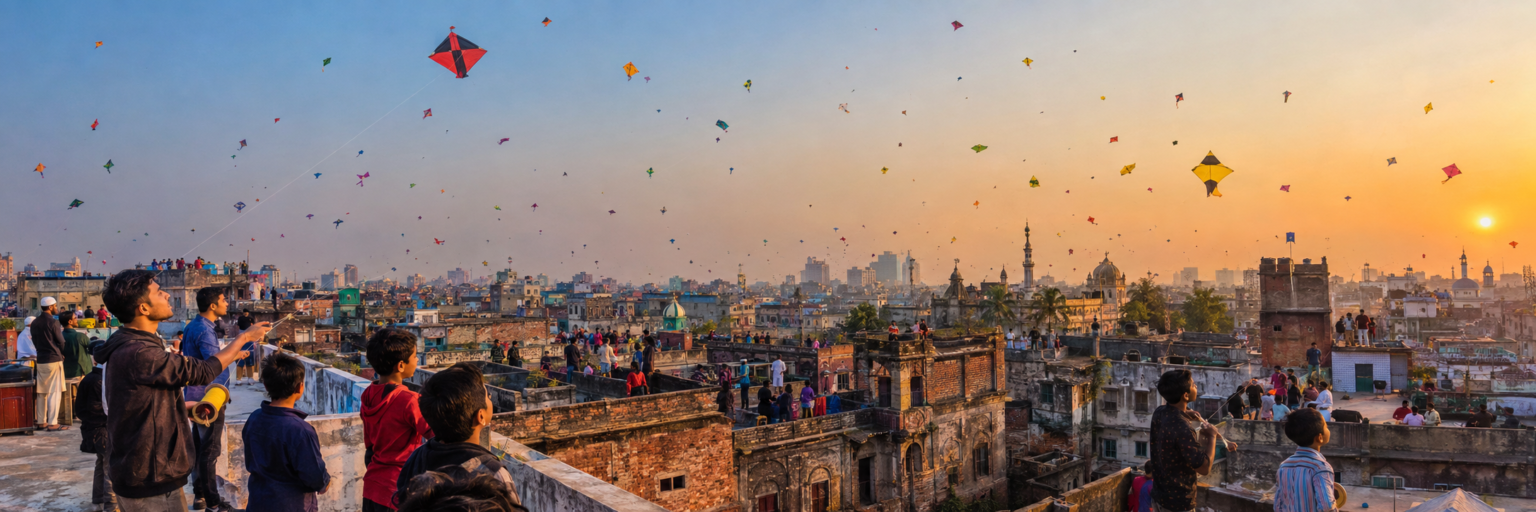
Shakrain is the premier winter feast in Old Dhaka. This Shakrain Festival guide gives essential visitor tips. The festival marks the solar shift of Poush Sankranti. It takes place every year in mid-January. Millions of colorful paper kites take flight. Soon, they fill the sky above the historic city.
This Shakrain Festival guide gives confirmed dates, street routes, and safety tips. Specifically, travelers need two full days. Indeed, this window lets you enjoy the main events well.
Shankharia Bazar and Tantibazar celebrate on January 14, 2027. In fact, they lead the opening day of festival duels. In contrast, Narinda and Sutrapur celebrate on January 15. Wari also joins the second day of rooftop battles.
January brings dry winter days with mild sun. Meanwhile, cool evening breezes blow across the city. Dhaka Metro Rail runs directly to Motijheel station. From there, cycle rickshaws reach the old quarters with ease.
Top Festival Events in This Shakrain Festival Guide
Shankharia Bazar Kite Workshops in This Shakrain Festival Guide
Shankharia Bazar is the historic heart of kite making. In fact, old shops line this famous lane. Narrow brick lanes fill with small family workshops. Also, roadside stalls display thousands of kites. Indeed, this Shakrain Festival guide rates this alley as an essential stop.
Artisan craftsmen split thin bamboo struts by hand. Then, they carve the cane with small knives. They bend the cane with great care. Thus, it forms a light, balanced frame. Next, they glue thin tissue paper using flour paste.
Local kite designs carry distinct local names. For example, buyers love chokhdar and ponkhidar styles. In addition, shoppers buy polished wooden reels called latais. Also, these sturdy spools are turned from solid wood. Skilled workers wind tough cotton string onto the reels. Then, they prepare the spools for high-flying duels.
Shoppers browse tall stacks of colorful kites. Soon, crowds pack the narrow street before festival day. In fact, buying direct from makers saves money. It also directly supports heritage artisan craft.

Old Dhaka Rooftop Sky Duels in This Shakrain Festival Guide
By midday, the entire town heads to flat brick roofs. Indeed, people of all ages climb up to join the fun. Families launch thousands of swift paper kites. Soon, bright colors fill every corner of the sky.
Kite battles mean crossing lines in mid-air. Also, flyers aim to slice rival strings with skill. Flyers use two main combat moves in the sky. In fact, these tactics are known as dheel and tan.
In the dheel method, flyers feed out line fast. Then, the wind drags the line through rival cords. In contrast, the tan move uses a swift pull. So, this sharp tug slices the rival string.
When a flyer cuts a rival line, cheers ring out. Soon, loud shouts echo across the flat brick roofs. Joyful shouts celebrate each victory in good fun. Also, neighbors clap and wave from nearby roofs.
Moreover, friendly neighbors share hot tea across walls. Also, they pass fresh winter snacks across roof edges. Local residents welcome polite guests to family roofs. Moreover, they let guests hold reels and try flying.
Children run through narrow brick alleys below. Often, they chase and catch loose cut kites.
Two-Day Neighborhood Split in This Shakrain Festival Guide
A unique custom divides Shakrain across two days. Specifically, different quarters celebrate on back-to-back dates. On January 14, Hindu quarters lead the festivities. Indeed, Shankharia Bazar and Tantibazar celebrate first.
They celebrate Poush Sankranti with morning prayers. Then, fierce daytime kite fights follow across all roofs. In contrast, eastern quarters celebrate on January 15. In fact, they host their massive feasts on day two.
Neighborhoods like Narinda and Sutrapur fill the sky. Also, Wari rooftops host massive sound shows. As a result, visitors enjoy two full days of fun. Moreover, you can experience distinct neighborhood vibes each day.
Planning your trip across both zones is wise. Therefore, it ensures you catch every major highlight. This Shakrain Festival guide helps you pick the right quarter each day.
Sunset Fire-Spinning and Kerosene Breath Shows
The festival changes character as sunset falls. Soon, dusk settles quietly over Old Dhaka. Master street performers climb onto high roof walls. Often, they stand on exposed parapets above the crowds.
They take sips of kerosene into their mouths. Then, they blow giant fireballs into the dark sky. Massive orange flames light up the old brick walls. Meanwhile, the bright fire illuminates cheering rooftop crowds.
Furthermore, performers spin glowing balls of fire. Also, they twirl blazing wicks on long steel chains. These spinning wheels create dazzling circles of light. Moreover, the fiery rings glow bright in the night breeze.
Watch these fiery shows from a safe distance. Therefore, always stand behind sturdy brick roof railings. The glowing flames create striking photo scenes. Indeed, they capture the raw street energy of Old Dhaka.

Night Lantern Tukkals, Fanush, and Laser Sound Battles
After fire shows, flyers launch glowing lanterns. In fact, these paper balloons are called fanush. These paper balloons rise on warm heated air. Soon, they float gently away into the night breeze.
Flyers also tie candle lanterns called tukkals. Also, they attach these small boxes to kite lines. Soon, hundreds of floating lights drift overhead. Indeed, they look like moving stars above Old Dhaka roofs.
Meanwhile, rival rooftops set up giant sound boxes. In addition, high-powered lasers project across the sky. Green and blue laser beams cut through the dark. Constantly, they sweep across crowded rooftops and streets.
Rooftop sound systems play loud, upbeat dance music. Meanwhile, young people dance on open terraces. In addition, bright fireworks burst across the sky. Then, colorful sparks shower down over the old city.
Lalbagh Fort Perimeter and River Vantage Points
Lalbagh Fort provides a stunning historic backdrop. Indeed, it frames the festive sky with brick towers. This seventeenth-century fort stands in west Old Dhaka. In fact, it remains the premier Mughal fort in town.
Prince Muhammad Azam began construction in 1678. Then, he designed the complex as a royal palace. Kites soar high above Pari Bibi’s marble tomb. Brightly, the white dome shines beneath the kites.
In addition, the Lalbagh Fort Mosque stands nearby. Nearby, its three historic domes rise above green lawns. Walk the outer walls along the perimeter road. There, you can see kites soar over ancient brick gates.
Another great viewpoint sits by the Buriganga River. Specifically, head down to the river near Sadarghat pier. Hire a small wooden boat on the river. From the water, you can watch thousands of kites overhead.
Traditional Winter Pitha Feasting and Dhakaiya Street Food
No Shakrain visit is complete without winter pitha. In fact, these seasonal sweets are made fresh. Vendors set up clay steam pots on street corners. Constantly, steam rises into the cool evening air.
Try hot bhapa pitha fresh from the steamer. It mixes rice flour, coconut, and sweet molasses. Locals also love savory chitai pitha flatbreads. Often, they dip them in spicy mustard or duck curry.
Throughout the day, rooftop hosts serve plates of pitha. Warmly, they offer hospitality and sweets to all. In addition, sip cups of sweet malai tea. Locals brew tea fresh with thick clotted milk.
Sample fresh bakarkhani from local neighborhood bakeries. Indeed, this flaky biscuit bread is an Old Dhaka icon. Pair your food tour with our guide to places to visit in Bangladesh during winter.

Chawkbazar Evening Food Markets and Mughal Heritage Alleys
Chawkbazar is the historic market of Old Dhaka. In fact, it has served as a trade center since old times. During festival nights, food stalls stay open late. Late at night, cooks keep grills sizzling until midnight.
Narrow lanes fill with sizzling meat grills. In addition, giant cauldrons of spiced tea feed the crowds. Taste famous shahi jilapi in the central market. Cooks fry this giant sweet spiral in pure ghee.
In addition, sample spiced mutton seekh kebabs. Freshly, vendors serve them hot with fresh naan. Walk past the ruins of Bara Katra and Choto Katra. Historically, these ancient caravanserais stand west of the bazaar.
These merchant inns housed traders centuries ago. Long ago, they sheltered traders on trade routes. Visiting Chawkbazar gives rich cultural insight. Truly, it reveals the living street heritage of town.
Historic Heritage Sites: Armenian Church and Star Mosque
Old Dhaka holds remarkable religious architecture. In fact, historic sites sit near the main festival quarters. Visit the Armenian Church in Armanitola. Pioneers founded this sacred church in 1781.
This quiet church features peaceful courtyard gardens. There, marble gravestones tell the history of merchant families. A short walk away stands famous Tara Masjid. Popularly, locals know this place as Star Mosque.
This mosque features ornate blue porcelain mosaics. Delicate star patterns decorate its white walls. In addition, explore the riverside rooms of Ahsan Manzil in Old Dhaka.
Compare these sacred quarters with our guide to Durga Puja pandals in Dhaka. Also, they give rest from the noisy rooftop duels.
Wildlife Protection Rules and String Safety in Old Dhaka
String safety is vital for every festival guest. Clearly, this Shakrain Festival guide details all rules. City police strictly ban synthetic nylon line. Furthermore, they outlaw sharp glass-coated Chinese manja.
This sharp line harms wild birds and pigeons. Moreover, it cuts power cords and hurts road riders. Therefore, travelers must fly only with cotton thread. Indeed, pure cotton string is safe, legal, and true.
In addition, watch your footing on old rooftops. Often, many brick terraces lack sturdy protective walls. Never step backward near the edge of a roof. Constantly, stay aware of your footing while watching kites.
Community safety teams patrol busy street alleys. Carefully, they remove loose strings from electric wires. Always follow local guidance on every rooftop. Ultimately, this care keeps the celebration safe and joyful.
Getting to Old Dhaka: Metro Rail and Cycle Rickshaws
Reaching Old Dhaka is simple with the metro. Indeed, the Dhaka Metro Rail provides fast transit. Take the metro line directly to Motijheel station. Conveniently, it sits on the edge of the old city.
From Motijheel, hire a traditional cycle rickshaw. Experienced drivers know the quickest lanes into Shankharia Bazar. Cycle rickshaws navigate narrow lanes with ease. In contrast, cars cannot enter these dense historic alleys.
Expect to pay sixty to one hundred BDT. Easily, this short ride brings you to the heart of the action. Walking is the best way to explore festival streets. On foot, you can soak in the electric neighborhood mood.
Where to Stay in Dhaka: Shakrain Festival Guide Bases
Picking a central hotel ensures quick travel. Easily, you can reach Old Dhaka festival zones. For premier comfort, book Pan Pacific Sonargaon Dhaka in Kawran Bazar. This luxury hotel offers spacious, quiet rooms. Also, it features an outdoor pool and secure parking.
Another top luxury option is InterContinental Dhaka. Conveniently, it sits right next to green Ramna Park. It provides fast access to the Dhaka Metro line. Quickly, guests can reach festival streets in twenty minutes.
Budget travelers will find clean guest houses. Specifically, many affordable lodges sit around Victoria Park.
Shakrain Festival Guide Travel Costs and Daily Budget
Attending the Shakrain Festival offers great value. Indeed, travelers can enjoy grand feasts on low funds. This Shakrain Festival guide shows that guests can enjoy festival days on low funds. Below is a clear breakdown of typical daily costs. Clearly, it covers three distinct travel tiers in BDT and USD.
| Expense Category | Budget Traveler (BDT / USD) | Mid-Range Traveler (BDT / USD) | Luxury Traveler (BDT / USD) |
|---|---|---|---|
| Accommodation | 800–1,500 BDT ($7–13) / night (Old town guest house) | 3,500–6,500 BDT ($29–54) / night (Central city hotel) | 14,000–25,000 BDT ($117–208) / night (5-star luxury hotel) |
| Daily Meals & Street Food | 300–600 BDT ($3–5) (Pitha, bakarkhani, kebabs) | 1,000–2,000 BDT ($8–17) (Heritage biryani restaurants) | 3,500–7,000 BDT ($29–58) (Fine dining hotel venues) |
| Local Transportation | 120–250 BDT ($1–2) (Metro Rail & cycle rickshaws) | 500–1,200 BDT ($4–10) (Reserved AC auto-rickshaws) | 3,000–5,500 BDT ($25–46) (Chauffeur-driven AC car hire) |
| Kites, Spools & Supplies | 250–500 BDT ($2–4) (20 fighter kites & cotton latai) | 800–1,800 BDT ($7–15) (50 kites, latai, fanush lanterns) | 2,500–5,000 BDT ($21–42) (Custom kites, tukkals & rooftop pass) |
| Estimated Daily Total | 1,470–2,850 BDT ($12–24) | 5,800–11,500 BDT ($48–96) | 23,000–42,500 BDT ($192–354) |
Recommended 2-Day Shakrain Festival Guide Itinerary
This two-day plan balances daytime kite fights. In addition, it includes evening fire shows and night lights. Follow this Shakrain Festival guide route to experience both festival neighborhoods.
| Day | Timing Window | Primary Focus | Activity Highlights & Cultural Sights |
|---|---|---|---|
| Day 1 | Morning (9:30 AM – 12:30 PM) | Shankharia Bazar Craft | Tour narrow artisan lanes, watch bamboo kite splitting, buy cotton latai spools, and visit historic conch workshops. |
| Day 1 | Afternoon (1:00 PM – 5:00 PM) | Hindu Quarter Sky Duels | Join local families on Shankharia Bazar and Tantibazar rooftops for high-energy kite combat, shouts, and hot tea. |
| Day 1 | Night (6:00 PM – 10:00 PM) | Fire Shows & Lanterns | Witness rooftop kerosene fire-breathing, release glowing paper fanush lanterns, and eat steamed bhapa pitha. |
| Day 2 | Morning (10:00 AM – 1:00 PM) | Mughal Heritage Sites | Explore 17th-century Lalbagh Fort, the Armenian Church, Star Mosque, and the riverside rooms of Ahsan Manzil. |
| Day 2 | Afternoon & Evening | Eastern Quarter Battles | Head to Narinda, Sutrapur, and Wari for day two rooftop battles, laser light shows, sound boxes, and Chawkbazar feasts. |
Frequently Asked Questions About the Shakrain Festival Guide
When does the Shakrain Festival take place in 2027?
The festival takes place on January 14 and January 15, 2027. Shankharia Bazar celebrates on January 14, while Narinda and Sutrapur celebrate on January 15.
How can foreign travelers get onto an Old Dhaka rooftop?
Many local residents warmly invite polite travelers to join their family roofs. You can also book a guided heritage walk with Old Dhaka community hosts.
What is the best time of day to watch the kite fights?
The best daytime kite duels happen from 1:00 PM to 4:30 PM. The night fire-spinning and fireworks shows begin right after sunset from 6:00 PM onward.
What street food should I try during Shakrain?
Try hot steamed bhapa pitha with date molasses, spicy chitai pitha, and shahi jilapi. Freshly grilled kebabs and sweet malai tea are also top treats.
Safety Essentials, Rooftop Precautions, and Responsible Travel
Always watch your step on crowded rooftops. Strictly, avoid standing near open edges without railings. Wear dark sunglasses and a light sun hat. Also, these protect your eyes on sunny terraces. In addition, carry a small pocket flashlight. Easily, it helps you walk dark alleys at night.
Check official travel guidelines on Bangladesh Tourism Board. Tour packages and city maps are available via Bangladesh Parjatan Corporation. Municipal civic advisories are posted by Dhaka South City Corporation. Prices were checked on 08 October 2026. Local currency conversions use 120 BDT per USD.


