

Punakha sits in a warm valley. It lies in western Bhutan. This Punakha Bhutan travel guide provides verified travel facts. The valley floor rests at twelve hundred meters. In contrast, nearby Thimphu sits much higher.
Therefore, Punakha enjoys mild warmth all year. The town served as the old winter seat. In fact, it held that rank for ages. Today, it remains the winter home for monks. Also, the valley offers green hills and rivers.
Specifically, guests need three days here. Bhutan sets a daily fee of one hundred dollars. In addition, all guests must tour with a guide. This Punakha Bhutan travel guide helps you plan each day.
Cars climb across high mountain passes to enter. Good roads connect the valley with Thimphu. Thus, Punakha serves as a top stop on any trip.
Top Sights and Cultural Experiences in This Punakha Bhutan Travel Guide
Punakha Dzong: The Palace of Great Happiness
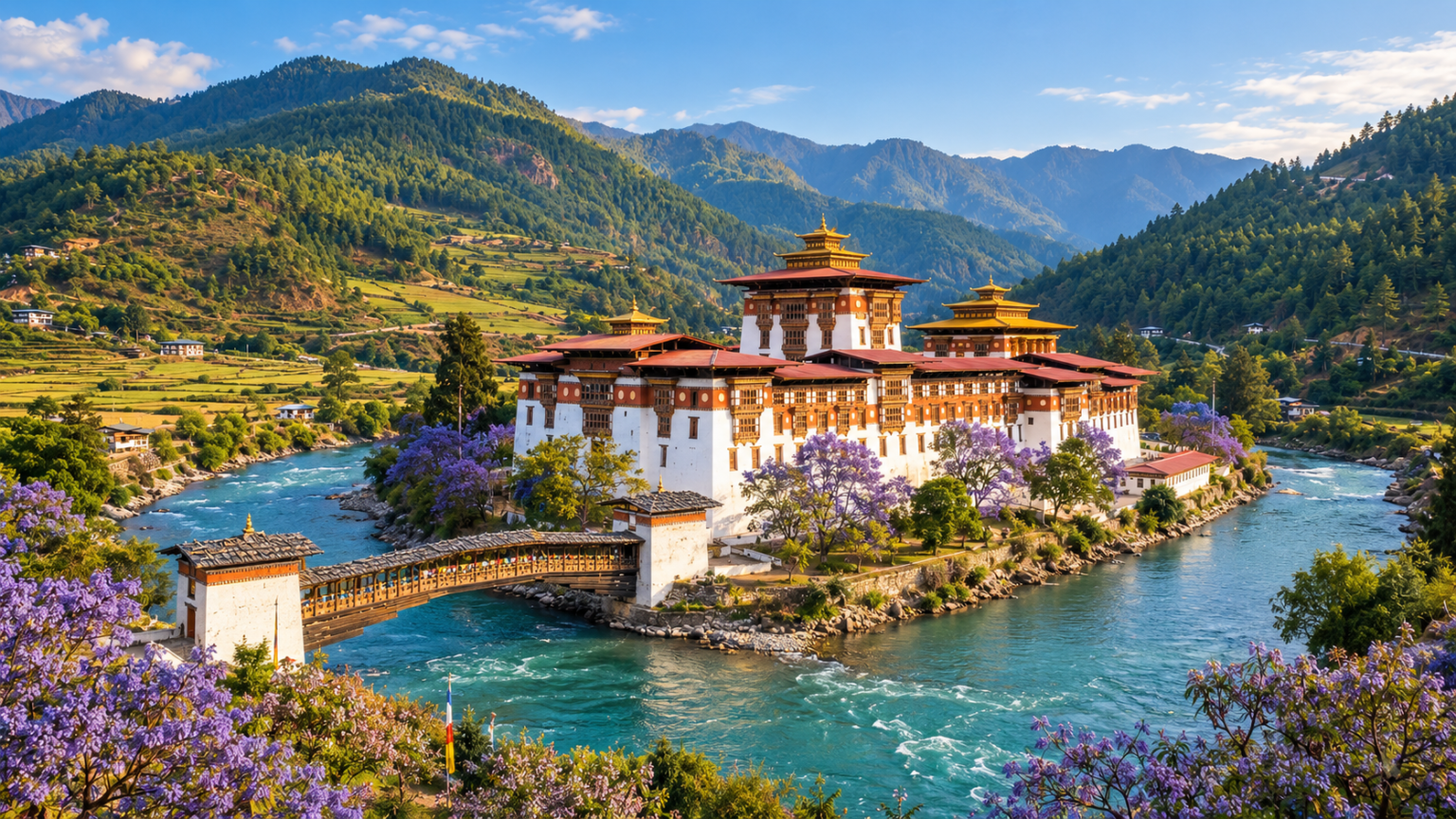
Punakha Dzong stands at the center of the valley. Its name means the Palace of Great Happiness. Zhabdrung Ngawang Namgyal built this fort in 1637. In fact, it ranks as the second oldest fort.
Also, it remains the grandest fort in the land. Massive white stone walls rise from the riverbanks. Golden roofs shine brightly in the sun. Furthermore, dark wooden balconies overlook the clear river.
Long ago, the fort served as the royal seat. In 1907, King Ugyen Wangchuck took his royal oath here. Thus, the site holds deep historic value for all. Guests admire the ancient timber craft in each hall.
The Sacred Three Docheys in This Punakha Bhutan Travel Guide
Inside Punakha Dzong, three stone yards welcome guests. In local terms, builders call these squares docheys. This Punakha Bhutan travel guide reveals the role of each yard. Each open yard serves a distinct civic or holy task.
The first courtyard handles local town affairs. Here, white offices and a tall stupa fill the space. A sacred bodhi tree also grows in the center. Local clerks and court officers work in these rooms.
Next, the second courtyard houses rooms for monks. Young monks study holy texts along these wooden rails. Meanwhile, senior teachers instruct pupils in sacred arts. Drums and horns echo softly through the stone halls.
Finally, the third courtyard holds the holy Machen hall. The body of Zhabdrung Ngawang Namgyal rests here. Only the King and the chief monk may enter. Pilgrims pray quietly outside the carved wooden doors.
The Bazam Cantilever Wooden Bridge Over the Mo Chhu
Visitors enter the fort across the Bazam bridge. This covered bridge spans fifty-five meters across. Skilled local carpenters rebuilt the span with timber joints. Indeed, craftsmen used cypress beams without steel nails.
High shingle roofs protect the walkway from rain. In addition, white stone towers anchor both ends firmly. Walking across the planks provides grand views of the fort. Below your feet, cold river water churns past smooth rocks.
Guards check entry tickets quietly at the bridge tower. Then, guests walk up steep stone steps to the gates. The wooden crossing offers a scenic start to your tour. Also, colorful prayer flags wave gently in the river breeze.
Pho Chhu and Mo Chhu River Confluence in This Punakha Bhutan Travel Guide
Punakha Dzong sits where two famous rivers meet. These glacial streams are the Pho Chhu and Mo Chhu. In the local tongue, these mean Father and Mother rivers. Both streams drain cold snowmelt from high northern peaks.
The Pho Chhu runs with fast white water over rocks. In contrast, the Mo Chhu glides with clear blue water. The rivers join right beneath the white prow of the fort. Local belief holds that this junction balances natural forces.
On sunny mornings, mist rises where the waters unite. Thus, this Punakha Bhutan travel guide recommends morning photos. The twin rivers frame the majestic fort with natural grace. Also, pebble beaches along the bank offer calm walking paths.
Walking the 160-Meter Punakha Suspension Bridge
A short walk up the Pho Chhu leads to the bridge. This footbridge stretches one hundred and sixty meters across. In fact, it ranks as one of the longest bridges. Steel cables hold a narrow wooden deck high above rapids.
Furthermore, thousands of colorful prayer flags drape the ropes. The bright flags flutter and snap loudly in the wind. Local farmers and school children cross the river daily here. It connects the fort with the farming homes of Samdingkha.
Walking across brings gentle swaying motions and wide views. The crossing is free and stays open from dawn to dusk. Therefore, visit in the late afternoon for golden sun. The wooden planks feel sturdy underfoot as you walk. Also, river spray rises softly from the churning waters below.

Chimi Lhakhang Fertility Temple and Sopsokha Rice Fields
Chimi Lhakhang is a famous temple south of town. Lama Ngawang Chogyal built this hilltop shrine in 1499. However, locals dedicate the site to his cousin, Drukpa Kunley. Folk tales remember Drukpa Kunley as the Divine Madman.
He used humor, songs, and wild tricks to teach truth. Today, childless couples travel from afar for sacred blessings. Monks tap pilgrims on the head with a wooden relic. Then, visitors browse the miracle book filled with baby photos.
To reach the temple, travelers enjoy a walk from Sopsokha. The flat dirt trail winds past green terraced rice fields. Village houses display painted murals of flying dragons. Also, local craft stalls sell hand-carved wooden goods.
Hiking to Khamsum Yulley Namgyal Chorten in This Punakha Bhutan Travel Guide
Khamsum Yulley Namgyal Chorten crowns a steep ridge north of town. Her Majesty the Queen Mother built this temple in 1999. In fact, she dedicated the monument to global peace. Hikers start from the valley floor and cross a footbridge.
Next, the scenic dirt trail climbs through terraced rice fields. The pleasant uphill walk takes forty-five minutes through pines. Inside, four vertical levels feature elaborate painted deity statues. Master painters covered every wall with detailed Buddhist art.
Also, these golden figures guard the kingdom against harm. They protect the land from negative spiritual forces.
Finally, climb the spiral stairs to the high balcony. From this windy deck, you can gaze across the valley. Indeed, this Punakha Bhutan travel guide rates this view as top tier. Terraced fields curve along the river in bright green tones.
Sangchhen Dorji Lhuendrup Nunnery on Wolakha Ridge
Sangchhen Dorji Lhuendrup Nunnery perches on the Wolakha ridge. This calm temple complex serves as a college for Buddhist nuns. Over one hundred nuns live, study, and pray in these halls. The hilltop complex overlooks the entire lower river basin.
The central temple houses a bronze statue of Avalokiteshvara. Intricate carvings depict the multi-armed figure of compassion. Surrounding courtyards feature blooming rose gardens and prayer wheels. Young nuns chant melodic prayers during morning ritual hours.
In addition, the nunnery runs a recognized religious learning center. Here, young women learn bronze casting, painting, and philosophy. The hilltop lookout offers sweeping views across Punakha and Wangdue valleys. Visitors enjoy the quiet mountain breeze away from busy roads.
Dochula Pass and 108 Druk Wangyal Chortens
Dochula Pass sits at thirty-one hundred meters height. It links the capital of Thimphu with the lower Punakha basin. On clear autumn mornings, the pass offers sweeping mountain views. Travelers can see snow-capped giants, including sacred Gangkar Puensum.
Notably, Gangkar Puensum remains the highest unclimbed peak on Earth. Royal builders erected one hundred and eight stone chortens here. Queen Mother Ashi Dorji Wangmo Wangchuck built these stupas in 2004. They honor brave Bhutanese soldiers who defended the kingdom.
Cool mountain mist frequently drifts between the white stone shrines. Prayer flags flutter on tall poles along the windy highway ridge. In fact, a hilltop tea house serves hot butter tea to cold travelers. Therefore, the mountain air feels crisp and fresh on the high ridge.

Traditional Punakha Valley Dining: Ema Datshi and Red Rice
Exploring Punakha also introduces travelers to authentic food customs. Local farms thrive in this warm valley, growing fresh vegetables. Foremost among all national dishes is fiery Ema Datshi. Chefs split green chilies and simmer them in melted cheese.
Then, they serve the stew alongside heaps of nutty red rice. In addition, sample Shakam Paa, a savory dish of dried beef. Cooks fry the beef with dried chilies and mountain radishes. Sip warm cups of Suja, the classic salty butter tea.
In Khuruthang town, weekend farmer markets sell river fish and wild ferns. Sampling local farm dishes offers deep insight into rural mountain lifestyle. Indeed, fresh mountain ingredients make every local meal hearty and filling.
River Rafting on the Pho Chhu and Mo Chhu Waters
Glacial rivers offer exciting outdoor adventures in the Punakha Valley. In fact, river rafting provides a thrilling way to admire landscapes. Rafting runs operate along both the Mo Chhu and the Pho Chhu. Local outfitters run daily trips throughout autumn and spring.
The Mo Chhu float offers calm class two rapids for beginners. You drift past green terraced fields and beneath fortress walls. In contrast, the Pho Chhu features faster class three rapids. Expert river guides provide life vests and safety helmets.
Furthermore, licensed support kayakers paddle alongside every tourist raft. Floating past ancient stone walls creates a lasting mountain memory. The splash of cool river water feels refreshing on warm sunny afternoons. Gentle river bends offer scenic views of distant mountain peaks.
Talo Monastery and Nobgang Village Hilltop Walks
Talo Monastery rests on a high mountain ridge above Punakha. This historic hill village sits at twenty-eight hundred meters height. The monastery dates back to 1767 and honors royal queens. Flower gardens and hedges line the sacred monastic courtyards.
In addition, medieval temple buildings overlook sweeping valley terraces below. Monks chant quietly in ancient wooden halls adorned with silk banners. Walking through the stone lanes of Nobgang village reveals rural life. Friendly farm families dry bright red chilies on split-shingle roofs.
Thus, visiting Talo offers a calm escape from busier valley sights. The winding mountain road affords stunning panoramas of the valley floor. Ancient walnut trees shade the quiet paths between village stone houses.
Route Permits and Dochula Pass Road Transit
Foreign travelers must obtain a Route Permit to travel east of Thimphu. Your certified Bhutanese tour agency handles all permit papers in advance. Then, immigration guards inspect your road permit at the Dochula checkpoint. Always keep your official papers safely in your day pack.
Most trips begin with tours of Thimphu top attractions before driving east. Driving from Thimphu to Punakha takes three hours by car. The winding highway descends over twelve hundred meters through oak woods. Smooth asphalt covers the entire length of the national highway.
Departing Thimphu early in the morning helps you avoid thick fog. In addition, early departures ensure you cross Dochula Pass in clear weather.
Where to Stay in Punakha: Valley Resorts and Homestays
Punakha provides diverse lodging options for foreign travelers. For luxury hillside privacy, book Dhensa Boutique Resort. This peaceful hotel overlooks pine forests and terraced valley slopes. Guests enjoy organic spa treatments and private balcony views.
Alternatively, travelers seeking riverside luxury can reserve Pemako Punakha. This fine tented retreat sits directly along the banks of the Mo Chhu. Private footbridges and plunge pools pamper upscale guests. Budget-conscious travelers can stay in three-star hotels in Khuruthang town.
In addition, family farm homestays in Lobesa offer classic hot stone baths. Soaking in heated river stones relieves tired muscles after long walks.
Punakha Bhutan Travel Guide Costs and Daily Budget
Traveling in Bhutan follows a structured daily tariff model. The kingdom charges a daily fee of one hundred dollars nightly. However, independent travelers enjoy good value from inclusive tour packages. These packages cover hotels, cars, drivers, meals, and licensed guides.
This Punakha Bhutan travel guide provides an overview of daily expenses. All figures below cover the tourist fee, transport, lodging, and guide fees. The table outlines three distinct travel tiers in US Dollars and local Ngultrum.
| Expense Category | Budget Homestay (USD / BTN) | Mid-Range Explorer (USD / BTN) | Luxury Resort (USD / BTN) |
|---|---|---|---|
| Sustainable Development Fee | $100 USD (8,400 BTN) / night | $100 USD (8,400 BTN) / night | $100 USD (8,400 BTN) / night |
| Accommodation & Meals | $50–80 USD (4,200–6,700 BTN) / night (Rustic farm homestay) | $120–200 USD (10,000–16,800 BTN) / night (3-star valley hotel) | $550–1,100 USD (46,000–92,400 BTN) / night (Luxury villa or tent) |
| Transport & Private Guide | $50–70 USD (4,200–5,900 BTN) (Shared vehicle and guide) | $90–130 USD (7,500–10,900 BTN) (Dedicated SUV and guide) | $180–300 USD (15,100–25,200 BTN) (Luxury 4WD and senior guide) |
| Sightseeing & Activities | $15–25 USD (1,260–2,100 BTN) (Monastery entry tickets) | $40–80 USD (3,360–6,700 BTN) (Entries and river rafting run) | $100–250 USD (8,400–21,000 BTN) (Private rafting and hot stone bath) |
| Estimated Daily Total | $215–275 USD (18,060–23,100 BTN) | $350–510 USD (29,260–42,400 BTN) | $930–1,750 USD (77,500–147,000 BTN) |
Recommended 3-Day Punakha Bhutan Travel Guide Itinerary
This three-day itinerary balances sacred fort tours with valley hikes. Follow this Punakha Bhutan travel guide route to experience the best sights of Punakha. Your private vehicle and guide ensure smooth travel between each landmark.
| Day | Timing Window | Primary Focus | Activity Highlights & Cultural Sights |
|---|---|---|---|
| Day 1 | Morning (8:30 AM – 12:30 PM) | Dochula Pass & Transit | Drive from Thimphu across scenic Dochula Pass, view the 108 Druk Wangyal Chortens, and descend into Punakha. |
| Day 1 | Afternoon & Evening | Chimi Lhakhang Walk | Walk through Sopsokha terraced rice paddies to Chimi Lhakhang fertility temple, then check into your valley hotel. |
| Day 2 | Morning (9:00 AM – 1:00 PM) | Punakha Dzong Tour | Cross the historic Bazam wooden cantilever bridge and explore the three grand courtyards of Punakha Dzong. |
| Day 2 | Afternoon (2:00 PM – 5:30 PM) | Suspension Bridge & River | Walk across the 160-meter Punakha Suspension Bridge, photograph prayer flags, and enjoy gentle Mo Chhu river rafting. |
| Day 3 | Morning (8:30 AM – 12:30 PM) | Khamsum Yulley Hike | Hike through Nyizergang terraced fields to Khamsum Yulley Namgyal Chorten for breathtaking upper valley vistas. |
| Day 3 | Afternoon (1:30 PM – 4:30 PM) | Sangchhen Nunnery | Visit Sangchhen Dorji Lhuendrup Nunnery on Wolakha ridge to see the bronze Avalokiteshvara statue before onward travel. |
Regional Connections Across Western and Central Bhutan
Punakha connects easily to other destinations across central and western Bhutan. Travelers should explore our guide to traditional festivals of Bhutan. Masked dances and sacred trumpets bring ancient fortresses alive during tshechu weeks.
Furthermore, travelers heading east can read our Black-Necked Crane Festival guide. This seasonal festival takes place each November in the alpine Gangtey valley. Rare mountain cranes migrate from Tibet to roost in Phobjikha wetlands.
Frequently Asked Questions About the Punakha Bhutan Travel Guide
What is the Bhutan tourist fee in 2026?
International tourists pay a daily fee of 100 USD per adult per night. Children aged six to twelve pay 50 USD nightly. This fee supports free healthcare, education, and ecological conservation in Bhutan.
How do travelers reach Punakha from Paro or Thimphu?
Visitors travel by private car with a licensed driver and guide. The drive from Thimphu takes three hours via Dochula Pass. Driving from Paro International Airport takes four hours.
When is the best time to visit Punakha?
The best months to visit are October through December and March through May. These seasons bring dry sunny days, clear mountain skies, and pleasant hiking weather. Winters are mild and sunny in the valley.
Is photography allowed inside Punakha Dzong?
Photography is permitted in outdoor courtyards, grounds, and across river bridges. However, cameras and smartphones are strictly banned inside all inner temple rooms. Always leave shoes outside before stepping onto sacred timber floors.
Safety Essentials, Temple Etiquette, and Responsible Travel
Always dress respectfully when visiting Punakha Dzong and local Buddhist monasteries. Wear shirts with long sleeves and full-length pants covering your ankles. Furthermore, remove hats and shoes before stepping into sacred shrine rooms.
Always walk clockwise around chortens, stupas, and mani prayer wheels. In addition, drink only purified bottled water and carry your passport during road trips. Keep a light rain jacket in your day pack for sudden mountain showers.
Official tourist visa policies are governed by the Department of Tourism, Bhutan. Regional road notices are published by the Punakha Dzongkhag Administration. International flights can be booked directly via Drukair Royal Bhutan Airlines. Prices were checked on 08 October 2026. Local currency conversions use 84 BTN per USD.


