

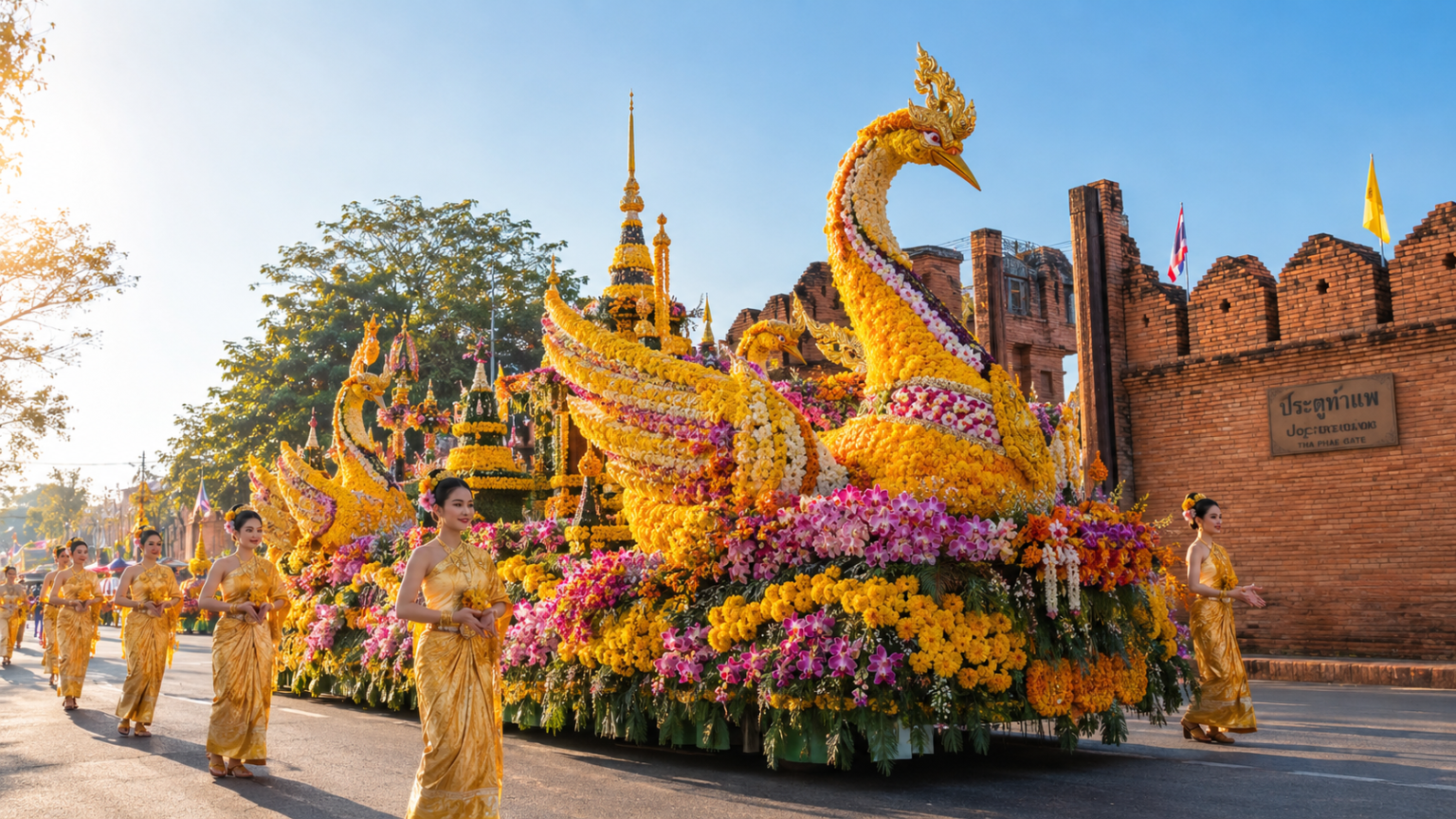
Chiang Mai celebrates peak winter blooms in early February. In fact, northern Thailand enjoys cool, sunny weather as bright flowers open. The annual fair fills the city moat with grand flower floats and garden shows. Guests visit from across the globe to see flower art and folk dance.
This practical Chiang Mai Flower Festival guide gives tested advice for your trip. Confirmed dates for 2027 run from Friday, February 5 through Sunday, February 7. Events center on Nawarat Bridge, Thapae Gate, and Nong Buak Haad Park. Early morning arrival ensures prime parade viewing before midday heat sets in. Check official updates from the Tourism Authority of Thailand before planning your journey.
Confirmed 2027 Dates and Three-Day Festival Schedule
Planning your trip requires tracking the three-day festival schedule. Festivities open on Friday morning with garden shows. Also, plant market stalls open early along the moat.
The grand street parade starts on Saturday morning. In fact, the procession begins at eight o’clock near the river. Most street exhibits stay open until midnight daily. Also, entry to all public show areas is free for every guest. Northern Thailand transitions from cool February blooms to April splash battles, as covered in our Songkran water festival guide.
Top Festival Highlights and Floral Attractions
The Grand Floral Parade: Millions of Blooms and Lanna Floats
The Saturday morning street parade forms the crown jewel of this event. In fact, using this Chiang Mai Flower Festival guide helps you find the best seats early. Over twenty-five massive floats roll down city streets. In fact, they move slowly past cheering crowds.
Each float is covered in fresh yellow mums, orange marigolds, and pink orchids. Local artists spend weeks gluing millions of petals onto sculpted clay frames. These floats show sacred Buddhist legends. They also feature royal Lanna palaces.
Marching bands in bright uniforms play upbeat brass songs between the rolling floats. Also, hill tribe dancers in hand-woven silk tunics perform folk steps. Spectators clap along to loud drumbeats as flower banners pass.

Nawarat Bridge Starting Point: Early Morning Float Assembly
Nawarat Bridge across the Ping River serves as the parade starting point. Floats line up along Charoen Muang Road before sunrise. Crews polish the displays in the dark.
Arrive at the bridge by 7:00 AM to see the floral sculptures up close. Early morning light reflects off the water, creating clean angles for photos. Therefore, walking the bridge before the parade lets you watch teams add final blooms.
You can smell fresh orchids in the cool morning air. Damp moss covers the wooden float bases. Local vendors sell hot coffee, sticky rice, and sweet grilled bananas near the bank. After eight in the morning, the long procession crosses the bridge toward the Old City.
Thapae Gate Viewing Zone: Royal Pageantry and Traditional Dancers
Thapae Gate marks the historic eastern entrance into the Old City. The parade passes through this wide plaza between nine and eleven. Morning sunlight warms the crowd.
Old brick walls and open stone plazas provide fine backdrops for photos. However, large crowds gather early. Therefore, claim your spot on the curb before 8:00 AM.
While waiting for floats, watch bright cultural troupes perform on the stage. Dancers perform the graceful fingernail dance. They wear golden brass tips on their fingers.
Also, city teams give out festival maps and cold drinking water to seated guests. Respectful visitors stay behind the rope lines so marching troupes can pass freely. Follow traffic advisories released by the Chiang Mai Municipality.
Nong Buak Haad Public Park: Giant Floral Sculptures and Orchid Pavilions
Following this Chiang Mai Flower Festival guide leads you to Nong Buak Haad Park. This public park sits in the southwest corner of the city moat. During the fair, the grounds turn into an open flower paradise. In fact, entry to the park remains free for all visitors.
Walking paths wind past ponds filled with floating lotus blooms. Also, small flower boats float on the water. Giant floral sculptures rise above green lawns. In fact, artists shape them like peacocks and dragons.
Shaded bamboo pavilions display rare tropical orchids. You can also see bonsai trees and potted ferns. The park stays open from six in the morning until midnight daily.

Miss Chiang Mai Flower Festival Pageant and Cultural Stages
The Miss Chiang Mai Flower Festival pageant takes place on weekend nights. Floral queens ride atop flower floats during the Saturday street parade. In the evening, the stage at Thapae Gate hosts folk music. Local talent shows draw big crowds.
Contestants wear elegant silk Lanna gowns with fresh orchid garlands in their hair. Furthermore, watching the evening pageant offers rich insight into local beauty ideals. The crowd cheers loudly as judges pick the floral queen of the year.
Folk music plays on bamboo xylophones beside the ancient gate. Strings echo through the plaza. Visitors can sit on plastic chairs in the plaza or watch from outdoor cafes.
Temperate Garden Displays: Tulips, Lilies, and Northern Roses
A special highlight inside Nong Buak Haad Park is the cool flower tent. Cool mist sprayers keep winter flowers fresh under shade canopies. The air feels cool and clean. You will see thousands of bright Dutch tulips, white lilies, and blue hydrangeas.
In addition, rare red Damask roses fill the air with sweet natural perfume. Northern Thai farmers take great pride in growing these mountain blooms. Royal project gardens supply the plants.
High mountain stations on nearby Doi Inthanon supply many of the cold-climate blooms. Helpful signs explain how crop projects helped local hill tribes. In fact, farming replaced opium crops decades ago. Photographers should use soft morning light inside the tent.
Bonsai Competitions and Rare Botanical Exhibitions
Orchid lovers will find stunning floral displays in the central show tent. In fact, hanging wire baskets hold rare Vanda and moth orchids. Purple and white blooms hang in rows.
Regional growers enter their finest blooming plants into official prize contests. Blue ribbon badges mark the top award-winning orchids along the wooden display tables. This floral showcase forms a key stop in this Chiang Mai Flower Festival guide.
Beside the orchid pavilion, master gardeners display old dwarf bonsai trees. Old ficus and juniper trees feature twisted trunks and small leaves. Garden experts sit nearby to answer guest questions. They explain pruning and root care.
Night Garden Illuminations: Lantern Tunnels and Water Fountains
Returning to the park after dark reveals a magical evening mood. Bright light displays illuminate the flower arches. Fountains glow with colorful beams. In fact, illuminated flower tunnels create glowing pathways for evening strolls with family and friends.
Cool night breezes make walking pleasant after the warm afternoon sun. Also, live jazz bands and northern Thai folk groups perform on floating park stages. Locals spread straw mats across the grass to enjoy outdoor picnic dinners. Comparing evening garden lanterns with floating sky lights is easy, as detailed in our Yi Peng lantern festival Chiang Mai guide.
Small paper lanterns hang from large rain trees, casting a warm golden glow over the water. The evening lights stay on until midnight throughout the three-day weekend.

Street Food and Local Plant Markets Along the Moat
A lively plant and craft market wraps around the outer edge of the park. Hundreds of stalls sell flowering shrubs and clay pots. You can also buy garden tools. Local artisans display hand-painted paper umbrellas, woven bamboo baskets, and wood carvings.
Prices are very fair, and friendly stall owners happily explain local plant care. In addition, small food carts line the street. They sell fresh fruit juices and grilled snacks.
You can buy sweet coconut ice cream served in real shells. It tastes rich and cool. Remember to bring cash in small Thai Baht notes, as most market stalls do not take cards. The market stays active all day from early morning until late evening.
Quiet Temple Courtyards and Historic Wooden Monasteries
Strolling beyond the moat reveals quiet temple courtyards with seasonal blooms. Ancient wooden monasteries like Wat Phra Singh display golden pagodas beside manicured jasmine shrubs. Also, orange-robed monks sweep gravel paths beneath blooming frangipani trees. Walking these peaceful temple lanes adds rich depth to this Chiang Mai Flower Festival guide. Comparing northern Lanna shrines with central royal sanctuaries is simple through our Bangkok temples guide.
Traditional Northern Thai Street Food and Market Feasts
Food lovers exploring with this Chiang Mai Flower Festival guide will find great local food. Make sure to try khao soi. This rich coconut curry noodle soup comes with crispy toppings. Also, sample sai oua pork sausage. It is flavored with lemongrass and lime leaf.
Night food markets near the moat serve fresh mango sticky rice. Warm coconut milk poured over sweet rice makes a classic northern treat.
Getting to Chiang Mai: Flights, Sleeper Trains, and Local Songthaews
Getting around Chiang Mai during the flower weekend is simple on foot. You can also take a red truck. Shared red trucks called songthaew charge 30 THB ($0.90 USD) across town.
Also, the municipal Smart Bus connects the airport to the Old City for 20 THB ($0.60 USD). Renting a bicycle offers a fun, easy way to tour quiet temple streets. Stay connected across parade crowds with an Airalo Thailand eSIM.
Where to Stay in Chiang Mai: Old City and Riverside Bases
Choosing the right base makes your Chiang Mai Flower Festival guide trip smooth and easy. Staying inside the Old City puts you near park exhibits. Riverside hotels along the Ping River offer quiet rooms near the parade start. In contrast, the Nimman area features modern cafes. For traditional Lanna architecture set under heritage trees, book a stay at Tamarind Village. For modern luxury rooms near the Sunday Walking Street, reserve a room at U Chiang Mai.
Estimated Travel Costs and Itemized Festival Budget
Daily travel costs in Chiang Mai stay low. Budget travelers in hostels spend 850 to 1,200 THB ($24 to 34USD)daily.Mid-rangeguestsincityhotelsbudget2,200to3,800THB(63 to 108USD)daily.Inaddition,luxuryguestsspend7,500+THB(214+ USD) daily. Protect your travel investment against transit delays with SafetyWing Nomad Insurance.
| Expense Category | Backpacker Tier (Daily) | Mid-Range Tier (Daily) | Luxury Tier (Daily) | Budget Strategy & Notes
|
|---|---|---|---|---|
| Accommodation | 450 – 700 THB ($13 – $20 USD) Hostel dorm or simple guesthouse | 1,400 – 2,400 THB ($40 – $69 USD) 3-star boutique Old City hotel | 5,000 – 12,000+ THB ($143 – $343+ USD) 5-star luxury heritage resort | Reserve rooms 2–3 months ahead; hotel rates peak during the flower festival weekend. |
| Food & Dining | 250 – 350 THB ($7 – $10 USD) Khao soi, night food stalls, fruit | 600 – 950 THB ($17 – $27 USD) Casual garden cafes & local restaurants | 1,800 – 3,500+ THB ($51 – $100+ USD) Fine northern Thai dining & riverside bistros | Street market meals cost 40–60 THB (1.15–1.70 USD) per dish at evening moat food stalls. |
| Local Transportation | 60 – 100 THB ($1.70 – $2.90 USD) Walking & shared red songthaews | 150 – 300 THB ($4.30 – $8.60 USD) Songthaews & Grab ride-hailing | 800 – 1,500 THB ($23 – $43 USD) Private air-conditioned car & driver | Red songthaews offer a flat 30 THB fare anywhere within the Old City perimeter. |
| Festival Admissions | 0 THB ($0 USD) All festival public areas free | 50 – 100 THB ($1.40 – $2.90 USD) Optional nearby temple museum entries | 200 – 500 THB ($5.70 – $14 USD) Reserved seating or VIP garden tours | Nong Buak Haad Park, Thapae Gate stages, and parade viewing are 100% free of charge. |
| Estimated Daily Total | 760 – 1,150 THB ($22 – $33 USD) | 2,200 – 3,750 THB ($63 – $107 USD) | 7,800 – 17,500+ THB ($223 – $500+ USD) | Prices checked on 10 October 2026. (Exchange rate: 35.0 THB = $1.00 USD). |
Recommended 3-Day Festival Itinerary
| Festival Day & Focus | Morning Highlights | Afternoon Highlights | Evening & Night Activities | Transport & Access Advice
|
|---|---|---|---|---|
| Day 1: Friday Opening & Park Exhibits | Official opening ceremony at Nong Buak Haad Park; orchid exhibition opening | Tour temperate flower pavilion; browse gardening market stalls along the moat | Miss Chiang Mai Flower Festival opening round at Thapae Gate; night illuminations | Walk within Old City or ride red songthaew for 30 THB flat fare |
| Day 2: Saturday Grand Floral Parade | 7:00 AM float viewing at Nawarat Bridge; 8:00 AM grand parade down Tha Phae Road | Floats arrive at Nong Buak Haad Park; photograph floral sculptures up close | Miss Flower Festival final coronation at Thapae Gate; night light tunnels & jazz | Roads closed to vehicles along parade route; travel strictly on foot |
| Day 3: Sunday Culture & Local Markets | Quiet morning temple walk at Wat Phra Singh; bonsai contest judging in park | Sample northern street food; shop for handmade paper umbrellas and pottery | Closing award ceremony; Sunday Walking Street market along Ratchadamnoen Road | Walk central Old City streets; rent bicycles for quiet side alley routes |
Frequently Asked Questions About the Flower Festival
Is admission to the Chiang Mai Flower Festival free?
Yes, entry to Nong Buak Haad Park, parade viewing areas, and evening music concerts is completely free.
Where is the best place to watch the Saturday morning flower parade?
Nawarat Bridge offers great float views at 7:30 AM. Also, Thapae Gate provides good viewing around 9:00 AM.
How early should you arrive for the floral parade on Saturday?
You should claim a sidewalk spot along Tha Phae Road by 7:30 AM before thick crowds gather.
What is the best way to travel to Chiang Mai for the festival?
Direct domestic flights from Bangkok take one hour, while comfortable overnight sleeper trains take twelve hours. Book overnight train berths via the State Railway of Thailand.
Cultural Etiquette, Environmental Care, and Responsible Travel
When attending the festival, show respect for local customs and park spaces. Never pull petals from flower floats. Also, do not climb onto display stands. Dress modestly with covered shoulders when visiting nearby Buddhist temples. Following this Chiang Mai Flower Festival guide ensures a colorful, memorable, and respectful holiday.
Please travel responsibly by disposing of your litter in park bins and supporting local family artisans.


