

Lahore is the historic heart of Punjab. It also ranks as the top cultural city in Pakistan. Mughal kings, Sikh chiefs, and British rulers left brick forts across the old town. Today, travelers visit to tour grand palaces and taste spicy night food.
This Lahore travel guide gives verified facts, ticket costs, and crowd tips. Specifically, most guests need three to four days to explore the main historic sights well.
Winter is the best travel window. It brings dry, sunny days from November through February. Allama Iqbal Airport and the M-2 road provide quick routes into town.
Top Historic Attractions in Lahore Travel
Badshahi Mosque: Mughal Red Sandstone Architecture and Courtyard Logistics
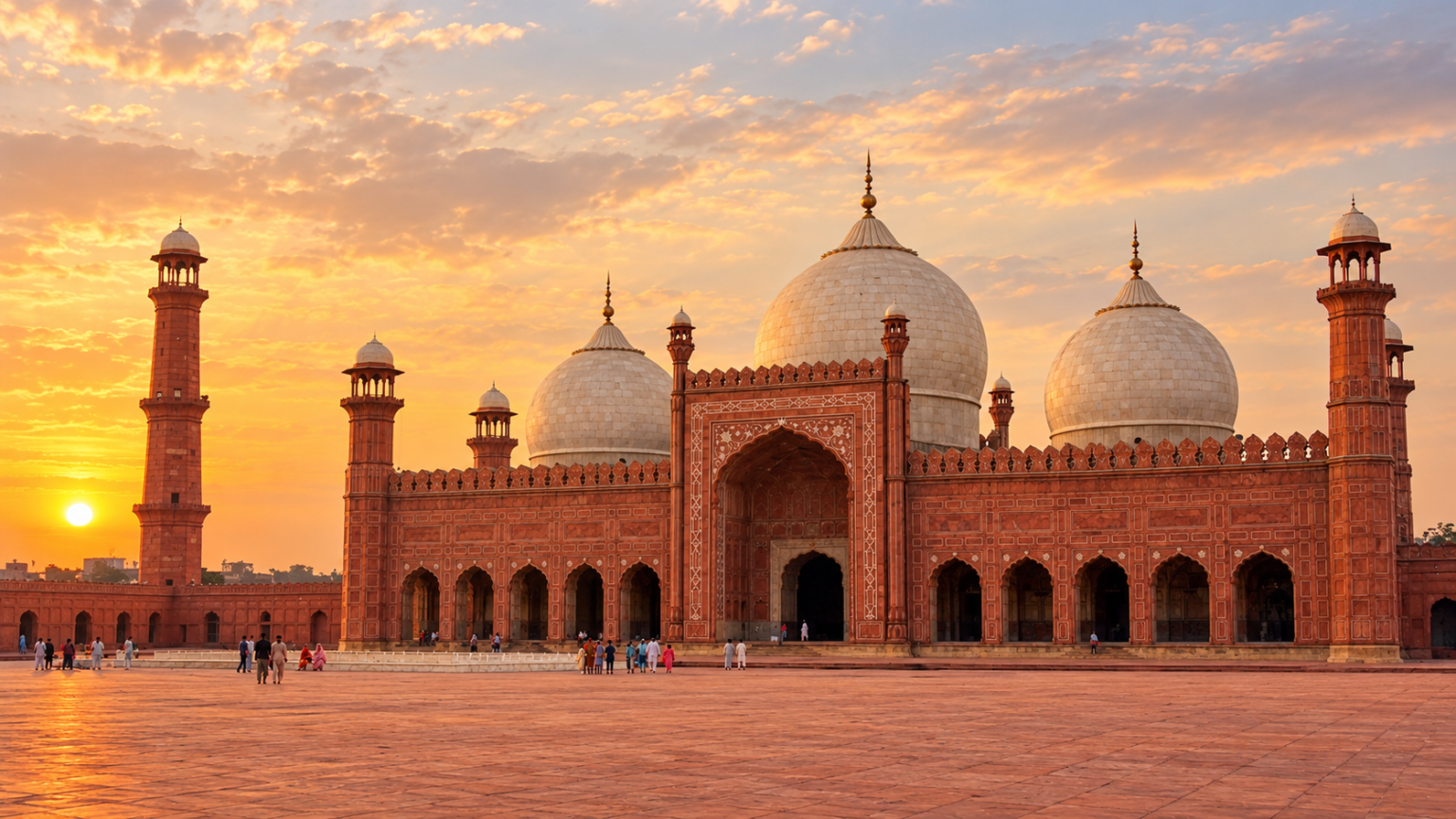
Badshahi Mosque is one of the largest Mughal mosques in the world. Indeed, this Lahore travel guide rates it as an essential stop. Emperor Aurangzeb built the red stone mosque in 1671. Workers finished it two years later.
The vast stone courtyard holds one hundred thousand people for Friday prayers. Three white marble domes rise above the main red stone hall. Furthermore, carved marble blooms and floral plaster art decorate the high inner walls.
A small gallery above the main gate holds sacred historic relics. Meanwhile, outside the gate sits Hazuri Bagh garden and its white marble pavilion. In addition, next to it stands the red stone tomb of national poet Allama Iqbal.
Morning visits from 8:00 AM to 10:00 AM offer soft light and quiet paths. In contrast, weekend nights bring large family crowds to the wide brick yard. Moreover, the red minarets glow bright against the night sky after sunset prayer calls.
Visitors leave shoes at the main gate stall for fifty PKR. In addition, guards ask women to cover their hair with a light scarf. Entry into the main mosque yard is free for all travelers.
Lahore Fort: Sheesh Mahal Glasswork and the 450-Meter Picture Wall
Lahore Fort stands right across Hazuri Bagh garden from the great mosque. Emperor Akbar founded the brick fort in 1566. Later kings added grand marble halls. As a result, the fort displays four centuries of royal building styles.
The Sheesh Mahal, or Mirror Palace, is the most famous royal pavilion. In fact, Shah Jahan built this northern palace between 1631 and 1632 for court events. Furthermore, thousands of tiny curved glass mirrors line the white marble walls and ceiling.
These mirror chips reflect candle sparks into a sea of stars at night. Nearby stands the Naulakha Pavilion, prized for its curved roof and stone art. Meanwhile, the marble Diwan-e-Khas hall gave kings a cool summer seat for state guests.

Nearby sits Moti Masjid, a small pearl-white marble mosque built for royal ladies. Below the royal courts runs the famous Picture Wall, spanning 450 meters. Indeed, this wall is the largest glazed tile mural in the world.
Specifically, bright glazed tiles show elephant fights, polo games, dragons, and winged spirits. The Aga Khan Trust for Culture recently restored the fine tile murals. Foreign entry tickets cost 1,200 PKR ($4.30 USD) at the gate counter. Guards charge two hundred PKR extra to enter the inner Sheesh Mahal court.
Enter through the western Postern Gate rather than outer park gates. This route leads you straight to the tile wall and royal palace steps.
Walled City Heritage Trail: Delhi Gate to the Royal Shahi Hammam
The Walled City retains twelve brick gates leading into dense old lanes. Travelers enter through Delhi Gate to walk the historic Royal Trail. Right inside stands the Shahi Hammam, a grand seventeenth-century Turkish bath.
Court doctor Wazir Khan built this public bathhouse in 1634 for town residents. Underground floor pipes once carried hot steam and warm water into domed baths. Old wall frescoes and star shapes decorate the main hall and warm pools.
The Walled City of Lahore Authority offers local guides here for two thousand PKR. These trained guides show hidden roof views, heating pits, and old neighborhood homes. As a result, booking a guided walk keeps you on the right path.
Wazir Khan Mosque: Intricate Persian Tile Mosaics and Minaret Views
Walk four hundred meters down Kashmiri Bazaar to reach Wazir Khan Mosque. Built between 1634 and 1635, this sacred site shows South Asia’s richest tile art. Bright cobalt, gold, and green glazed tiles coat the inner yard and arches.
Four brick minarets rise thirty-three meters above the busy street markets below. Inside the quiet central court lies the underground tomb of saint Syed Mohammad Ishaq. In addition, the outer bazaar once housed court scribes, book crafters, and leather workers.
Climbing the minarets requires special permission from mosque staff to protect old steps. Therefore, visitors should photograph the bright yard art in early afternoon light. Also, notice the Persian poems carved across the high arched brick niches.

Fakir Khana Museum: Private Royal Collections in Bhati Gate
Near Bhati Gate sits the private Fakir Khana Museum. This historic brick mansion is the largest private museum in South Asia. The Fakir family served as chief ministers to Sikh King Ranjit Singh.
In detail, their home holds over twenty thousand rare items across several carpeted rooms. For example, guests can view small Mughal paintings, old books, Sikh swords, and royal gifts. Because this is a private home, guests must call ahead to set visiting times. Entry is by gift donation, usually one thousand PKR per guest.
Historic Havelis: Barood Khana and Old Town Domestic Architecture
Another notable sight near Taxali Gate is historic Haveli Barood Khana. Built during Sikh rule as an arms depot, it later became a family home. Today, the yard shows carved wood balconies, old weapons, and folk art.
Furthermore, walking these side streets reveals layered Sikh and Mughal home styles. In fact, local wood carvers still make classic teak window screens here. These quiet residential walks show authentic daily life away from busy car traffic.
Shahdara Royal Tombs: Jahangir, Asif Khan, and Nur Jahan
Across the Ravi River in Shahdara lie grand royal Mughal tombs. Here stands the great Tomb of Emperor Jahangir, built in 1637 by Shah Jahan. Moreover, the square stone building has four high minarets decorated with white marble bands.
Inside, Jahangir’s marble tomb displays stone flower inlays and sacred names of God. In addition, a vast fifty-nine-acre garden surrounds the tomb with old brick water paths. Nearby in the same walled park rests the octagonal Tomb of Asif Khan.
A short walk away lies the simple tomb of Empress Nur Jahan. She was Jahangir’s smart wife and ruled by his side for many years. Foreign entry costs one thousand PKR, and quiet afternoon paths offer peaceful walks.
Shalimar Gardens: Royal Terraces and Mughal Water Fountains
Shalimar Gardens sits eight kilometers east along Grand Trunk Road. Emperor Shah Jahan built this three-tier Persian garden in 1641 for royal walks. The three rising terraces carry Persian names: Farah Baksh, Faiz Baksh, and Hayat Baksh.
Four hundred and ten stone fountains fed by canal waters once cooled the courts. Marble pavilions and carved stone water falls cool the afternoon air. Foreign entry costs 1,200 PKR ($4.30 USD). Morning hours offer peaceful shade under trees.
Also, the high red brick wall protects ancient fruit trees and quiet lawns. Consequently, visitors enjoy cool breezes even during warm midday hours. A short stroll through the lower terrace reveals grand royal sleeping chambers.
Lahore Museum: Gandhara Buddhist Relics on The Mall
Culture lovers following this Lahore travel guide should visit the Lahore Museum. Founded in 1894 along The Mall, this red brick hall shows fine colonial design. The museum holds the famous Fasting Buddha stone carving from ancient Gandhara.
Scholars rank this ancient stone statue as a masterwork of world Buddhist art. In addition, other rooms display royal miniature art, gold coins, Sikh arms, and tribal rugs. Foreign tickets cost one thousand PKR ($3.60 USD) at the entry desk.
Wagah Border Ceremony: Afternoon Flag-Lowering Military Drill
Each afternoon, travelers ride thirty kilometers east to the Wagah border. Pakistan Rangers and Indian border troops perform an active joint flag drill. Soldiers march with high kicks, loud calls, and tall fans on their hats.
Meanwhile, crowds roar with cheers while music plays before the sunset flag drop. In addition, foreign guests get seats near the front gate by showing their original passports. Arrive by 3:45 PM to clear security gates before the 5:00 PM start. Entry into the stadium is free, making it a fun afternoon trip.
Legendary Lahore Food Guide: Fort Road to Historic Bazaars
Lahore holds a proud name as the street food capital of Pakistan. This Lahore travel guide takes you straight to Fort Road at sunset. Here, old wooden town homes flank outdoor dining roofs under warm lamps.
Rooftop tables look out on the lit red walls and domes of Badshahi Mosque. Diners eat hot pans of spiced chicken karahi with fresh tandoor naan. Meanwhile, old shops near Anarkali serve rich beef stew cooked slow with marrow.

Morning guests meet at Taxali Gate for puffed bread, chickpea curry, and halwa. Finally, stop at Khalifa Nan Khatai near Bhati Gate for sweet almond cookies. You can pair your food tour with our scenic Swat Valley travel guide.
Getting Around Lahore: Airport Links and the Orange Line Metro
Getting around town is quick with modern trains and ride-hailing phone apps. This Lahore travel guide recommends the Orange Line train to avoid road jams. The modern line runs twenty-seven kilometers across twenty-six clean train stops.
Run by the Punjab Mass Transit Authority, single tokens cost only forty PKR ($0.15 USD). The train links the central train station directly to old city gates. For bus trips from Islamabad, book coaches via 12Go intercity transit booking portals. You can also read our Islamabad capital city guide for route tips.
Where to Stay in Lahore: Best Bases and Neighborhoods
Picking the right area makes sight trips easy and restful. Our Lahore travel guide suggests central bases for fast access to old gates. The Mall offers great heritage access, home to the Pearl Continental Hotel Lahore.
This five-star base has clean rooms, green lawns, and quick car links to the fort. In contrast, southern districts like Gulberg offer modern inns, cafes, and shops. Budget travelers will find cheap rooms on Davis Road near rail links.
Lahore Travel Costs and Itemized Daily Budget
Pakistan is one of the most budget-friendly destinations in all of Asia. This Lahore travel guide shows that travelers enjoy palaces and food on low funds. Below is a clear view of daily costs across three travel styles.
| Budget Tier | Daily Cost (USD) | Daily Cost (PKR) | Included Expenses & Travel Style
|
|---|---|---|---|
| Budget Backpacker | $18 – $28 USD | 5,000 – 7,800 PKR | Clean guesthouse dorm, street food meals, Orange Line Metro rides, and auto rickshaws. |
| Mid-Range Explorer | $40 – $75 USD | 11,000 – 20,800 PKR | 3-star city hotel, restaurant dining, app car rides, monument tickets, and guided walking tour. |
| Luxury Comfort | $120 – $240+ USD | 33,200 – 66,500+ PKR | 5-star hotel stay, private car driver, fine dining on Fort Road, and private museum guides. |
Prices checked on 08 October 2026. Local currency conversions calculated at 278 PKR per USD.
Recommended 3-Day Lahore Heritage Itinerary
Follow this Lahore travel guide route to skip noon heat and catch warm sunset light.
| Day & Time | Target Activity | Key Highlights & Essential Tips
|
|---|---|---|
| Day 1: Morning | Badshahi Mosque & Fort Tour | Visit the red stone mosque courtyard early, then explore Sheesh Mahal and the Picture Wall in Lahore Fort. |
| Day 1: Evening | Fort Road Food Street Feast | Enjoy rooftop dining overlooking illuminated monuments with mutton karahi and fresh tandoor naan. |
| Day 2: Morning | Walled City Heritage Trail | Enter Delhi Gate to tour Shahi Hammam bathhouse, walk bazaar lanes, and photograph Wazir Khan Mosque. |
| Day 2: Afternoon | Lahore Museum & Anarkali | Examine the Gandhara Fasting Buddha at Lahore Museum, followed by shopping in historic Anarkali Bazaar. |
| Day 3: Morning | Shalimar Gardens & Royal Tombs | Stroll triple-terraced Mughal gardens, then cross the Ravi River to visit Jahangir’s monumental tomb. |
| Day 3: Afternoon | Wagah Border Flag Ceremony | Drive east to witness the high-energy military flag-lowering drill alongside thousands of cheering spectators. |
Frequently Asked Questions About This Lahore Travel Guide
Is Lahore safe for independent foreign tourists?
Yes, Lahore is very safe and welcoming for foreign guests across all main areas. Local people take pride in hospitality and often share tea with guests. However, keep wallets safe in crowded bazaars and book rides via phone apps.
Do foreign visitors need an advance visa to visit Lahore?
Most foreign travelers must get an e-visa before flying to Pakistan. Apply through the official Pakistan Online Visa System two weeks before travel. The online form is simple and quick.
What should women wear when visiting mosques in this Lahore travel guide?
Women should wear loose shirts and pants covering arms and legs completely. Also, pack a light head scarf to cover hair in active mosques. Men should wear long pants rather than shorts.
Can I photograph inside Lahore Fort and Badshahi Mosque?
Yes, handheld phone and camera photos are welcome across yards and open halls. However, guards ban commercial tripods and drone flights without formal permits from state heritage offices.
Safety Essentials, Local Scams, and Responsible Travel in Lahore
When walking old town lanes, respect home privacy and do not shoot photos into open doors. Always carry cash in small rupee notes since street food stalls do not take bank cards. You can expand your trip with our broader Pakistan tourism guide.
Travel with care, respect local customs, and help protect the living heritage of old Lahore.


