

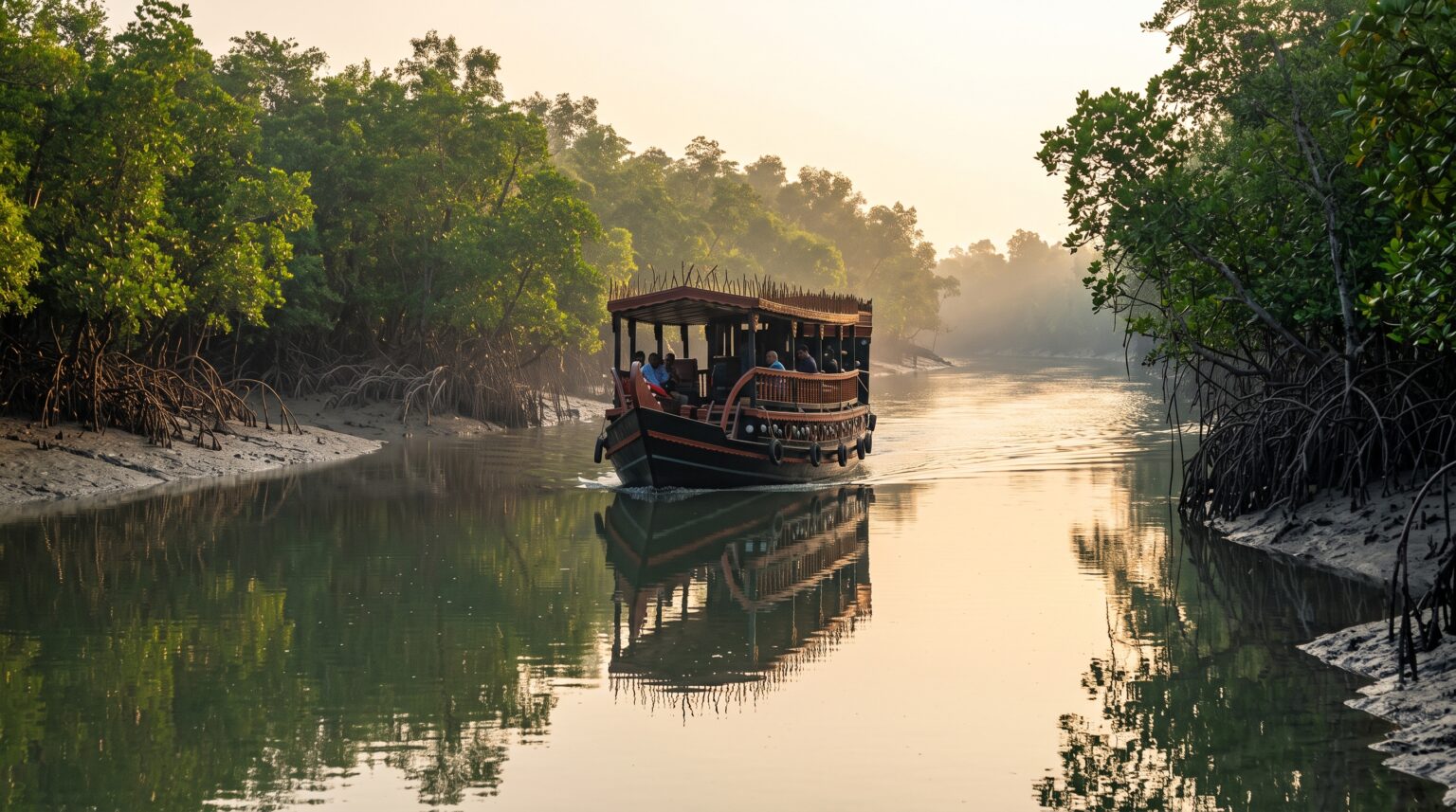
The Sundarbans forms the largest mangrove forest. It is a vast wild delta. It spans the tidal delta of southern Bangladesh. This Sundarbans tour Bangladesh guide gives verified travel facts. UNESCO inscribed the wild delta. In fact, it is a World Heritage site. Tidal rivers weave past trees. Dense sundari groves line each bank.
Therefore, guests explore the forest by wooden boat. In fact, no roads enter the protected core reserve. Mongla Port serves as the main launch gate. Most visitors book a river cruise. In fact, three-day trips are standard. Also, winter brings cool weather and calm tides.
Specifically, travelers visit in winter. November through February is best. Tigers and deer roam freely here. Also, wild boar forage in the grass. In addition, rare river dolphins swim in the creeks. This Sundarbans tour Bangladesh guide helps you plan each step.
Modern express buses cross the Padma Bridge from Dhaka. Good transit makes reaching the south coast fast and easy. Thus, the Sundarbans offers an easy wild trip.
Top Sights and Wildlife Safaris in This Sundarbans Tour Bangladesh Guide
Silent Dawn Country Boat Safaris Through Narrow Tidal Canals in This Sundarbans Tour Bangladesh Guide
Dawn boat trips offer the finest wildlife viewing. Guests board small wooden country boats at sunrise. Boatmen paddle with oars through narrow side canals. In fact, non-motor boats move in total silence.
Quiet paddling lets you watch wildlife. Boats glide softly without noise. In fact, spotted deer graze along muddy tidal banks. Also, bright kingfishers dive for small fish. Mudskippers hop across slick grey mud flats.
Morning mist drifts across the calm water. Also, monkeys chatter from high leafy branches. Listening to the jungle wake up feels deeply calm. Indeed, these silent dawn trips provide lasting safari sights.
Kotka Wildlife Sanctuary Trails and Spotted Deer Meadows
Kotka sits deep in the southern tiger reserve. In fact, it forms the premier wildlife reserve in Bangladesh. Tour boats anchor in the wide river channel nearby. Armed forest guards escort guests on forest trails.
A scenic path winds through meadows. In fact, open grasslands spread wide. In fact, large herds of spotted chital deer graze here daily. Wild boar root through the grass for bulbs and roots. Also, rhesus monkeys forage in the forest treetops.
Climb the tall wooden tower. It sits near the forest post. The high deck offers sweeping views. You look over green treetops. Tigers occasionally cross the open meadow at dusk. Thus, Kotka remains an essential stop on each expedition.
In fact, Kotka offers prime deer watching in Bangladesh. Small herds drink water from muddy river banks at dawn. Also, kingfishers perch calmly on overhanging branches.

Jamtola Sea Beach: The Wild Coast of the Bay of Bengal in This Sundarbans Tour Bangladesh Guide
Jamtola Sea Beach ranks among the wildest coasts in Asia. The remote beach faces the open Bay of Bengal. To reach it, hikers take a three-kilometer forest trail. The dirt path crosses footbridges. Also, it winds past sand dunes.
Untouched sand stretches for miles. In fact, golden shores meet the sea. Bleached driftwood lines the shore. Old logs mark the high tide line. In fact, fresh tiger paw prints often mark the wet sand. Tigers walk the shoreline at night searching for washed-up food.
Heavy surf crashes loudly against the deserted coast. However, strong sea currents make swimming unsafe here. Walking the wild sands feels truly remote and untamed.
Also, gentle sea turtles nest in the dunes at night. They lay eggs safely above the high tide line. This Sundarbans tour Bangladesh guide highlights Jamtola as unmissable.
Kochikhali River Station and Forest Trails
Kochikhali sits east of Kotka along a tidal channel. This remote forest station offers superb wildlife walks. Dense sundari trees line the banks. Also, gewa trees shade the water. In fact, marsh crocs often bask on sunny mud banks.
Armed guards lead walking tours through coastal scrub and grass. Guests can spot grand sea eagles circling above. Large monitor lizards sun themselves on fallen logs. Also, herds of deer feed along the edge of the woods.
A quiet tower views a pond. In fact, sweet water draws thirsty deer. Animals gather here at dusk. They drink cool water peacefully. Spending an afternoon at Kochikhali brings true jungle solitude. Indeed, it reveals the rich biodiversity of the southern delta.
Harbaria Eco-Tourism Centre and Suspension Bridge Walk in This Sundarbans Tour Bangladesh Guide
Harbaria serves as a major northern forest base. It sits along the Pasur River south of Mongla. The Forest office maintains an excellent eco-trail here. In fact, a raised wooden boardwalk winds through the swamp.
The wooden walkway spans far. In fact, it runs one and a half kilometers. Guests can inspect spiky mangrove breathing roots close up. These roots, called pneumatophores, poke through tidal mud. Also, an arched rope bridge crosses a tidal creek.
A calm pond features fresh tiger paw marks in cement casts. A wooden tower offers views over the dense treetops. Harbaria gives a safe, easy taste of the deep jungle. Thus, this Sundarbans tour Bangladesh guide recommends it for all ages.
In fact, Harbaria shelters rare mangrove plant species. Tall sundari trees rise high above the swamp floor. Also, fiddler crabs scuttle across the grey mud flats.
Karamjal Crocodile Breeding Centre and Deer Park
Karamjal sits closest to Mongla Port on the Pasur River. It operates as a government wildlife breeding research base. Day trippers can reach Karamjal by motor boat in one hour. The station features shaded trails. In fact, clean enclosures hold wildlife.
The center breeds rare crocs. In fact, staff release young reptiles. Also, the center breeds critically endangered river terrapins. A deer park allows guests to observe spotted deer up close.
A wooden boardwalk leads through dense palm and sundari trees. Rhesus macaque monkeys swing playfully along the trail rails. Touring Karamjal provides an educational wildlife trip. Also, it suits guests with limited time on the coast.
Tracking Royal Bengal Tigers: Pugmarks and Alarm Calls
The Sundarbans harbors the largest wild Bengal tiger numbers. In fact, these rare swamp tigers swim across wide rivers. They drink saline tidal water and hunt wild deer. Spotting a tiger in dense mangroves demands patience and luck.
Expert forest guides track tigers using fresh paw prints. Locals call these distinct four-toed tracks pugmarks. Also, guides listen closely for sharp jungle alarm calls. Spotted deer bark loudly when a predator approaches nearby.
Langur monkeys screech warnings from high tree branches. Always follow advice from your armed forest escorts. Seeing fresh pugmarks in wet mud brings real jungle thrills. Indeed, knowing a tiger walked here recently stirs the imagination.

Irrawaddy and Ganges River Dolphin Habitats at Dhangmari
The delta shelters rare dolphins. In fact, two distinct species live here. In fact, Ganges dolphins and Irrawaddy dolphins live here. Dhangmari reserve protects deep pools. In fact, dolphins feed here safely.
First, tour boats idle their engines in calm river forks. Guests watch the water surface for rising dolphin snouts. Dolphins roll gracefully through muddy river water to breathe. Also, young calves swim close beside their mothers.
Conserving these rare river dolphins remains vital. It protects the delta. Watching dolphins surface against green mangrove banks is delightful. It showcases the incredible marine richness of the delta.
In fact, dolphins leap clear of river foam. They hunt small fish near the mud banks. Also, boat guests watch them surface in morning sun.
Hiron Point Southern Sanctuary and Birdwatching
Hiron Point sits on the western bank of the Nilkamal River. In fact, locals know this remote southern post as Nilkamal. It ranks as a premier birdwatching destination in the reserve. In fact, tidal mudflats attract hundreds of migratory shorebirds.
Birdwatchers can spot grand sea eagles overhead. Lesser adjutant storks wade patiently through shallow creeks. Also, rare masked finfoots nest in quiet mangrove branches. River birds in bright blue and copper plumage perch on roots.
A wooden tower views wide channels. It looks over river flats. Quiet watching rewards photographers. Patient guests get rare bird shots. Touring Hiron Point adds exceptional bird depth to your cruise.
In fact, Hiron Point offers exceptional wildlife photography. Large egrets wade quietly through shallow creek waters. Also, wild boars forage along the muddy banks at low tide.
Traditional Otter Fishing Heritage of Sundarbans Rivers
Otter fishing is a rare folk custom in southern Bangladesh. In fact, generations of fishers have trained otters to fish. In fact, families breed and train otters from young pups. Otters wear soft string harnesses tied to long poles.
Fishers lower wide nets at night. In fact, they work in river shallows. Then, trained otters swim in arcs. They herd schools fast toward the trap. The otters do not catch fish themselves with their teeth. Instead, they chase schools of fish directly toward the trap.
Fishers reward their loyal otters with fresh fish treats. This rare custom survives today. In fact, it continues along the Chitra River. Witnessing this ancient human-animal partnership is deeply moving. Indeed, it highlights the living ancient heritage of the delta.
In fact, otters swim fast in cold river waters. They dive under surface currents with great ease. Also, fishers keep them warm on wooden decks at night.
Authentic Riverboat Galley Dining: Fresh Hilsa and Prawn Feasts
Dining aboard a wooden safari cruiser is a trip highlight. In fact, ship cooks prepare fresh Bengali meals in compact galleys. Breakfast brings hot flatbreads. Cooks serve fried eggs and warm lentils. Cooks serve sweet milk tea throughout the morning cruise.
Lunch and dinner feature fresh seafood. In fact, cooks buy fish from coastal ports. Taste famous river hilsa cooked in spicy mustard paste. Cooks also fry giant sweetwater tiger prawns with onions. Bowls of warm yellow dal and vegetable curry accompany each meal.
Enjoying hot, freshly cooked meals on deck feels wonderful. Cool river breezes make evening dining under starlit skies memorable. Fresh ingredients bought at river ports make each feast delicious.
Dublar Char Island and Seasonal Fishermen Communities
Dublar Char is an isolated island on the Bay of Bengal. In fact, thousands of fishers build bamboo huts here in winter. They dry millions of coastal fish on tall bamboo racks. In fact, the island buzzes with busy seasonal activity.
Walking through drying yards reveals local life. In fact, fishers work on bamboo racks. Fishers mend large nets. Also, they paint wooden trawler hulls. The island hosts Rash Mela. In fact, this Hindu fair draws thousands. Pilgrims gather under the full moon. They take holy river dips.
Touring Dublar Char offers rich human cultural insight. It balances days of remote wildlife tracking in the quiet forest. Thus, a beach stop here enriches your complete cruise route.
Transit to Mongla and Khulna: Express Buses and Rail in This Sundarbans Tour Bangladesh Guide
Reaching the mangrove launch ports is now quick and smooth. In fact, modern express buses leave Dhaka daily via the Padma Bridge. Comfortable AC buses run fast. They reach Mongla Port in five hours. One-way bus fares cost between eight hundred and fifteen hundred taka.
Alternatively, guests can take the train with Bangladesh Railway. Indeed, the Sundarban Express connects Dhaka with Khulna in four hours. From Khulna station, local buses reach Mongla Port in one hour. Compare this route with tea hill hikes in our Sreemangal travel guide.
Also, guests can pair delta rivers with mountain trails in our Bandarban travel guide. Taking the train offers scenic views of southern rural landscapes.
Forest Department Permits and Armed Guard Regulations
Each visitor entering the reserve needs an official entry pass. The Bangladesh Forest Department manages all permits from its Khulna office. In fact, tour operators handle all permit papers and fees in advance. Foreign guests pay fifteen hundred taka daily for reserve access.
In addition, forest rules mandate two armed guards for walking groups. Guards carry rifles to safeguard tourists from potential tiger encounters. Always remain close to your guards during forest trail walks. Never wander into thick brush away from established walking paths.
Where to Stay: Riverboat Cabins and Pre-Cruise Hotels
Most guests sleep aboard their chartered river safari boat. In fact, boats feature private twin-bed cabins with screened windows. Waking up to misty water views and birdsong is deeply calming. Standard cruisers offer clean shared baths. Luxury ships feature private ensuites.
If arriving before departure, stay at City Inn Khulna. This top-rated hotel offers cool rooms, a pool, and station transfers. Browse options through this Khulna hotel search for local stays. Explore historic sights in our guide to places to visit in Khulna.

Sundarbans Tour Bangladesh Guide Costs and Daily Budget
A Sundarbans tour in Bangladesh delivers extraordinary trip value. Most guests book a complete three-day boat package. In fact, packages include boat cabins, meals, permits, and armed guards. This Sundarbans tour Bangladesh guide details costs across three travel tiers.
| Expense Category | Budget Tier (1-Day Eco-Park) | Mid-Range Tier (3-Day Cruiser) | Luxury Tier (Private Houseboat) |
|---|---|---|---|
| Round-Trip Transit (Dhaka – Mongla) | 1,600–2,200 BDT ($13–18 USD) / AC bus | 2,400–3,500 BDT ($20–29 USD) / AC bus or train | 12,000–20,000 BDT ($100–167 USD) / private car |
| Boat Safari Package | 3,500–5,000 BDT ($29–42 USD) / day trawler | 16,000–24,000 BDT ($133–200 USD) / shared cabin | 35,000–65,000 BDT ($292–542 USD) / luxury suite |
| Forest Entry & Armed Guard Fees | 1,500 BDT ($12.50 USD) / day permit | 3,000 BDT ($25.00 USD) / bundled in tour | 3,000 BDT ($25.00 USD) / bundled in tour |
| Meals & Drinking Water | 800–1,200 BDT ($7–10 USD) / local cafes | Included in cruise package | Included gourmet dining |
| Local Transit & Staff Tips | 500–1,000 BDT ($4–8 USD) / auto-rickshaw | 1,200–2,000 BDT ($10–17 USD) / crew tip share | 2,500–5,000 BDT ($21–42 USD) / private tips |
| Estimated Trip Total | 7,900–10,900 BDT ($66–91 USD) | 22,600–32,500 BDT ($188–271 USD) | 52,500–93,000 BDT ($438–775 USD) |
Recommended 3-Day Sundarbans Tour Bangladesh Guide Itinerary
This three-day itinerary balances tidal canal safaris with watchtower hikes. Follow this Sundarbans tour Bangladesh guide route for a rewarding wilderness voyage. This Sundarbans tour Bangladesh guide ensures you spot prime wildlife.
| Day | Timing Window | Primary Focus | Activity Highlights & Wildlife Sights |
|---|---|---|---|
| Day 1 | Morning (7:00 AM – 12:00 PM) | Mongla to Harbaria | Board your safari vessel at Mongla Port, cruise down the Pasur River, and walk the Harbaria wooden eco-trail. |
| Day 1 | Afternoon (1:00 PM – 5:30 PM) | Tidal Canals to Kotka | Navigate deep forest channels, watch for basking marsh crocs and Irrawaddy river dolphins, and anchor near Kotka. |
| Day 2 | Morning (6:00 AM – 9:00 AM) | Silent Dawn Rowboat | Take a quiet wooden country boat into narrow creeks at dawn to observe swimming deer and hear jungle bird calls. |
| Day 2 | Daytime (10:00 AM – 2:00 PM) | Kotka Trails & Tower | Hike with armed forest guards across spotted deer meadows and climb the forty-foot wooden watchtower for canopy views. |
| Day 2 | Afternoon (3:00 PM – 6:00 PM) | Jamtola Sea Beach | Hike three kilometers through coastal jungle to the remote Bay of Bengal beach to inspect wild tiger pugmarks on sand. |
| Day 3 | Morning (6:30 AM – 11:30 AM) | Kochikhali Wildlife Loop | Cruise through Kochikhali river channels, spot grazing herds of spotted deer, and observe white-bellied sea eagles. |
| Day 3 | Afternoon (12:30 PM – 5:00 PM) | Karamjal & Return | Tour Karamjal crocodile breeding pools and deer enclosures before disembarking at Mongla Port for onward travel. |
Regional Connections Across Southern Bangladesh
The Sundarbans connects seamlessly with ancient attractions across the delta. Visit the 15th-century Sixty Dome Mosque in historic Bagerhat nearby. Compare this tidal river journey with our guide to Tanguar Haor freshwater wetlands. Smooth highway transit links Khulna with major hubs across Bangladesh.
Frequently Asked Questions About the Sundarbans Tour Bangladesh Guide
When is the best time for a Sundarbans tour in Bangladesh?
The best season runs from November through February with pleasant winter weather. Tidal waters stay calm, and sunny days encourage wildlife basking. The forest closes for three months each summer for animal breeding.
How safe is a Sundarbans tour in Bangladesh with wild tigers?
Tours are very safe when following certified Forest Department guidelines. In fact, two armed guards escort each group walking on forest trails. Visitors spend the vast majority of their time aboard secure riverboats.
How do you get to the Sundarbans from Dhaka?
In fact, AC express buses reach Mongla Port in five hours via Padma Bridge. Alternatively, the Sundarban Express train connects Dhaka to Khulna in four hours. Local buses and taxis link Khulna railway station with Mongla.
Can foreign travelers visit the Sundarbans independently?
Foreign visitors cannot enter protected forest reserves without official permits and guards. Booking through a registered tour operator is the standard, easy approach. Agencies handle all boat charter, forest permit, and armed guard paperwork.
Safety Essentials, River Hazards, and Responsible Travel
Always follow advice from your assigned armed forest guards. Therefore, wear sturdy walking boots with thick socks on jungle trails. Do not wear bright clothing; choose natural greens, browns, and khakis.
Drink only purified bottled water provided on your tour boat. Carry all plastic waste back aboard and never litter in tidal streams. Official eco-tourism advisories are published by the Bangladesh Tourism Board. Prices were checked on 08 October 2026. Local currency conversions use 120 BDT per USD.


