

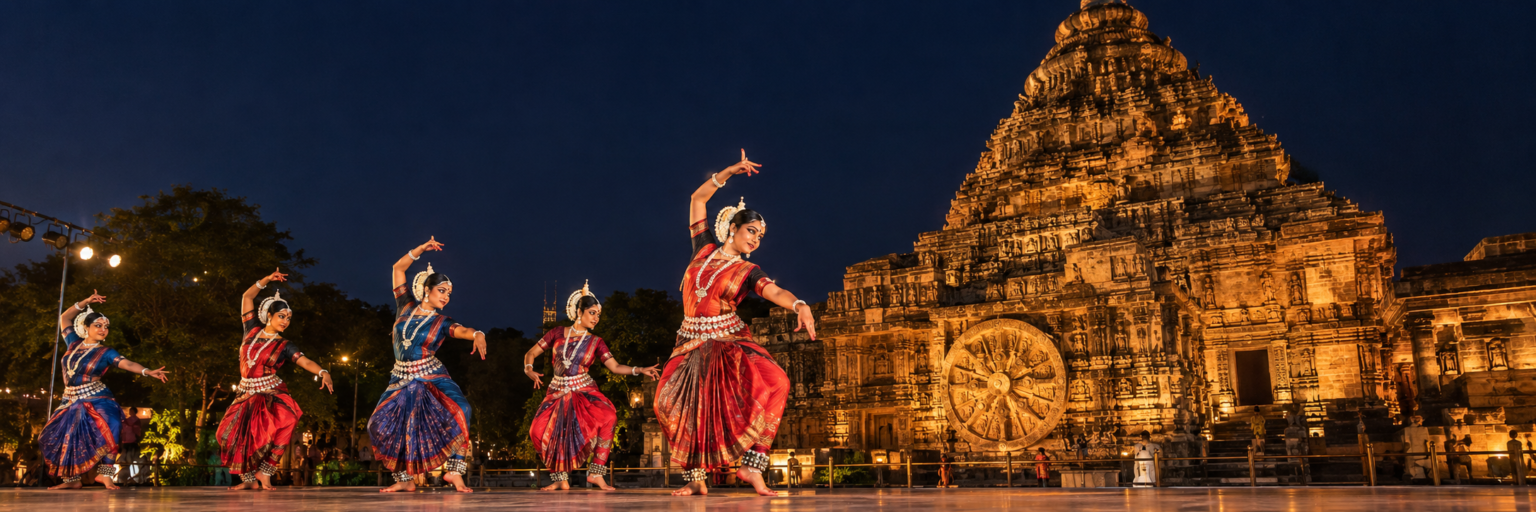
Konark sits on the Bay of Bengal coast. It lies in the state of Odisha. This Konark Dance Festival guide gives verified travel facts. The festival takes place every December without change. In 2026, events run from December 1 to December 5.
Therefore, guests enjoy five days of open dance. In fact, the stage sits before the Sun Temple. Also, artists carve giant sand figures on the beach. Pleasant winter weather brings clear skies.
Specifically, guests need three days here. Day warmth stays near twenty-seven degrees Celsius. In contrast, night sea winds bring a pleasant chill. This Konark Dance Festival guide helps you plan each show.
State buses link the town with Bhubaneswar. Good roads make coastal travel quick and smooth. Thus, Konark serves as a top stop in India.
Top Sights and Cultural Wonders in This Konark Dance Festival Guide
The 13th-Century Konark Sun Temple Architecture and Natamandira
The Konark Sun Temple stands as a world site. In fact, King Narasimhadeva built the shrine in 1250. Master stone masons shaped the temple as a chariot. It honors Surya, the Hindu sun god.
Next, the complex features the Natamandira dance hall. In fact, carved stone pillars depict divine dancers. Stone figures play flutes, drums, and bronze cymbals. Furthermore, each pillar reflects ancient dance poses.
Centuries ago, dancers moved in this stone hall. Today, the modern festival revives that ancient rite. This grand stone craft matches the UNESCO stone chariot ruins in Hampi. Also, guests pair this trip with Kolkata Kali Puja celebrations.
The 24 Monolithic Sun Chariot Wheels and Astrological Sundials
Twenty-four giant stone wheels line the temple base. In fact, each wheel measures ten feet across. Also, fine carvings cover the rims and spokes. Eight wide spokes divide each wheel into hours.
Indeed, these giant wheels function as solar sundials. The axle casts a sharp shadow. It shows the exact time. Skilled masons carved fine scenes into the spokes. Carvings depict daily life. Also, they show wild animals.
Seven carved stone horses pull the chariot east. They face the rising sun above the sea. Walking around the base reveals clever stone craft. Indeed, inspecting the wheels offers a top highlight.
Evening Classical Recitals at the Open-Air Auditorium
The dance festival begins each night at six. Golden floodlights light up the Sun Temple walls. In fact, the open stage faces this ancient backdrop. Cool sea breezes blow gently across the stone seats.
First, opening bugles and conch shells announce each show. Next, top classical dance troupes take the open stage. Two distinct dance styles perform each night. Performances run until half past eight at night.
The bright stone ruins create a grand sight. The stage echoes the glory of Dev Deepawali celebrations in Varanasi. Thus, this Konark Dance Festival guide recommends front seats. Also, warm shawls keep spectators cozy during night shows.
Odissi Dance Mastery: Tribhanga Poses and Silver Filigree
Odissi takes center stage during the festival nights. It ranks among the oldest dance arts in India. In fact, dancers master the famous tribhanga posture. This graceful pose mirrors the stone temple carvings.
Furthermore, performers wear silk sarees with red borders. Fine silver filigree jewelry from Cuttack adorns each dancer. They wear white floral crowns in their hair. Brass ankle bells chime in crisp rhythm with drums.
Expressive eyes and hand signs tell sacred tales. Dancers portray stories of Lord Jagannath. Also, they depict Krishna. Watching Odissi before the temple connects art with history. Indeed, this dance form embodies the soul of Odisha.
Pan-Indian Classical Dance Traditions on the Konark Stage
The event showcases India’s diverse dance arts. In fact, audiences enjoy major regional styles. Master troupes present Bharatanatyam, Kathak, and Manipuri. Each night pairs two different dance styles.
Indeed, Kathak dancers dazzle with fast spins. In contrast, Manipuri troupes glide with soft swaying. Bharatanatyam dancers display sharp geometric steps. This diverse showcase mirrors classical Kathakali dance in Fort Kochi.
Renowned gurus travel here to perform on stage. Furthermore, guest artists explain the stories before each set. This diverse art showcase makes the festival deeply rewarding.

The International Sand Art Festival at Chandrabhaga Beach
The World Sand Art Festival runs along the beach. It pairs with the night shows. It takes place on the sands of Chandrabhaga Beach. Famed sand master Sudarsan Pattnaik directs the event. In fact, it opens daily from ten in the morning.
Master sand artists arrive from many lands. Next, artists carve giant sand figures along the shore. Figures depict ocean wildlife. Also, they highlight world peace. Raised wooden walkways let guests view each work closely.
In the evening, bright spotlights light up the sand carvings. The glowing figures look magical beside breaking ocean waves. Entry to the sand art display is free. It welcomes all visitors. Also, artists gladly explain their methods to crowds.

Chandrabhaga Beach Sacred Shoreline and Sunrise
Chandrabhaga Beach sits two miles east of the temple. In fact, the wide golden beach holds deep sacred value. Ancient lore tells of Samba. He bathed here and was cured. Today, pilgrims gather at dawn. They greet the rising sun.
Indeed, early morning brings pastel skies over the sea. Also, local fishermen launch wooden boats through the surf. Tall pine groves line the sandy coastal dunes. The clean morning breeze feels fresh. It cools the shore after dark.
Strong sea currents make swimming unsafe. Therefore, stay on dry sand. The quiet shore provides calm rest between festival events.
Archaeological Museum Konark and Sculptural Galleries
The heritage museum sits near the Sun Temple gate. The Archaeological Survey of India curates this museum. In fact, four rooms display eight hundred stone relics. Masons found these pieces during temple preservation work.
Next, the central room houses green chlorite stone carvings. Guests admire detailed statues of Surya on his chariot. Other rooms display divine nymphs, lions, and elephants. Scale models show the temple tower. They reveal how it looked long ago.
Touring the museum helps guests. It explains the history of the ruins. Admission costs just a nominal fee for day guests. A calm garden surrounds the museum with shaded stone benches.
Scenic Puri-Konark Marine Drive and Casuarina Coastal Groves
The Puri-Konark Marine Drive is a scenic highway. The smooth road skirts the edge of the sea. In fact, dense pine forests line both sides of the road. Also, fresh sea breezes sweep through the pine trees.
In addition, the route passes through Balukhand-Konark Wildlife Reserve. Guests often spot spotted deer grazing near roadside groves. Quiet sandy beaches invite drivers to stop and take photos. The scenic drive links the coast. It connects festival events with Puri.
Riding this highway by taxi or public bus is delightful. Golden afternoon sunlight filters through the tall pines.
Ramchandi Temple and Kushabhadra River Estuary
Ramchandi Temple sits four miles southwest along Marine Drive. This ancient coastal shrine honors Goddess Ramchandi. In fact, the temple stands where the river meets the sea. Indeed, a calm tidal estuary shelters the sandy beach.
Gentle waters make Ramchandi Beach a popular picnic spot. Guests can rent pedal boats or take motorboat rides. The river mouth offers safe waters. Swims feel calm here. In fact, waters stay sheltered. Furthermore, local seaside stalls serve fried fish and coconuts.
Watching the sunset across the river is deeply relaxing. It provides a calm trip before evening festival dance sets.
Traditional Odia Temple Cuisine and Coastal Delicacies
Dining during the festival introduces guests to Odia food. In fact, Odia cuisine uses light spices and fresh coconut. For lunch, try dalma, a warm lentil and vegetable stew. Next, chefs simmer pumpkin and raw papaya. They add eggplant with roasted cumin.
Pair dalma with steaming white rice. Also, enjoy crispy fried fish. Coastal stalls serve fresh fish. In fact, they fry prawns from local harbors. For dessert, taste chhena poda. It is Odisha’s baked cheese cake. Sweet brown sugar forms a tasty golden crust.
In nearby Puri, sample fresh khaja, crisp sugar pastries. Sip green coconut water sold along every roadside.
Pipli Applique Craft Village Heritage Excursion
In fact, Pipli is a famous craft village near Konark. Indeed, local craft families have sewn applique cloth for ages. In fact, artisans stitch bright fabric patterns onto canvas cloth. Historically, they created royal canopies for the Puri chariot fair.
Bright shops line the main street with handmade craft goods. Guests can buy colorful cloth lanterns. Also, they pick up wall hangings. Detailed elephant and bird patterns adorn each embroidered piece. Buying direct from village artisans supports local village crafts.
A short stop in Pipli enriches your trip. It adds charm to your day. It shows living craft customs. These flourish in rural Odisha.
Route Transit: Mo Bus Network and Marine Drive Cabs
Reaching Konark is simple using modern state transit. The airport in Bhubaneswar lies forty miles away. In fact, from Bhubaneswar railway station, Mo Bus Route 70 runs fast to Konark. The air-conditioned bus runs fast. It costs just forty-five rupees.
Next, from Puri train station, Mo Bus Route 71 departs every thirty minutes. The scenic drive along Marine Drive takes only forty-five minutes. In addition, pre-paid taxis and auto-rickshaws connect all three cities. Train and bus routes are managed by Odisha Tourism.
Where to Stay for the Konark Dance Festival: Lodgings and Bases
Choosing where to stay depends on your plan. Consider your evening transit. Staying in Konark lets you walk to the open stage. The state-run Panthanivas Konark sits right opposite the Sun Temple. It offers clean rooms, green lawns, and a good restaurant.
Down Marine Drive, Lotus an Eco Resort Konark offers seaside cottages. The calm retreat sits beside Ramchandi Beach among pine trees. Alternatively, travelers can base themselves in nearby Puri. Browse rooms through this Puri hotel search for beachfront resorts.
Konark Dance Festival Guide Costs and Daily Budget
Attending the Konark Dance Festival provides good travel value. General open gallery seating is free. Guests sit on stone steps. However, reserved chair passes cost one hundred to four hundred rupees. This Konark Dance Festival guide details daily expenses across three travel tiers.
| Expense Category | Budget Pilgrim / Backpacker (INR / USD) | Mid-Range Explorer (INR / USD) | Luxury Resort (INR / USD) |
|---|---|---|---|
| Accommodation | 1,200–2,000 INR ($14–24) / night (Konark town guesthouse) | 4,500–7,500 INR ($54–89) / night (3-star resort or Panthanivas) | 12,000–25,000 INR ($143–298) / night (Lotus Eco Resort / Puri villa) |
| Festival & Temple Entry | 140 INR ($1.65 USD) (ASI Sun Temple & free gallery) | 440–640 INR ($5.25–7.60 USD) (ASI ticket & reserved chair pass) | 1,000–2,000 INR ($12–24 USD) (ASI ticket & VIP donor pass) |
| Daily Meals & Refreshments | 500–900 INR ($6–11 USD) (Local dalma, rice, and street snacks) | 1,500–3,000 INR ($18–36 USD) (Seafood thalis & resort dining) | 3,500–7,000 INR ($42–83 USD) (Fine dining & multi-course banquets) |
| Local Transit (Mo Bus / Cabs) | 150–300 INR ($2–4 USD) (State Mo Bus Routes 70 & 71) | 800–1,500 INR ($10–18 USD) (Auto-rickshaws & local taxis) | 2,500–5,000 INR ($30–60 USD) (Dedicated private AC car & driver) |
| Estimated Daily Total | 1,990–3,340 INR ($24–40 USD) | 7,240–12,640 INR ($86–150 USD) | 19,000–39,000 INR ($226–465 USD) |
Recommended 3-Day Konark Dance Festival Guide Itinerary
This three-day itinerary balances dance shows with coastal sightseeing. Follow this Konark Dance Festival guide route to explore the coast. It covers all key highlights. This Konark Dance Festival guide ensures you catch every dance set.
| Day | Timing Window | Primary Focus | Activity Highlights & Cultural Sights |
|---|---|---|---|
| Day 1 | Morning (9:00 AM – 1:00 PM) | Transit & Check-In | Take Mo Bus Route 70 from Bhubaneswar to Konark, check into your hotel, and enjoy a traditional Odia lunch. |
| Day 1 | Afternoon (2:30 PM – 5:00 PM) | Sun Temple Architecture | Tour the 13th-century chariot wheels, seven horses, and Natamandira dance pavilion with an official ASI guide. |
| Day 1 | Night (6:00 PM – 8:30 PM) | Opening Dance Recitals | Watch opening night Odissi and Bharatanatyam performances under golden floodlights facing the Sun Temple. |
| Day 2 | Morning (6:30 AM – 9:00 AM) | Chandrabhaga Sunrise | Greet the morning sun over the Bay of Bengal and watch local fishermen launch wooden boats through the breakers. |
| Day 2 | Daytime (10:00 AM – 2:00 PM) | Sand Art Festival | Walk the beach art pavilion to view global sand sculptures curated by Sudarsan Pattnaik on Chandrabhaga Beach. |
| Day 2 | Night (6:00 PM – 8:30 PM) | Kathak & Manipuri Sets | Attend evening recitals featuring fast Kathak spins and lyrical Manipuri dances at the open-air stage. |
| Day 3 | Morning (9:00 AM – 1:00 PM) | Marine Drive & Ramchandi | Ride along scenic Marine Drive to Ramchandi Temple where the Kushabhadra River meets the sea for calm boat rides. |
| Day 3 | Afternoon (2:00 PM – 5:00 PM) | Pipli Craft Village | Tour Pipli artisan workshops to watch applique embroidery craft before returning to Konark for final night shows. |
| Day 3 | Night (6:00 PM – 9:00 PM) | Grand Finale Recitals | Celebrate the festival grand finale presentations followed by the state cultural awards ceremony. |
Regional Connections Across the Golden Triangle of Odisha
Konark forms part of Odisha’s famous Golden Triangle. Puri sits twenty miles southwest, home to the Jagannath Temple. State capital Bhubaneswar lies forty miles northwest with sandstone temples. This Konark Dance Festival guide helps you explore all three cities.
Frequently Asked Questions About the Konark Dance Festival Guide
When does the Konark Dance Festival take place in 2026?
The festival takes place every year from December 1 to December 5. Evening classical dance shows run from six to half past eight. The World Sand Art Festival at Chandrabhaga Beach runs concurrently.
Do visitors need tickets for the Konark Dance Festival?
General open gallery seating is free for the public. Reserved chair passes cost one hundred to four hundred rupees daily. Daytime Sun Temple entry tickets are issued by the Archaeological Survey of India.
How do travelers reach Konark from Bhubaneswar or Puri?
Take Mo Bus Route 70 from Bhubaneswar railway station to Konark. From Puri, Mo Bus Route 71 runs along scenic Marine Drive. Taxis and auto-rickshaws also provide easy door-to-door transit.
Can tourists visit the Sun Temple at night during the festival?
The main temple monument closes at sunset per site rules. However, the open dance arena sits beside the temple perimeter. Spectators enjoy dramatic views of the floodlit stone monument throughout the shows.
Safety Essentials, Temple Etiquette, and Responsible Travel
Dress modestly covering shoulders and knees when visiting ancient shrines. Remove footwear before stepping onto marked stone temple platforms. Therefore, flash photography is strictly banned during live dance shows.
Bring a light sweater or warm shawl for cool December nights. At Chandrabhaga Beach, admire sand art without stepping inside artist ropes. Official travel guidelines are posted by Incredible India. Prices were checked on 08 October 2026. Local currency conversions use 84 INR per USD.


