

Kyoto was the ancient capital of Japan for a thousand years. Today, this valley holds over two thousand temples and shrines. Travelers visit to see old wooden halls, rock gardens, and stone paths. However, big midday crowds can slow your trip down.
This practical Kyoto 3 day itinerary gives you a clear path across the city. In fact, autumn and spring are the best travel seasons. Plan for three full days using Kyoto Station as your primary rail base. Early morning starts let you enjoy quiet shrine gates before tour buses arrive. Check seasonal temple illumination dates on the Kyoto City Official Travel Guide before heading out.
Day 1: Southern Shrines, Historic Higashiyama & Gion
Fushimi Inari Taisha: Dawn Torii Gates and Mountain Trails
Begin your Kyoto 3 day itinerary at Fushimi Inari Taisha at first light. This famous Shinto shrine honors the god of rice. In fact, ten thousand red torii gates climb up the forested mountain. Stone fox statues guard the path, holding keys to grain barns in their mouths.
Therefore, try to arrive at the shrine by 6:30 AM. Take the local JR train from Kyoto Station to Inari Station in five minutes. Walking the shrine grounds is free for all visitors. The full mountain walk takes two hours, but many hikers turn back at the scenic Yotsutsuji viewpoint.

Sanjusangendo: Thousand-Armed Statues of Mercy
Next, ride the local train north to Sanjusangendo in eastern Kyoto. Officially called Rengeo-in, this long wooden hall dates from the twelfth century. Inside, one thousand and one gold-leaf statues of Kannon stand in long rows. Also, twenty-eight fierce wooden guardian statues protect the main altar.
Visiting Sanjusangendo gives you a close look at rare Heian Buddhist art. An adult ticket costs ¥600 ($4.00 USD) at the entry gate. Furthermore, indoor photos are not allowed, which keeps the hall calm and dim. Plan to spend forty minutes looking at the carved wooden faces. Pairing ancient Kyoto temples with mountain heritage creates a classic journey, as detailed in our Takayama Autumn Festival guide.
Kiyomizu-dera: Monumental Wooden Stage and Sacred Springs
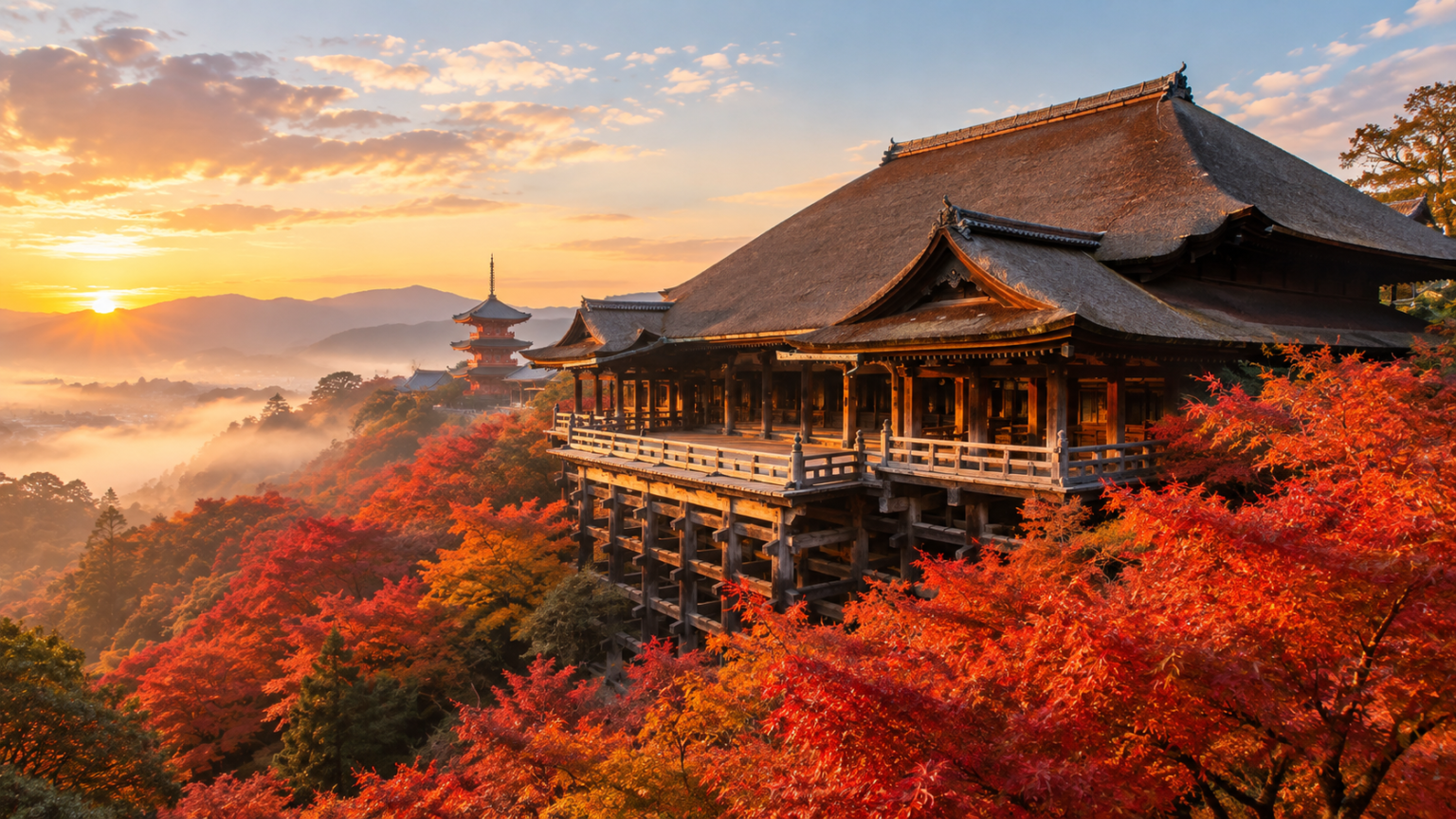
Afterward, walk up the hill toward the grand wooden stage of Kiyomizu-dera. Founded in 778 AD, this mountain temple overlooks eastern Kyoto from high cliffs. Master builders raised the massive main hall without using a single nail. Today, the wooden deck offers broad views across maple trees and city rooftops.
Below the wooden terrace, visitors line up at Otowa Waterfall. Three cool streams of mountain water flow into stone cups. People drink to wish for health, long life, or good grades. In addition, the temple gates open at 6:00 AM, and adult entry costs ¥500 ($3.35 USD).
Sannenzaka and Ninenzaka: Preserved Machiya Stone Lanes
Walking down these stone lanes is a top highlight of your Kyoto 3 day itinerary. Leaving Kiyomizu-dera brings you to the historic stone steps of Sannenzaka and Ninenzaka. These paved stone streets preserve rows of two-story wooden shop houses. Also, local shops sell clay tea cups, sweets, and fans.
As you walk down Ninenzaka, look up to see the five-story Yasaka Pagoda. Early morning light makes this spot ideal for clean travel photos. However, keep your voice down along these quiet alleys. Local laws ban blocking narrow paths or taking photos inside private courtyards.
Gion and Shirakawa: Lantern-Lit Canals and Pontocho Dining
Gion is Kyoto’s most famous historic district and home of geiko culture. In the evening, small lanterns light up the stone path along Shirakawa Canal. Weeping willow branches hang over the clear water near old tea houses. Also, narrow Pontocho alley runs beside the river with tiny dining spots.
When walking in Gion, visitors must follow strict local manners. Never touch, follow, or stop working geiko or young maiko apprentices. Private side streets now display clear warning signs that ban tourist entry and photos. Instead, stay on public streets or book an authentic dinner along the riverbank. If you visit in late October, consider an evening side trip featured in our Kurama Fire Festival Kyoto guide.
Day 2: Western Bamboo Groves, Zen Gardens & Golden Pavilion
Arashiyama Bamboo Grove: Beating Crowds at First Light
Day two of this Kyoto 3 day itinerary starts beneath the tall bamboo of Arashiyama. This walking path runs between Tenryu-ji temple and Nonomiya Shrine. Green bamboo stalks rise high into the air, filtering the early morning sunlight. When breezes blow, the swaying stalks make a soft wooden creak.
To enjoy this path without crowds, arrive by 7:00 AM. Take the JR train from Kyoto Station to Saga-Arashiyama Station in fifteen minutes. Walking the main bamboo path is free and takes about twenty easy minutes. Also, point your camera upward to capture the green canopy against the sky.

Tenryu-ji Temple: Sogenchi Pond and Zen Rock Formations
Tenryu-ji is a major Zen temple located right beside the bamboo path. Built in 1339, this temple features the famous Sogenchi pond garden. In fact, the landscape design uses the Arashiyama mountains as borrowed scenery behind the pond. Flat stone paths wrap around white sand and round boulders.
Furthermore, garden tickets cost ¥500 ($3.35 USD) at the entry booth. Sit on the open wooden porch to watch the water reflections. Afterward, walk through the pine grove to see colorful seasonal flowers. The garden looks much like it did seven centuries ago.
Okochi Sanso Villa: Secluded Hillside Gardens and Matcha
Right past the north end of the bamboo path sits Okochi Sanso Villa. A famous Japanese silent film star spent thirty years building this quiet estate. He planted cherry, pine, and maple trees across the steep hillside. Today, stone paths climb to open lookouts above the deep Hozu River gorge.
While the bamboo path gets busy, this private garden stays quiet. An entry ticket costs ¥1,000 ($6.70 USD) and includes a cup of hot matcha tea. Sip your green tea with a sweet bean cake inside the open tea house. Then, walk the mossy trails to see small wooden shrines.
Togetsukyo Bridge and Riverbank Walking Paths
Togetsukyo Bridge spans the wide Katsura River in front of forested hills. Named Moon Crossing Bridge after an old poem, it offers great mountain views. In spring and autumn, wooden rowboats glide across the calm water below the spans. Walking along the rocky river bank gives great views.
Take a short walk along the quiet south bank of the river. In fact, cool river breezes blow off the water after morning walks. Local vendors sell sweet rice balls and warm roasted chestnuts near the bank. Also, look for traditional wooden fishing boats tied near the shore.
Kinkaku-ji: The Golden Pavilion Reflected in Mirror Pond
Visiting the Golden Pavilion adds bright architectural contrast to this Kyoto 3 day itinerary. Known officially as Rokuon-ji, this Zen temple dates to the late fourteenth century. The top two floors gleam with real gold leaf. The bright golden walls reflect across Mirror Pond between small pine islands.
Entry tickets cost ¥500 ($3.35 USD) and look like paper blessing talismans. Arrive around 9:00 AM when morning sun shines bright on the gold walls. A clean stone path leads past the pond toward an old tea cottage. In addition, visitors can light incense at the small Fudo-do hall.

Day 3: Northern Zen Temples, Canal Walks & Culinary Alleys
Ginkaku-ji: Silver Pavilion and Raked Sand Sculpture
Day three of your Kyoto 3 day itinerary explores eastern temple gardens. Shogun Ashikaga Yoshimasa built Ginkaku-ji in 1482 as a quiet retreat. Although lacking silver foil, its dark wood shows pure Zen style. Also, a tall cone of raked white sand sits in the yard.
Admission costs ¥500 ($3.35 USD) at the front gate. Walk up the hillside stone path behind the main hall for views over the city. Thick green moss covers the ground beneath tall cedar trees. In addition, the dry sand garden reflects soft moonlight across the yard at night. For contrast with northern winter sights, explore our Sapporo Snow Festival dates and guide.
The Philosopher’s Path: Quiet Canal Walk and Stone Bridges
From Ginkaku-ji, the Philosopher’s Path follows a quiet canal south toward Nanzen-ji. Named after an old Kyoto professor, this stone trail runs for two easy kilometers. Cherry trees arch over the canal, giving cool shade on warm afternoons. Small craft shops, tea spots, and quiet shrines sit along the route.
Walking this stone path provides a calm link between major eastern temples. There is no fee, making it one of the top free walks in Kyoto. Stop at Honen-in temple to admire its thatched gate and sand mounds. The full canal walk takes about forty minutes at a relaxed pace.
Nanzen-ji Temple and the Historic Suirokaku Aqueduct
Walking between Zen halls completes the cultural core of your Kyoto 3 day itinerary. Nanzen-ji is a top temple of Zen Buddhism. Its massive wooden Sanmon gate towers over the gravel yard. Also, for ¥600 ($4.00 USD), you can climb steep stairs to the balcony.
Behind the main hall stands Suirokaku, an old red-brick aqueduct built in 1890. Its round Roman arches carried lake water across the temple grounds to power city mills. The red brick looks striking against green moss and tall pine trees. Photographers love framing shots beneath the tall brick arches.
Nishiki Market: Tasting Local Street Food in Kyoto’s Kitchen
Finally, spend your afternoon tasting local street food across historic Nishiki Market. Known as Kyoto’s Kitchen, this five-block covered arcade has sold food for seven hundred years. Over one hundred small stalls sell fresh food, tea, and cooking tools. A red and yellow glass roof keeps the walking alley dry.
Try tasty local bites like rolled egg omelets, grilled rice cakes, and roasted green tea. Also, look for small sweet octopus skewers stuffed with quail eggs. However, remember that market rules ban eating while walking down the crowded hall. Instead, eat your food in front of each stall counter.
Traditional Kyoto Dining: Kaiseki to Matcha Treats
Traditional Kyoto food focuses on fresh seasonal tastes and simple broths. For lunch, try obanzai, a spread of small vegetable dishes cooked in home style. In the evening, book a multi-course kaiseki meal to taste seasonal fish. In addition, treat yourself to rich green matcha soft ice cream near Gion.
Also, try hot yudofu tofu boiled in clay pots on cool evenings. Many historic tofu shops near Nanzen-ji offer quiet garden views.
Getting Around Kyoto: Subways, Private Rails, and IC Cards
Getting around Kyoto is simple with its clean grid layout and trains. The Kyoto Municipal Subway connects Kyoto Station to central sights. Also, private train lines link downtown to Arashiyama and eastern temple districts. Buy a prepaid IC card to tap through ticket gates fast. Review subway maps and route passes provided by the Kyoto Municipal Transportation Bureau. Stay connected across train platforms and temple trails with an Airalo Japan eSIM.
Where to Stay in Kyoto: Best Neighborhoods and Transit Bases
Picking the right base makes following this Kyoto 3 day itinerary smooth and easy. Central Shijo and Karasuma offer modern hotels near subway lines and food spots. In contrast, staying near Kyoto Station gives direct rail links. If you want old charm, book a traditional inn in Gion. For stylish boutique rooms near Kawaramachi dining, reserve a stay at Cross Hotel Kyoto. For calm modern luxury right beside the main rail gates, consider THE THOUSAND KYOTO.
Estimated Travel Costs and Itemized Daily Budget
Daily travel costs in Kyoto vary by room type and dining style. Budget travelers in hostels spend ¥7,500 to ¥10,000 ($50 to $67 USD) daily. Mid-range visitors in city hotels budget ¥18,000 to ¥28,000 ($120 to $188 USD) daily. In addition, luxury guests spend ¥50,000+ ($335+ USD) each day. Protect your holiday against unexpected transit delays with SafetyWing Nomad Insurance.
| Expense Category | Backpacker Tier (Daily) | Mid-Range Tier (Daily) | Luxury Tier (Daily) | Money-Saving Tips
|
|---|---|---|---|---|
| Accommodation | ¥3,500 – ¥5,000 ($23 – $34 USD) Hostel dorm or capsule hotel | ¥10,000 – ¥16,000 ($67 – $107 USD) 3-star modern city hotel | ¥35,000 – ¥70,000+ ($235 – $470+ USD) Luxury hotel or boutique ryokan | Book accommodations 3–5 months ahead for peak autumn and cherry blossom dates. |
| Food & Dining | ¥2,500 – ¥3,500 ($17 – $23 USD) Udon, ramen, market stalls | ¥5,500 – ¥8,500 ($37 – $57 USD) Obanzai sets & casual izakaya | ¥15,000 – ¥30,000+ ($100 – $200+ USD) Multi-course seasonal kaiseki | Order set lunches (teishoku) at high-end eateries to sample premium cuisine at half the evening rate. |
| Local Transportation | ¥800 – ¥1,100 ($5.40 – $7.40 USD) Subway & bus daily pass | ¥1,200 – ¥1,800 ($8.00 – $12 USD) Subway, trains & occasional bus | ¥4,000 – ¥8,000 ($27 – $54 USD) Private MK taxis between temples | Tap rechargeable IC cards (ICOCA, Suica) to bypass ticket vending lines at busy rail stations. |
| Attraction Admissions | ¥1,600 – ¥2,200 ($11 – $15 USD) Selective paid temple grounds | ¥2,600 – ¥3,200 ($17 – $21 USD) Full temple access & garden entries | ¥4,000 – ¥6,000 ($27 – $40 USD) VIP garden entries & private teas | Fushimi Inari, the Philosopher’s Path, and Nanzen-ji grounds are completely free of charge. |
| Estimated Daily Total | ¥8,400 – ¥11,800 ($56 – $79 USD) | ¥19,300 – ¥29,500 ($130 – $198 USD) | ¥58,000 – ¥114,000+ ($389 – $765+ USD) | Prices checked on 09 October 2026. (Exchange rate: ¥149 JPY = $1.00 USD). |
Step-by-Step 3-Day Kyoto Route Schedule
| Day & Focus | Morning Sights | Afternoon Sights | Evening & Dining | Transit Strategy
|
|---|---|---|---|---|
| Day 1: Southern Shrines & Higashiyama | Fushimi Inari Taisha (6:30 AM dawn walk) & Sanjusangendo wooden hall | Kiyomizu-dera wooden stage, Sannenzaka & Ninenzaka historic stone lanes | Gion Shirakawa canal walk & riverside dinner in Pontocho Alley | JR Nara Line to Inari, Keihan rail to Gion-Shijo, then walking |
| Day 2: Western Bamboo & Zen Gardens | Arashiyama Bamboo Grove (7:00 AM) & Tenryu-ji Sogenchi Zen garden | Okochi Sanso hillside estate & Togetsukyo Bridge river walk | Kinkaku-ji Golden Pavilion (3:30 PM golden hour) & Kyoto Station ramen | JR San-in Line to Saga-Arashiyama, Randen tram + bus to Kinkaku-ji |
| Day 3: Eastern Canals & Food Markets | Ginkaku-ji Silver Pavilion & the scenic Philosopher’s Path canal walk | Nanzen-ji Sanmon gate & historic red-brick Suirokaku Aqueduct | Nishiki Market food tastings, Kawaramachi shopping & matcha desserts | Tozai subway line to Keage Station, Hankyu rail to Karasuma |
Frequently Asked Questions About Visiting Kyoto
Is three days enough time to visit Kyoto?
Yes, three days gives you enough time to see top shrines, bamboo paths, and geiko quarters comfortably.
What is the best way to travel around Kyoto?
Subways and local trains are best because city buses often get stuck in traffic.
Do you need to book Kyoto temple tickets ahead of time?
Most temples sell entry tickets at the gate, so advance booking is not needed.
What should you wear when visiting Kyoto temples and shrines?
Wear shoes that slip off easily for wooden halls, and dress modestly with covered shoulders.
Temple Etiquette, Respectful Tourism, and Responsible Travel
When visiting sacred shrines and temples, follow local customs to respect historic Kyoto. Take off your shoes before stepping onto clean tatami straw mats. Bow your head at shrine gates, and speak softly in Zen gardens. Following this Kyoto 3 day itinerary gives you a rich, peaceful, and respectful journey. Find updated country transit rules through the Japan National Tourism Organization.
Please travel responsibly by carrying your trash with you and respecting local neighborhood residents.


