

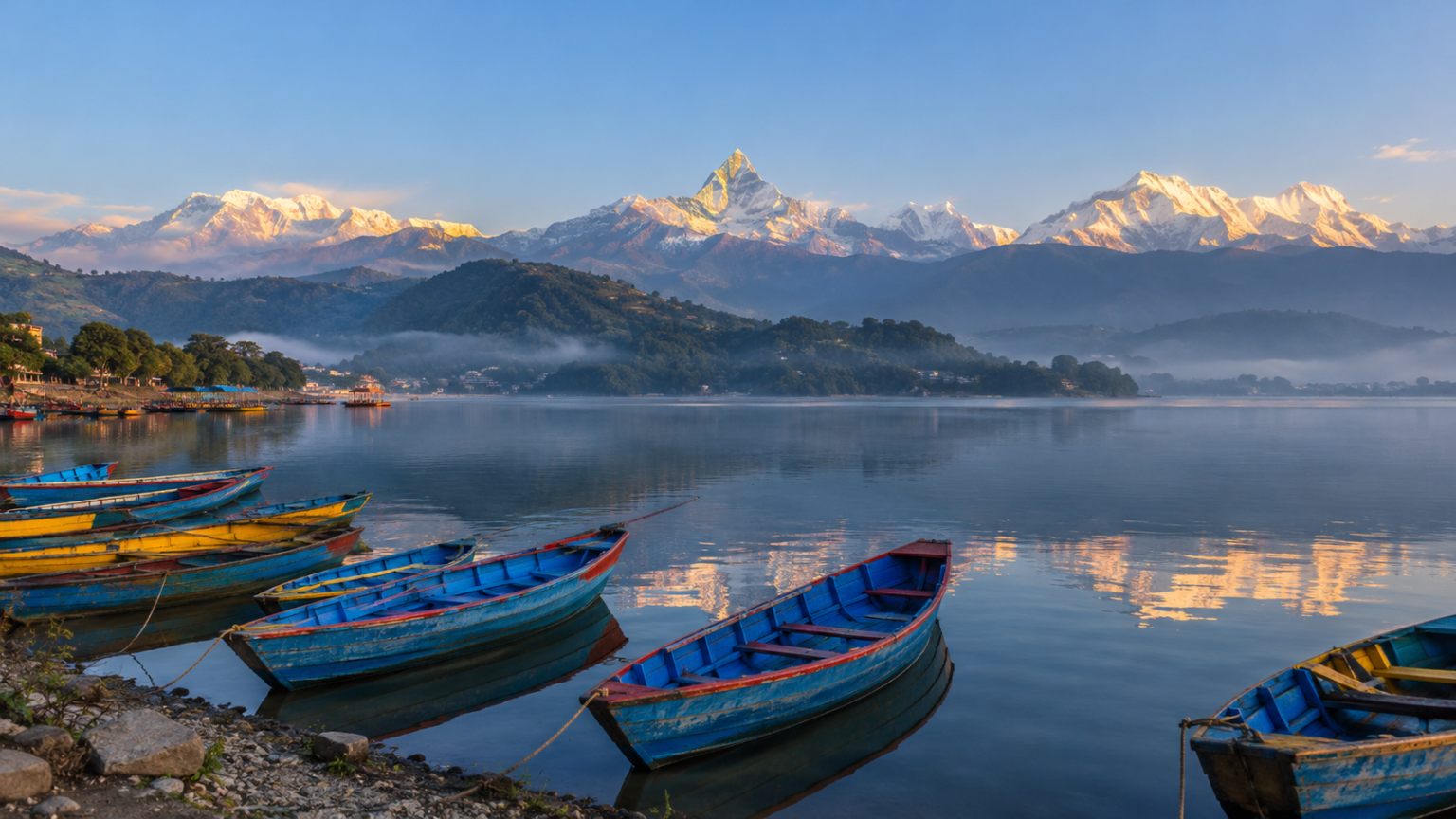
Pokhara rests beneath high snow peaks in central Nepal. In fact, blue waters of Phewa Lake mirror the sharp tip of Machhapuchhre. Autumn and spring bring clear skies for mountain hikes. In addition, the town welcomes alpine hikers and lake lovers.
This practical Pokhara travel guide gives tested advice for your mountain holiday. For example, guests learn boat hire rates, view cable cars, and forest paths. You will see hilltop stupas, deep water caves, and quiet lakesides. Good facts ensure an easy trip.
Boating on Phewa Lake and Visiting Tal Barahi Temple
Phewa Lake covers four square kilometers by the edge of town. Wooden rowing boats painted in bright yellow and blue line the stone shore. In this Pokhara travel guide, we suggest early boat trips. Indeed, still waters mirror giant white snow peaks with pure clarity.
Tal Barahi Temple sits on a tiny tree-shaded island in the lake. The two-tier shrine honors Goddess Durga as a protector of the vale. In fact, local boatmen row pilgrims to the temple dock each day. Guests ring brass bells and offer red flower wreaths.
Boat rental costs six hundred rupees per hour with a skilled rower. Alternatively, you can paddle a rental boat on your own for less. Therefore, always wear the bright orange life vests given out at the dock. Afternoon winds often whip up choppy lake waves.
Sarangkot Sunrise and the Annapurna Cable Car
Sarangkot ridge rises high above the blue lake water. Dawn brings crowds of travelers to watch the first pink sun rays hit Annapurna peaks. This Pokhara travel guide ranks the ridge top among the finest lookouts in all Nepal. Indeed, bright sun turns icy peaks gold.
The modern Annapurna Cable Car carries guests from Lakeside up to the ridge. The smooth ride takes barely ten minutes through the morning air. In fact, glass cars glide high above terraced farm fields and green pine woods. Round-trip tickets cost twelve dollars.
Tandem paragliding flights launch from the grassy slope just below the ridge top. Colorful wings circle on warm air currents beside wild eagles. In addition, pilots land gently along the north shore of Phewa Lake. Morning flights provide calm air and clear mountain views.

World Peace Pagoda on Ananda Hill
The World Peace Pagoda stands tall on the crest of Ananda Hill. Japanese Buddhist monks built the massive white stupa to inspire world peace. In this Pokhara travel guide, we advise walking the woods path from the south lake shore. The steep stone steps take forty minutes.
Four gold statues of Buddha face the four winds on upper decks. Many guests pair this quiet stupa with shrines in our Bhaktapur day trip from Kathmandu guide. In fact, take off your shoes before walking the stone circle. In particular, whisper softly out of deep respect.
Sweeping views stretch across the entire lake valley and the city below. White snow peaks frame the north horizon in grand alpine grace. In fact, late afternoon brings soft gold light over the lake water. Entry to the sacred stupa deck stays completely free.

Pumdikot Giant Shiva Statue and Valley Views
Pumdikot ridge hosts a tall bronze statue of Lord Shiva high above town. The giant statue rises fifty-one feet into the clear mountain air. In fact, a wide stone terrace offers wide views of Annapurna and Dhaulagiri. Guests walk past rows of bronze bells along the path.
The hill sits five kilometers past the World Peace Pagoda along a paved road. Taxis from Lakeside cost twelve hundred rupees for round trips with wait time. This comprehensive Pokhara travel guide suggests visiting in late afternoon. Cool mountain breezes blow across the open white court.
Stone steps lead to lookouts beneath the great bronze trident of Shiva. Down below, green vales and lake bays curve between rolling hills. In addition, small stalls near the gate serve hot spiced tea and steamed momos. In fact, entry to the area stays free.
Davis Fall and Gupteshwor Mahadev Cave
Davis Fall marks a bold spot where the Pardi stream dives deep underground. The rushing water drops into a dark limestone tunnel carved through solid rock. In fact, summer rains create thunderous roar and thick spray across the cleft. Entry costs one hundred rupees per guest.
Right across the main road lies the arched gate of Gupteshwor Mahadev Cave. Stone steps wind deep into the dark stone cavern beneath the earth. In fact, priests care for a sacred Shiva shrine found inside long ago. In addition, electric bulbs light the damp underground paths.
Beyond the shrine hall, a low path leads to the foot of Davis Fall. You can stand behind firm steel rails and watch water plunge into the dark. However, stone floors stay wet and slick from cave spray. Therefore, wear shoes with firm rubber grip inside the cave.
International Mountain Museum and Alpine Heritage
The International Mountain Museum honors the brave climbers who scaled high peaks. Large halls display climbing gear, old ice axes, and classic summit maps. This Pokhara travel guide highlights the hall built for brave Sherpa guides. In addition, the museum sits in the south valley.
Displays show the unique lives of mountain tribes across Nepal. You can study old dress, tools, and stone homes of Gurung and Thakali clans. In fact, the museum displays rock chips from the peak of Mount Everest. Furthermore, a scale model of Manaslu stands on the lawn.
Foreign adult entry costs five hundred rupees at the front ticket booth. The museum stays open daily from nine in the morning until five o’clock. In addition, the quiet garden cafe offers fine views of Machhapuchhre peak. Plan on two hours to view all halls.
Quiet Walks Along Northern Lakeside and Pame
Country trails wind through green farm fields along the north shore of Phewa Lake. Walkers pass water buffalo, rice plots, and small wooden fish huts. Hikers who love morning foothill walks also enjoy trails at Kunjapuri Devi Temple near Rishikesh. Farm lanes here offer calm walking away from cars.
The village of Pame sits five kilometers west of the main tourist town. Lakeside cafes serve freshly fried local fish and hot lentil cakes by the water. In fact, locals gather here at sunset to watch colors change across the lake. The rural feel stays calm and warm.
Renting a push bike for four hundred rupees per day makes seeing Pame simple. Flat dirt tracks trace the gentle lake curve with ease. In addition, small bridges cross cold mountain streams that feed the lake. Indeed, take your time to enjoy the green fields.
Historic Bazaars, Seti Gorges, and Begnas Lake Retreats
Old Pokhara bazaar features red brick homes with carved wooden window frames. Newari traders built these two-story shops along ancient salt routes. In fact, quiet spice stalls still sell dried ginger, sweet cloves, and mountain herbs. Indeed, a walk through town reveals rich living trade history.
Bindhyabasini Temple stands on a small green hill in central Old Pokhara. The white shrine honors Goddess Durga and draws morning prayer crowds. In fact, shaded stone yards provide clear views of northern snow peaks. Temple bells ring out as priests light oil lamps.
Deep chasms cut by the Seti River slice straight through the city floor. From high bridges, you see milk-white river water rush through narrow stone clefts. Pilgrims often pair these shrines with rites seen in our Maha Shivaratri Pashupatinath guide. The roaring water echoes loudly from the deep canyon.
Begnas Lake sits fifteen kilometers east of Pokhara along the road. The quiet mountain lake sees far fewer guests than central Phewa Lake. In fact, green forest hills plunge straight into clear, calm water. Meanwhile, old wooden boats drift across still waters in morning mist.
Small family fish ponds sit along the quiet south bay of Begnas Lake. Local boatmen row guests past floating net traps and wild water birds. In addition, simple hill cafes serve hot fish curry and rice. The peaceful shore makes an ideal day trip.
Matepani Gumba monastery sits atop a wooded hill above the east valley. Monks in red robes chant afternoon Buddhist prayers to deep brass horns. In fact, bright wall murals paint tales from old Buddhist lore. Sweet pine smoke curls softly through the calm main prayer hall.
Tibetan craft homes near Tashi Ling sell hand-tied wool rugs and silver beads. Friendly weavers spin raw sheep wool on old wooden looms in open yards. In fact, small tea shops serve hot butter tea and steamed dumplings. Visiting helps local artisan families directly.
Getting to Pokhara: Tourist Buses, Flights, and Road Transit
Daily tourist buses link Kathmandu with Pokhara along the Prithvi Highway in seven hours. In fact, the official Nepal Tourism Board suggests licensed VIP sofa buses for safety. Coaches depart from Sorhakhutte near Thamel at seven each morning. Standard tickets cost twelve to fifteen dollars.
Domestic flights from Kathmandu take twenty-five minutes into Pokhara Airport. Alternatively, book your bus tickets online through 12Go transit booking to secure guaranteed sofa bus seats. Window seats on the right side of the plane reveal stunning mountain views. Taxis to Lakeside cost five dollars.
Where to Stay: Lakeside Neighborhoods and Hilltop Lodges
Central Lakeside puts you steps from cafes, boat docks, and tour desks. Quiet guest homes in North Lakeside offer calm rooms away from bars. In fact, many hotels feature rooftop decks with views of Machhapuchhre. Room rates stay very fair all year long.
Sarangkot ridge suits travelers who want morning sunrise views from bed. For example, find verified mountain lodges on Booking.com Pokhara hotels before peak trekking months fill up. Staying up high guarantees quiet nights and fresh mountain air.
Daily Travel Costs and Realistic Vacation Budget Breakdown
Budget backpackers spend twenty to thirty dollars per day on dorms and meals. Mid-range guests budget sixty to ninety dollars daily for private rooms and taxis. In fact, tasty local dal bhat meals cost three to four dollars. Boating and museums cost very little.
| Expense Category | Budget Traveler (NPR / USD) | Mid-Range Traveler (NPR / USD) | Comfort / Private Tour (NPR / USD)
|
|---|---|---|---|
| Guesthouse / Hotel (Per Night) | 1,500 – 2,500 NPR ($11 – $19) | 4,500 – 8,000 NPR ($34 – $60) | 12,000 – 22,000 NPR ($90 – $165) |
| Daily Meals & Fresh Coffee | 800 – 1,400 NPR ($6 – $11) | 2,000 – 3,500 NPR ($15 – $26) | 4,500 – 7,500 NPR ($34 – $56) |
| Local Transport & Boat Rentals | 600 – 1,200 NPR ($5 – $9) | 2,200 – 4,000 NPR ($17 – $30) | 5,000 – 8,500 NPR ($38 – $64) |
| Activities & Museum Entry Fees | 500 – 1,000 NPR ($4 – $8) | 2,000 – 4,500 NPR ($15 – $34) | 6,000 – 12,000 NPR ($45 – $90) |
| Daily Estimated Total | 3,400 – 6,100 NPR ($26 – $47) | 10,700 – 20,000 NPR ($81 – $150) | 27,500 – 50,000 NPR ($207 – $375) |
Prices checked on 12 October 2026. Conversion rate: 1 USD ≈ 133 NPR.
Complete Three-Day Pokhara Travel Itinerary
| Day / Stage | Morning Highlights | Afternoon Highlights | Evening Highlights
|
|---|---|---|---|
| Day 1: Phewa Lake & Peace Stupa | Sunrise wooden boat hire to Tal Barahi Island Temple. | Hike forest trail up to World Peace Pagoda on Ananda Hill. | Sunset dinner and fresh fish at quiet North Lakeside cafes. |
| Day 2: Sarangkot Dawn & Caves | Annapurna Cable Car ride to Sarangkot ridge for mountain sunrise. | Explore Davis Fall and Gupteshwor Mahadev underground cave. | Visit Pumdikot giant bronze Shiva statue for late afternoon tea. |
| Day 3: Alpine Heritage & Countryside | Tour International Mountain Museum and Sherpa climbing displays. | Rent bicycle for quiet ride through Pame rice fields along the north shore. | Relax at peaceful lakeside gardens watching alpine reflections. |
Essential Mountain Safety, Trekking Permits, and Local Etiquette
Hikers planning trips into the Annapurna mountain park must buy state permits. In fact, the Trekking Agencies Association of Nepal checks guide badges at trail gates. This Pokhara travel guide reminds hikers to log their route before leaving town. Always carry a refillable water flask on trails.
Respect local religious customs when visiting Buddhist stupas and Hindu shrines. Always walk around stupas and shrines in a clockwise ring. In addition, take off your shoes before stepping onto sacred temple stone. Ask polite consent before taking photos of praying monks.
Keep spare cash handy as small mountain village tea homes cannot take cards. Pack warm coats for chilly mornings even when sunny valley days feel warm. Furthermore, buy travel insurance that covers emergency mountain medical help. This Pokhara travel guide keeps your mountain holiday safe.
Frequently Asked Questions About Visiting Pokhara
When is the best time of year to visit Pokhara?
In 2026 and 2027, the premier travel window runs from October through April during the dry season. This Pokhara travel guide recommends autumn for crisp mountain views and warm sunny days. Spring brings blooming pink rhododendron woods.
How many days should I spend in Pokhara?
We recommend spending at least three full days to explore lakes and lookouts. Extra days allow relaxing boat trips, museum visits, and day hikes to Sarangkot. Trekkers often stay longer to rest after long mountain routes.
Is Pokhara safe for solo travelers and hikers?
Pokhara is very safe and welcoming for solo travelers and female hikers. In fact, tourist police patrol the Lakeside strip regularly day and night. Stick to clear marked paths when walking into the hills alone.
Do I need a trekking permit to stay in Pokhara?
You do not need any permits to explore Pokhara city or Phewa Lake. However, hikes entering the Annapurna mountain region require conservation permits. You can buy these easily at the tourist desk in Damside.
Can you swim safely in Phewa Lake?
Swimming in central Phewa Lake is not recommended due to boat traffic. Instead, book hotels with swimming pools or visit clean mountain streams near Pame. Renting a paddleboard with a life vest is a great choice.
Travel with true kindness and honor mountain traditions. Leave every quiet trail clean for the local community.
Find hand-picked flight deals, hotel discounts, and local island travel packages.


